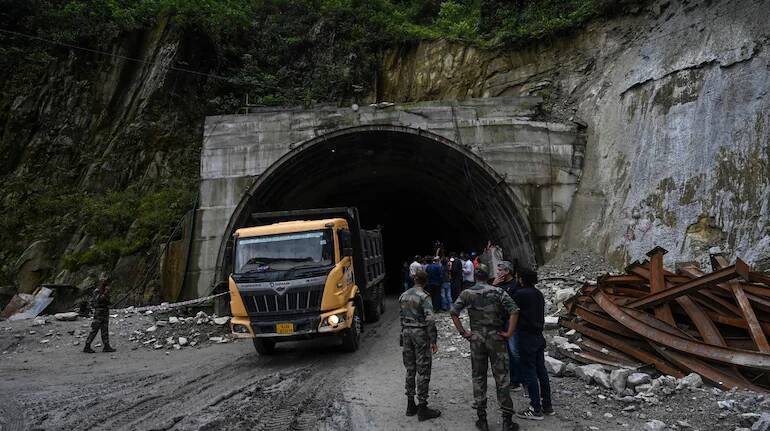
The Border Roads Organisation will construct a 32-km strategic road from Nilapani to Muling La in Uttarakhand near the India–China border at around 16,000 feet, at an estimated cost of ₹104 crore. The project will reduce access time to the Muling La base from a five-day trek to a few hours and enable vehicular movement of troops and sustained forward presence in extreme weather, enhancing military logistics and regional strategic posture while offering limited, localized upside to construction and defense suppliers.
Market structure: Direct winners are Indian civil‑infrastructure contractors and specialty suppliers — e.g., Larsen & Toubro (LT), IRCON (IRCON.NS), PNC Infratech — and materials firms supplying cement/steel (UltraTech ULTRACEMCO, JSWSTEEL). The project is small (₹104 crore) but is a high‑signal strategic capex catalyst that can lift specialised high‑altitude contracting revenue by an incremental 5–15% across the next 12–36 months and improve pricing power for winterized logistics/equipment providers.
Risk assessment: Tail risks include border escalation halting work, 20–50% cost overruns due to weather/altitude, or regulatory/environmental injunctions; such events can flip wins into stranded assets within weeks. Immediate impact is negligible; watch short‑term tender announcements (30–90 days) and medium/long term (1–3 years) for sustained defense/infrastructure budget increases.
Trade implications: Tactical opportunities are long selective infra and materials names with 3–12 month horizons and defined downside via option structures; expect limited macro spillover into FX/bonds (G‑sec yields +5–15bps if capex scales). Pair trades can capture relative execution: favour state‑owned/experienced contractors (IRCON) over smaller private builders lacking cold‑chain capability.
Contrarian angles: The market likely underestimates repeated follow‑on road programmes along the border — this is a rolling programme, not a one‑off; conversely early enthusiasm could be overdone given execution risk and small absolute budget. Historical parallels (2017–19 India border infra cycle) show winners concentrated among firms with Hi‑altitude track records, while generalist infra names underperformed after initial rallies.
AI-powered research, real-time alerts, and portfolio analytics for institutional investors.
Request DemoOverall Sentiment
mildly positive
Sentiment Score
0.25
