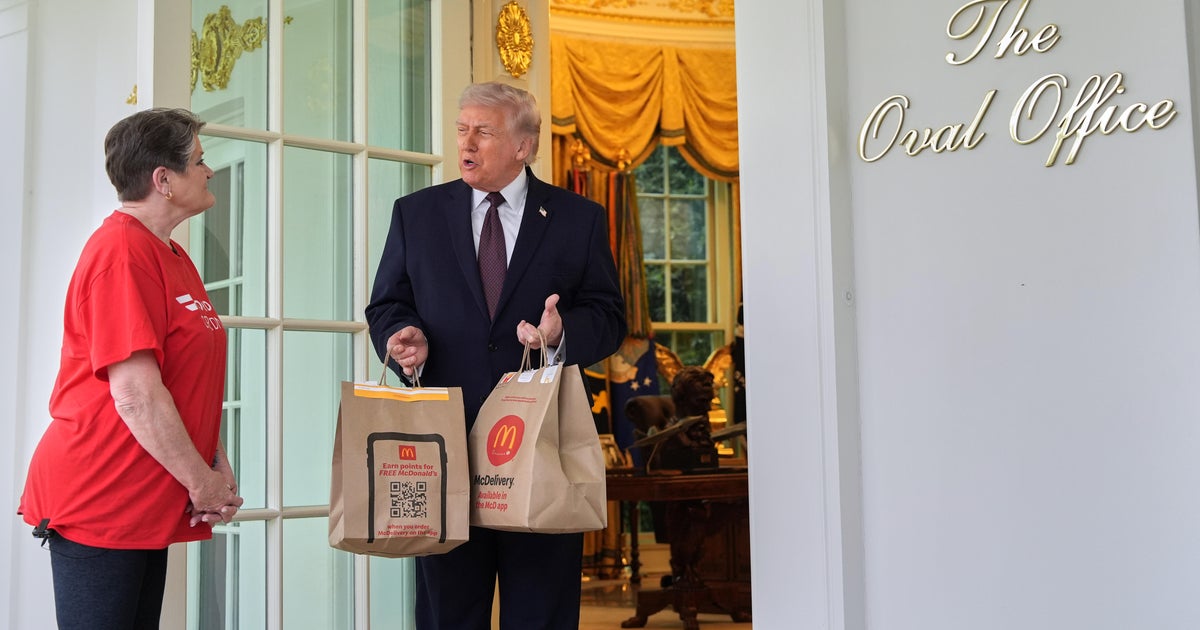
The article centers on President Trump promoting the 'no tax on tips' policy alongside a DoorDash driver who said the measure boosted her income by $11,000 and helped her family financially. The event was largely political theater, but it highlighted a tax policy relevant to tipped workers and gig-economy delivery labor. DoorDash framed the appearance as advocacy for Dashers nationwide, while the delivered McDonald's meal was sent to White House staff.
The market read-through is less about the photo-op and more about policy validation: tip income is being framed as politically durable, which lowers the probability of near-term repeal or dilution. That is modestly supportive for DASH because anything that increases driver take-home pay improves supply retention at the margin, reducing churn and order-time friction; the second-order benefit is higher fulfillment reliability, which is what ultimately protects mix and take rate more than headline order growth. The bigger incremental beneficiary may be MCD, but only in a narrow sense: this is free brand adjacency to the White House and a reminder that fast food remains culturally embedded across income cohorts. That said, the signal is not a demand inflection; it is mostly a low-cost marketing lift. If anything, the more relevant medium-term effect is on merchant economics broadly: if gig workers perceive tips as more favorable, competing delivery platforms will need to lean harder on incentives, pressuring unit economics across the category over the next few quarters. The contrarian angle is that the move may be overextended in DASH if investors assume this creates direct EPS upside. The policy tailwind is real, but the financial delta likely shows up first in driver supply and retention rather than in immediate revenue acceleration. The true risk is political reversibility after the election cycle: a change in congressional alignment or administrative priorities could unwind the narrative within 6-12 months, while the company has already been rerated on improving profitability expectations. From a time-horizon standpoint, this is a days-to-weeks sentiment event for MCD and a months-long operating backdrop for DASH. The key catalyst to watch is whether tip-related policy language expands into a broader labor package; if it does, wage expectations across food delivery and rideshare could reset higher, compressing margins faster than consensus models imply.
AI-powered research, real-time alerts, and portfolio analytics for institutional investors.
Request DemoOverall Sentiment
mildly positive
Sentiment Score
0.15
Ticker Sentiment
