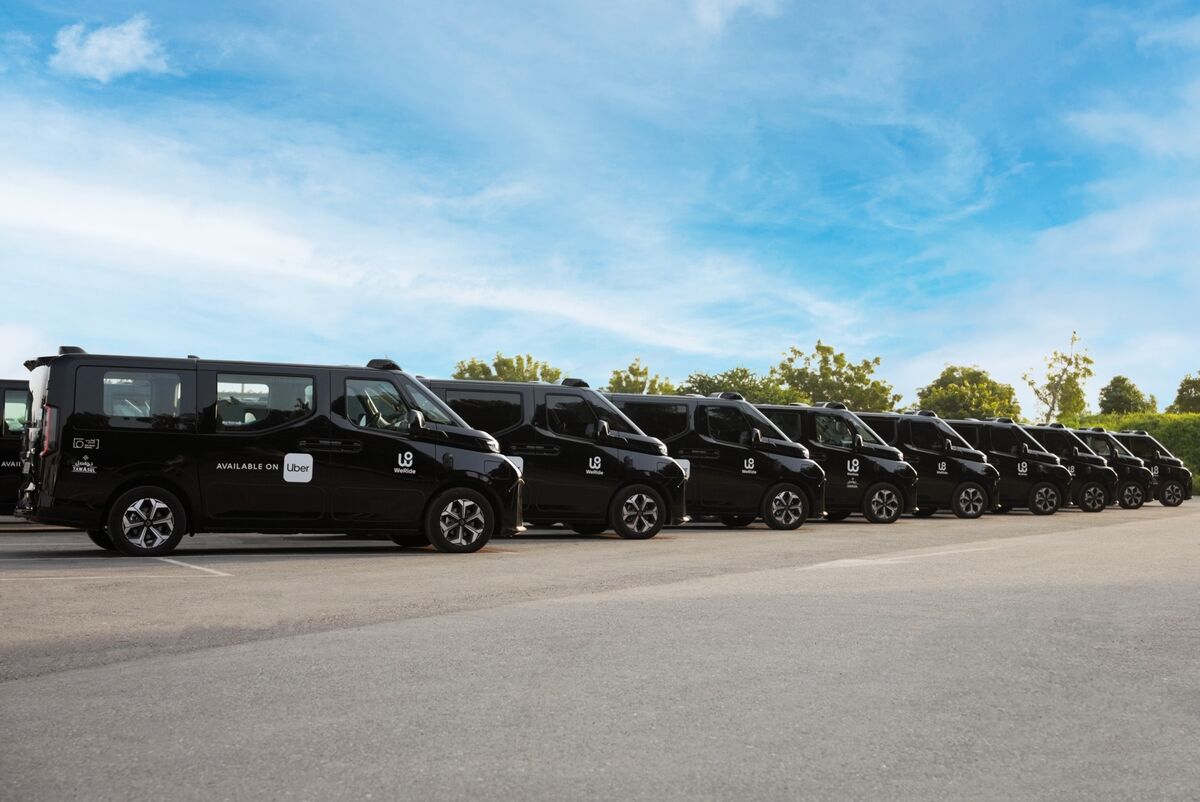
Uber and Chinese autonomous-vehicle developer WeRide are rolling out driverless UberX and Uber Comfort matches across a 12-square-mile area of Yas Island, Abu Dhabi, transitioning from a pilot with safety operators deployed about a year ago. Riders who select the app’s new “Autonomous” option — priced roughly in line with Uber Comfort — can be matched with a robotaxi, marking a commercial expansion of AV service in a regulated market and a tangible step toward scaling revenue-bearing driverless rides.
Market structure: This Abu Dhabi launch disproportionately benefits WeRide (WRD) as a technology/IP play and Uber (UBER) as a distribution & demand-aggregation layer; expect WRD to capture early tech-premium and Uber to gain incremental margin per ride if driver costs fall. Direct losers include local driver labor pools, legacy taxi operators, and insurers exposed to higher AV liability; impact on global oil demand is negligible near-term but structurally negative over years if robotaxi fleets scale. Competitive dynamics favor players with fleet scale + software stack; entrants without a two-sided network will struggle to compete on utilization and pricing power, keeping price pressure on individual ride yields in early commercialization (0–3 years).
Risk assessment: Tail risks include a single high-profile fatality or cyberattack that could pause deployments for 6–12 months, and capital-intensity for WRD that could force dilution if commercial traction stalls; regulatory rollback in major markets remains the dominant downside. Near-term (days–weeks) effects are sentiment-driven; short-term (3–12 months) depends on expansion announcements and safety data release; long-term (2–5 years) hinges on unit-economics improvement >10% margin lift for Uber and WRD achieving cost-of-capital reductions via scale. Hidden dependencies: lidar/chip supply, local mapping contracts, and sovereign approvals — watch procurement/insurance filings as second-order gating factors. Catalysts include additional city rollouts, government procurement deals, or published safety metrics (disclosures in next 30–90 days).
Trade implications: Direct plays: tilt long WRD (growth/optional upside) and modest long UBER (optionality to cut driver costs) while underweight legacy taxi/insurer exposures. Use relative trades: long WRD vs short traditional taxi operator ETF or LYFT (LYFT) to isolate AV-tech premium vs pure ride-hail incumbents; target 6–12 month horizons. Options: express long WRD via 9–12 month call spread to cap premium; harvest income on UBER via short-dated covered calls (30–90 days) if implied vol stays elevated. Sector rotation: overweight AI/semiconductors (lidar, ADAS chips) and select battery/EV names, underweight legacy rental/insurers dependent on human drivers.
Contrarian angles: Consensus headlines overstate immediate monetization — expect commercialization to follow a Waymo-like multi-year cadence (3–7 years) before material EBITDA contribution; markets underprice regulatory & insurance drag, and may also underappreciate WRD’s data/moat if it proves repeatable across geographies. Reaction could be underdone for WRD (if follow-on city wins occur) or overdone for UBER (headlines without unit-econ proof); a single severe incident could reset valuations by 15–40% for exposed names. Unintended consequences include higher capex per ride and slower driver displacement, delaying margin improvements and opening short-term mean reversion risks.
AI-powered research, real-time alerts, and portfolio analytics for institutional investors.
Request DemoOverall Sentiment
mildly positive
Sentiment Score
0.35
Ticker Sentiment
