

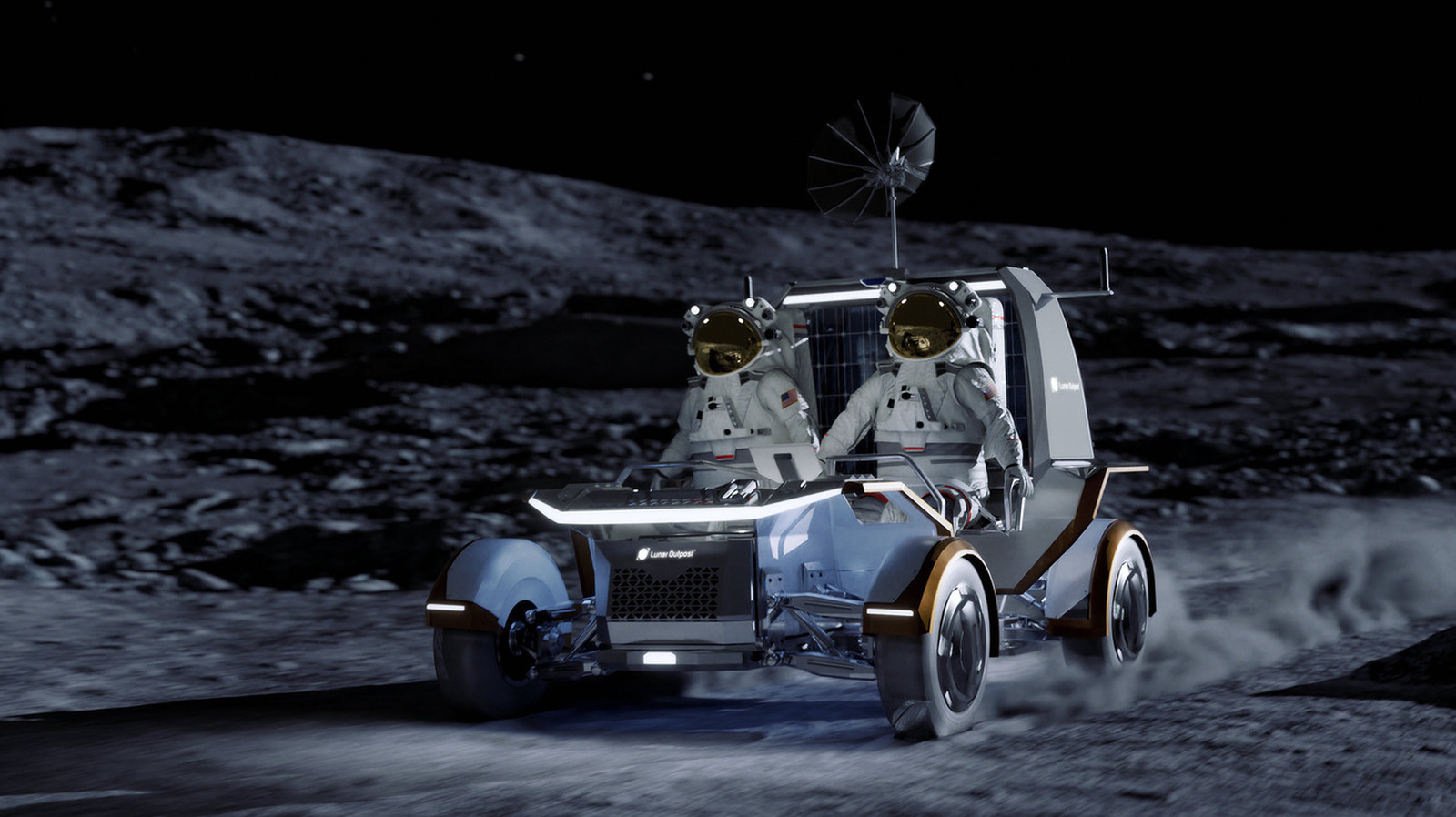
NASA selected two next-generation lunar rovers, the CLV-1 from Astrolab and Pegasus from Lunar Outpost, each costing about $220 million and expected to reach the Moon by 2028. The agency also advanced its Moon Base buildout with initial surface missions starting later this year and lander contracts awarded to Blue Origin, Astrobotic, and Intuitive Machines. The article is broadly positive for space infrastructure and lunar exploration contractors, but the near-term market impact is limited.
The market is likely underestimating how much this procurement shift de-risks the entire lunar supply chain. Moving from a bespoke, decade-long platform to faster, lower-spec iterations turns the Moon from a one-off engineering program into a repeatable logistics market, which is far more important for contractors than any single rover award. That favors companies that can convert space hardware into a cadence business: recurring integration, lander refurbishment, comms, autonomy, and surface mobility services should compound faster than the headline contract size suggests.
For GM, the real value is not the incremental revenue from space-grade components; it is validation of electrification/autonomy under extreme constraints. That creates a halo effect for defense, industrial, and EV powertrain credibility, but the near-term financial contribution is immaterial, so any equity reaction should be viewed as sentiment rather than earnings-driven. LUNR is more interesting as a platform beneficiary because the story shifts it from a single-mission lunar contractor to a landing/surface infrastructure enabler, but that also raises execution risk: if the cadence slips, the stock can de-rate quickly because the multiple is already pricing in program expansion.
The biggest second-order effect is competitive compression. Faster iteration means more vendors, more test failures, and more room for down-selects, which should pressure smaller pure-plays that depend on a single NASA pathway while advantaging diversified primes and lander vendors with balance-sheet endurance. The contrarian angle is that the enthusiasm around a lunar base may be too linear: the first 12-24 months will likely be dominated by technical setbacks, lander mishaps, and schedule drift, so the optimal trade may be to own the enablers while fading the most promotional names into strength.
Catalyst timing matters: the next 3-6 months are about launch/landing milestones, not revenue recognition, while the 12-24 month window is where investors can distinguish between credible execution and science-project theater. Any failure in early uncrewed landings, autonomy, or rover deployment would likely reset expectations across the entire theme. Conversely, successful first landings should widen the TAM narrative and support a second wave of awards, which is where the real equity upside would emerge.
AI-powered research, real-time alerts, and portfolio analytics for institutional investors.
Request TrialOverall Sentiment
mildly positive
Sentiment Score
0.25
Ticker Sentiment
