




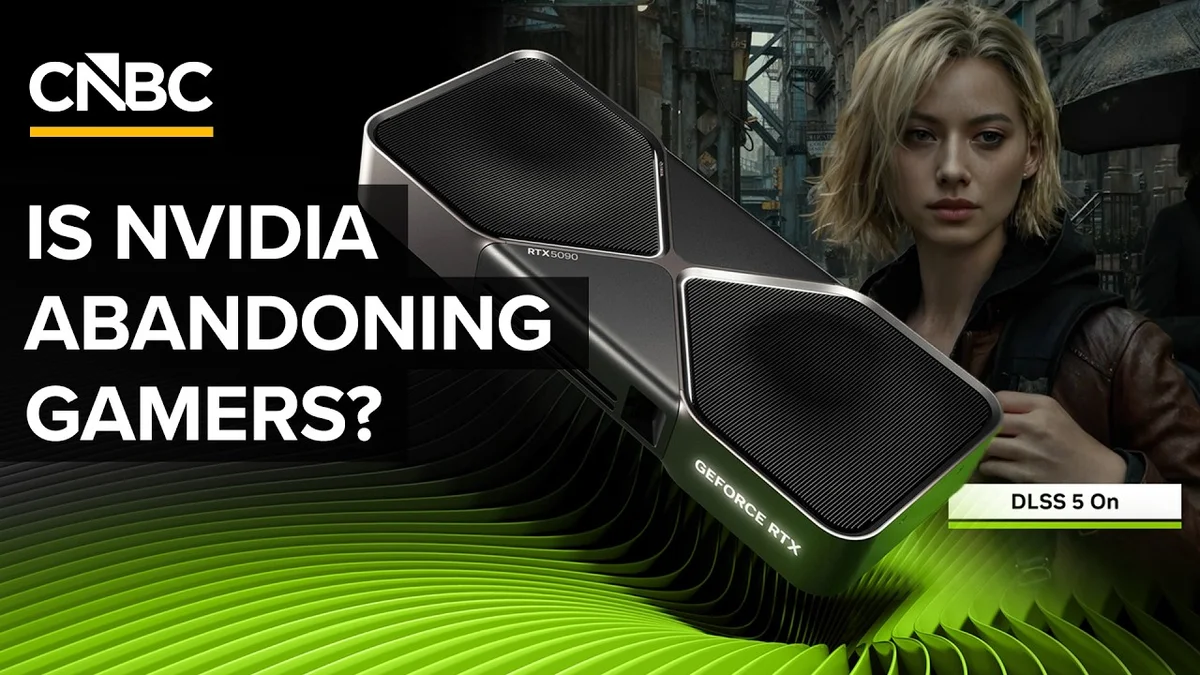
Nvidia’s Q4 FY2026 revenue is projected at $68.1B, with 91.5% expected from data center AI chips, underscoring the company’s pivot away from gaming. The article highlights potential RTX 50-series production cuts due to memory shortages, a possible first year without a new gaming GPU generation in three decades, even as Nvidia says gamers remain important and it is advancing DLSS 5. Overall, the piece is positive for Nvidia’s AI growth narrative but mixed for its gaming business and supply chain outlook.
NVDA’s mix shift is not just about growth concentration; it is about optionality leakage. As data-center AI absorbs more wafers, HBM, packaging, and board-level attention, gaming becomes a residual demand bucket that can under-earn for multiple cycles even if unit demand stabilizes. The second-order effect is that the entire PC/consumer GPU stack is now competing against hyperscaler capex for the same constrained memory and advanced manufacturing inputs, which makes any “new GPU generation” cadence less a product launch story and more a supply-allocation decision.
That creates a near-term winner/loser split that is broader than the headline. NVDA retains the pricing power, but AMD’s gaming share gains are limited if the bottleneck is upstream memory rather than GPU design; in that environment, share shifts tend to be slow and promotion-heavy, which compresses margins before they move unit share materially. MSFT and SONY are exposed through lower attach rates, weaker console/PC upgrade affordability, and delayed consumer spending as higher component costs leak into retail pricing over the next 2-3 quarters.
The market may be underestimating how much of this is a timing issue versus a structural issue. If memory shortages ease in 2H26, there is room for a sharp sentiment rebound in gaming names; if they persist, the real bull case is not gaming revenue growth but the monetization of AI into consumer graphics via DLSS-style software economics. That means the best long exposure is not a straight beta long on hardware cyclicals; it is either NVDA on pullbacks or a relative-value trade that benefits if AI monetization accelerates while gaming hardware stays supply constrained.
Near-term risk is that investors extrapolate a permanent gaming impairment and over-penalize AMD and the console ecosystem before demand elasticity is visible. Over a 6-12 month horizon, the catalyst set is memory pricing, retail GPU channel inventory, and management commentary on allocation discipline; any normalization there would force a fast unwind of the bearish gaming narrative. Conversely, if AI order books stay tight into the next budget cycle, NVDA can keep starving lower-margin segments without meaningfully harming its valuation narrative.
AI-powered research, real-time alerts, and portfolio analytics for institutional investors.
Request TrialOverall Sentiment
mixed
Sentiment Score
0.15
Ticker Sentiment
