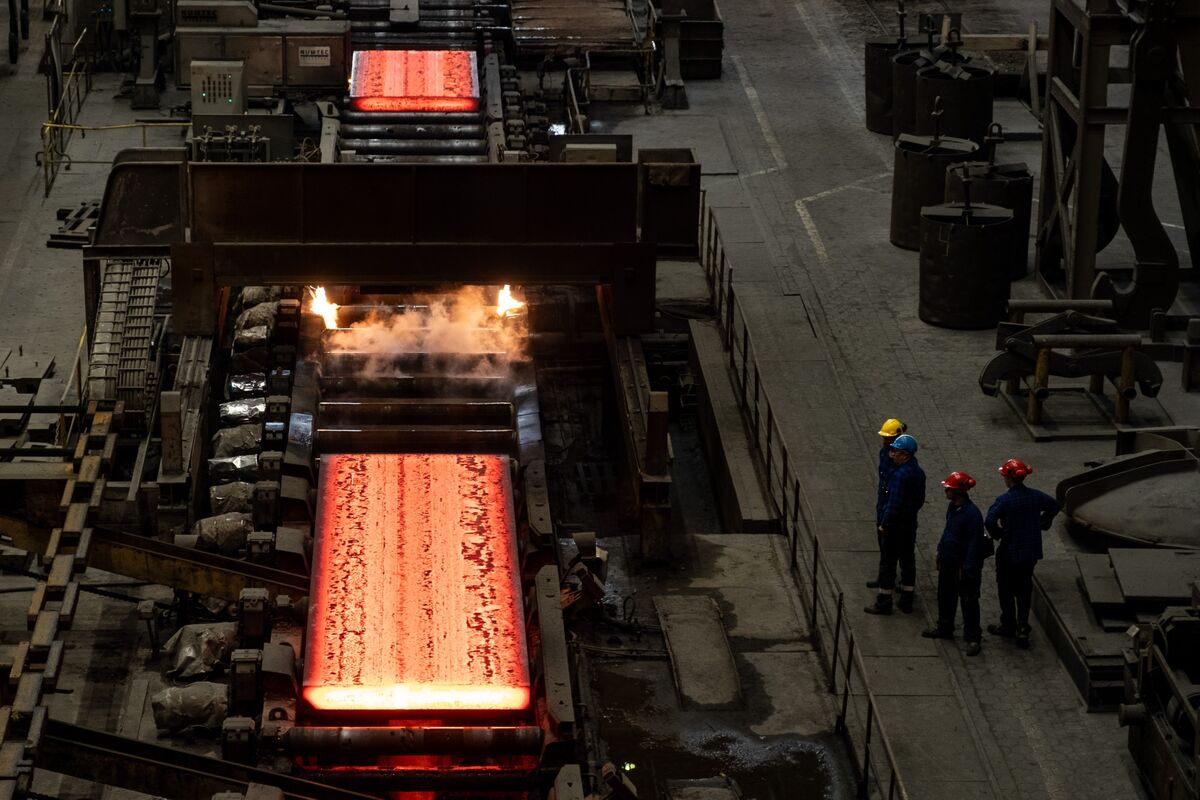
The EU’s antitrust chief rejected a U.S. demand to roll back the bloc’s digital/tech rulebook as part of a deal to lower U.S. steel and aluminum tariffs, despite U.S. Commerce Secretary Howard Lutnick saying the U.S. would offer a “cool steel and aluminum” agreement in exchange for regulatory changes. The dispute leaves in place U.S. levies — currently a 50% tariff on European metal imports — maintaining trade tensions that could weigh on European metals exporters and complicate transatlantic regulatory cooperation.
Market structure: The maintained 50% U.S. tariff preserves pricing power for U.S. steel/aluminum producers and keeps a structural margin gap vs European exporters, supporting a potential 10–25% U.S. price premium vs EU-origin metal over the next 3–12 months. EU exporters face demand re-routing, excess domestic supply risk and margin compression, which favors vertically integrated domestic miners/processors and raises inventory risk for EU-listed names. Cross-asset: expect modest EUR weakness (1–3% downside vs USD if talks stall longer than 90 days), wider peripheral–core sovereign spreads by 5–20bps, and support for base metals downside pressure in European cash markets while U.S. domestic scrap spreads firm.
Risk assessment: Tail risks include escalation to broader retaliatory tariffs or WTO complaints that could hit autos and machinery (high-impact, <20% probability over 12 months) and EU regulatory decoupling from U.S. tech that could raise compliance costs for multinationals (medium-impact, multi-year). Time horizons: knee-jerk moves in days; earnings and order-book effects in 1–3 quarters; structural supply-chain reallocation over 1–2 years. Hidden dependencies: downstream demand (construction, autos) cyclical weakness could blunt tariff benefits; inventory gluts in EU could create a delayed price shock if exports redirect elsewhere.
Trade implications: Favor U.S. steel/aluminum producers over EU exporters — position to capture domestic price spread and order-book reallocation. Use relative-value shorts on EU-exposed materials and longs on U.S. integrated producers; hedge FX and sovereign spread exposure. Options use 3–9 month expiries to capture policy resolution risk and volatility spikes tied to negotiation windows (next 30–90 days).
Contrarian angles: Consensus underestimates the ability of EU exporters to reroute volumes to Asia/ME, which could limit price moves — meaning short positions on EU names may be partially priced-in and require careful sizing. Historical parallel: 2018 U.S. tariffs produced a rapid price spike then normalization within ~12 months as supply chains adapted; similarly, a patient, event-driven approach (90–180 days) will avoid getting squeezed by short-term headline noise. Unintended consequence: accelerated non-EU supply growth (Turkey/India) could structurally cap long-term price upside in metals despite transatlantic frictions.
AI-powered research, real-time alerts, and portfolio analytics for institutional investors.
Request DemoOverall Sentiment
mildly negative
Sentiment Score
-0.25
