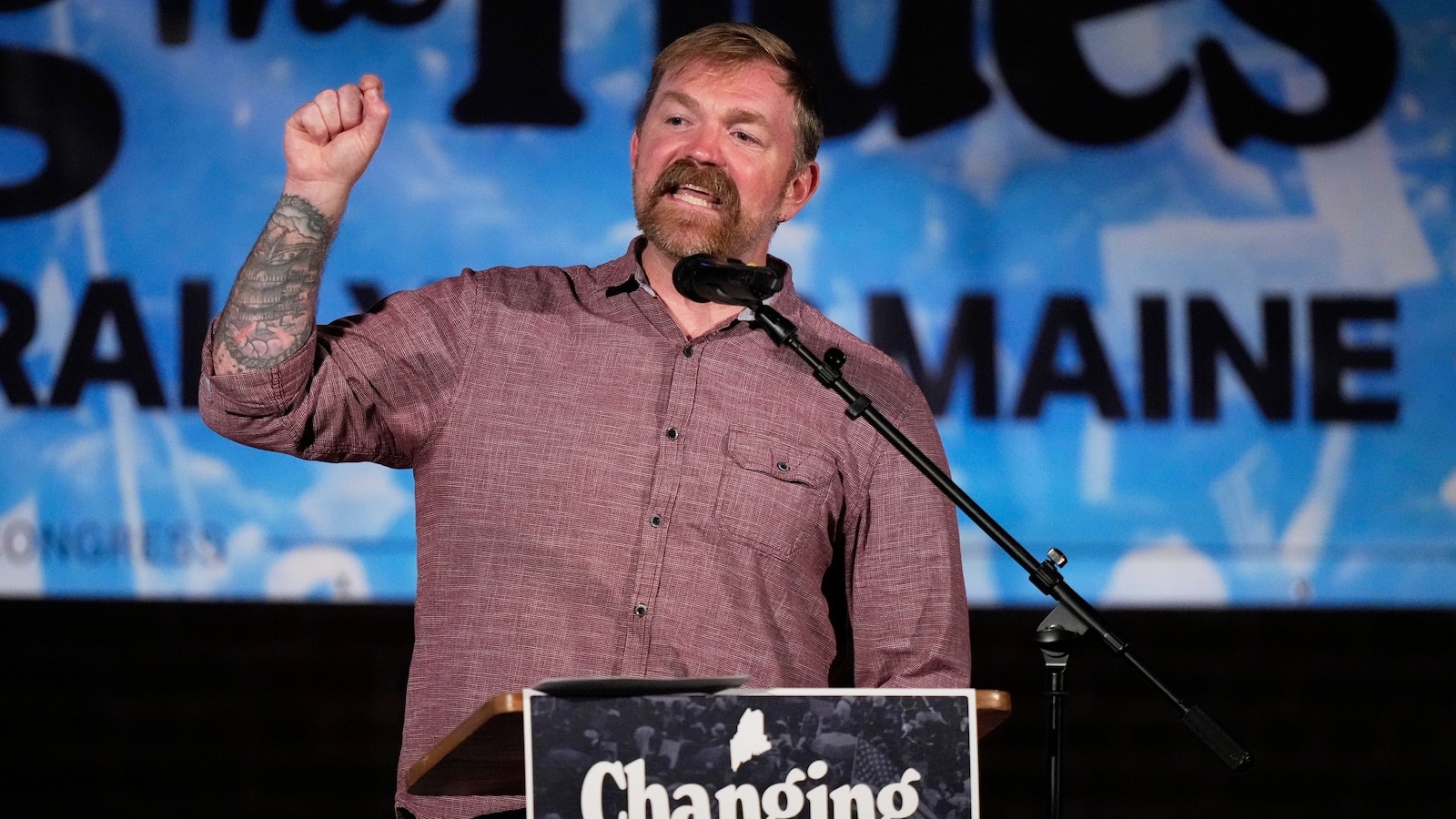
Graham Platner's Maine Senate campaign is under pressure after new reports alleged sexually explicit text messages and troubling past behavior, adding to earlier controversy over online comments and a Nazi-linked tattoo. Some Democrats say they will not support him, while others remain committed or reluctantly supportive because they still see him as the best chance to defeat Susan Collins. The episode creates reputational risk for the campaign and could affect Democratic primary and general election dynamics, but it is unlikely to have broader market impact.
The immediate market implication is not the election itself but the rising probability of a messy Democratic primary-to-general-election transition in Maine. That typically hurts the front-runner’s ability to consolidate donors, field staff, and earned media, which increases the odds of a weaker nominee or depressed turnout versus a clean anti-incumbent narrative. For a sitting GOP incumbent like Collins, even a modest erosion in opposition enthusiasm can matter more than the exact polling delta because her path benefits from fragmentation, not necessarily a surge in Republican support.
The second-order effect is on Democratic national positioning: leadership is being forced to spend bandwidth on damage control rather than resource allocation, and that can leak into adjacent races where the party needs a disciplined message. The more the race becomes about candidate quality and personal conduct, the harder it is to convert a Senate contest into a referendum on affordability or governance, which is usually what helps challengers in a high-salience midterm environment. That dynamic also raises the odds of a late-cycle switch to an alternative or a de facto soft-landing narrative, both of which can suppress outside spending efficiency.
The key risk window is the next 2-8 weeks, when new allegations or defections can still alter donor behavior and volunteer intensity before general-election advertising ramps. If the story stabilizes and endorsements hold, the controversy can fade into background noise; if additional revelations land, the downside is nonlinear because voters already have a credibility discount and marginal disclosures become more damaging. The contrarian view is that the market may be overestimating how much virtue matters relative to partisan incentives in a polarized state, but that is only supportive if the campaign can rapidly reframe around competence and inevitability.
From an investable standpoint, this is a sentiment drag on the newsflow around NYT rather than a durable fundamental shock, but it can create short-lived attention spikes and higher volatility in political-media equities. The better trade is to treat this as a positioning event around election-cycle uncertainty, not an earnings event: controversy sustains clicks, but the incremental value is in repeat engagement and fast-turn readership, not in a clean trend thesis.
AI-powered research, real-time alerts, and portfolio analytics for institutional investors.
Request DemoOverall Sentiment
mildly negative
Sentiment Score
-0.25
Ticker Sentiment
