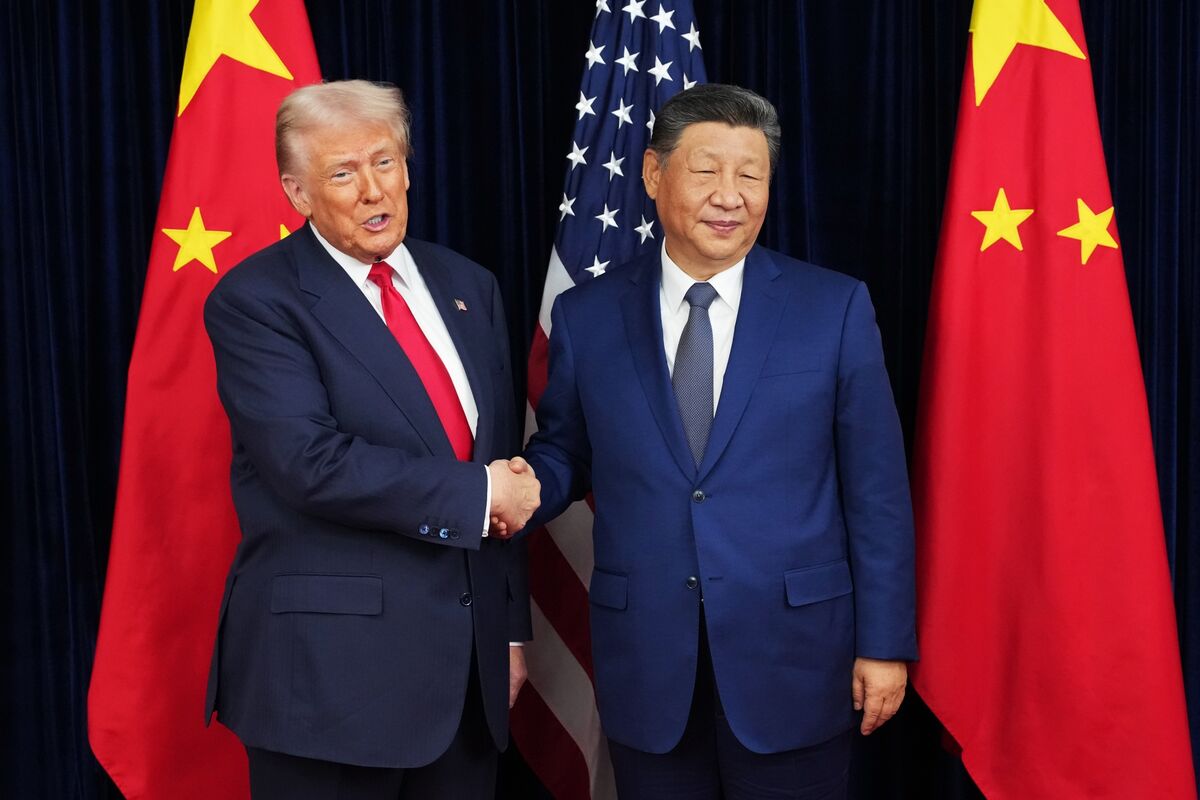
Taiwanese officials report an unexplained drop in People’s Liberation Army flights near the island, which Deputy Minister Shen Yu-chung says may reflect Beijing easing tensions ahead of an expected Xi-Trump summit in three weeks. If sustained, the reduction in PLA activity would lower near-term cross-strait military risk and could modestly ease geopolitical pressure on Asian markets and trade-sensitive sectors; monitor for confirmation and follow-up diplomatic or military moves.
If a temporary reduction in cross‑strait kinetic pressure persists, the most immediate market effect is a compression of political risk premia priced into Taiwan equities and global semiconductor supply‑chain stocks. A 25–50bp decline in a geopolitical risk spread (roughly equivalent to a 5–10% multiple re‑rating for a high‑quality fab like TSM) is plausible over 1–3 months as near‑term investment deferrals are re‑activated and inventory restocking resumes.
Second‑order winners include logistics and freight players that benefit from fewer routing constraints and lower war‑risk premiums: container slot re‑optimizations and resumed direct flight paths can shave days off lead times, translating into material working capital relief for OEMs in the near term (think high‑value chips with days saved, not just months). Insurers and specialty credit providers to Asia trade may see loss picks decline, which should lift credit spreads modestly across Taiwan SME borrowers over 3–6 months.
Tail risks remain asymmetric. A swift reversal — tactical redeployment, a high‑profile incident, or a collapsed diplomatic window — would re‑inflate vols and force rapid margin calls on levered Taiwan/semicap longs; that reversal risk is highest in the next 30–90 days. Over a multi‑year horizon the structural trend toward diversification and selective onshoring remains intact, so any near‑term re‑rating is likely partial and vulnerable to policy setbacks.
Consensus is underweight the “calm before redeployment” scenario: markets may price sustained normalization too quickly and ignore Chinese strategic playbooks that trade short tactical de‑escalations for longer‑term leverage. We should therefore capture near‑term upside while keeping asymmetric protective hedges active rather than assuming full decoupling reversal.
AI-powered research, real-time alerts, and portfolio analytics for institutional investors.
Request DemoOverall Sentiment
neutral
Sentiment Score
0.00
