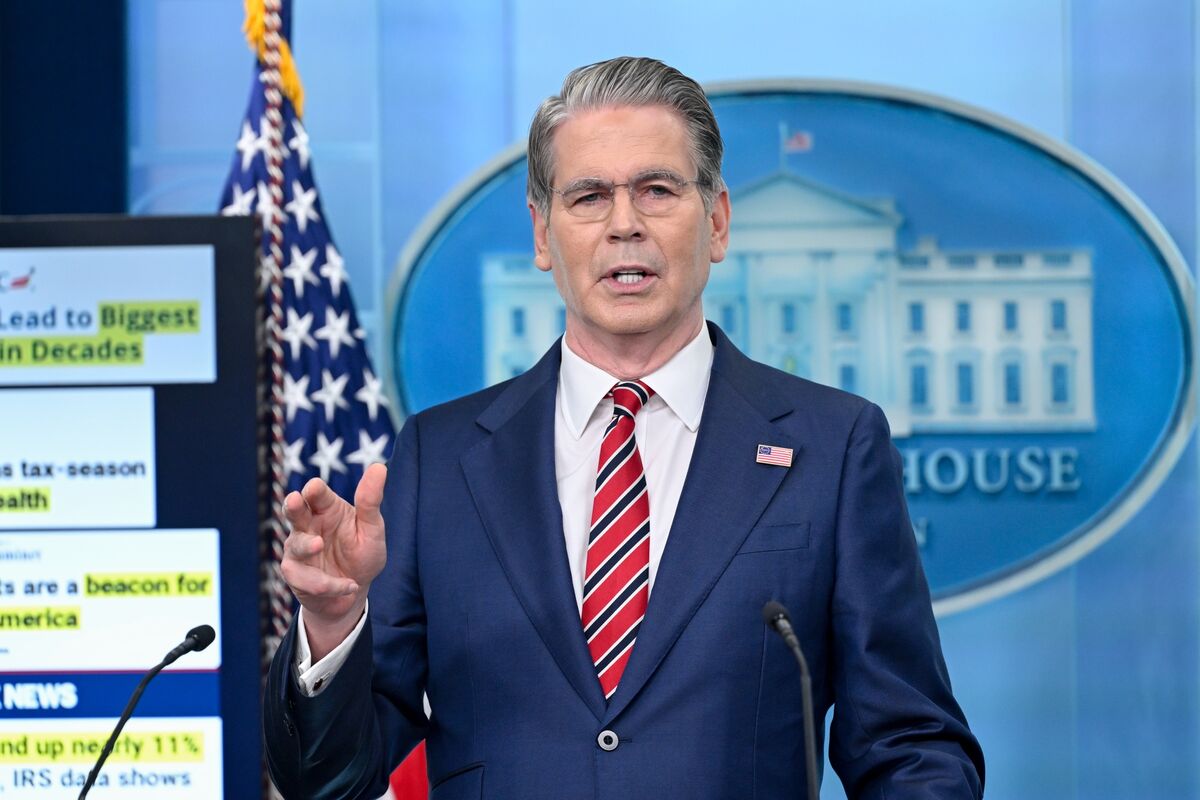
The article highlights growing frustration among global officials that US engagement on the international economic system has not matched prior assurances from Treasury Secretary Scott Bessent. It frames this against a worldwide energy crisis, suggesting weaker US leadership and coordination at a time of elevated global stress. The piece is largely thematic and political rather than event-driven, limiting direct near-term market impact.
The real signal here is not diplomatic optics, but the growing mismatch between global energy stress and Washington’s willingness to spend political capital to relieve it. That creates a slow-burn bullish setup for producers with discretionary supply and political insulation, while punishing import-dependent economies through higher input costs, weaker margins, and more pressure on fiscal balances. In practice, the first-order beneficiaries are domestic hydrocarbon cash flows; the second-order winners are shipping, LNG logistics, and any upstream asset with short-cycle optionality.
The biggest loser is probably the policy transmission itself: when the US is seen as less dependable, allies accelerate hedging behavior, which means more bilateral commodity deals, more strategic stockpiling, and more fragmented trade flows. That tends to lift the value of reliability over efficiency, which is mildly inflationary and supportive for hard-asset exposures over a 6-18 month horizon. It also raises the probability that energy becomes a campaign issue, increasing the chance of headline-driven intervention in strategic reserves, sanctions, or permitting.
The contrarian risk is that the current tension is mostly rhetorical and can reverse quickly if growth softens or energy prices spike enough to force coordination. If Washington wants to restore credibility, the easiest lever is signaling on supply expansion or selective sanctions relief, which would compress the geopolitical risk premium fast. So the trade is less about a secular regime shift and more about exploiting a window where policy inconsistency is widening the discount applied to non-US supply chains.
From a timing perspective, this is a days-to-months catalyst for volatility in energy and FX, but a months-to-years tailwind for asset-light energy producers and LNG infrastructure. The market is probably underpricing how often domestic politics will override multilateral energy management in an election cycle, which should keep volatility elevated even if outright prices do not trend sharply higher.
AI-powered research, real-time alerts, and portfolio analytics for institutional investors.
Request TrialOverall Sentiment
mildly negative
Sentiment Score
-0.15
