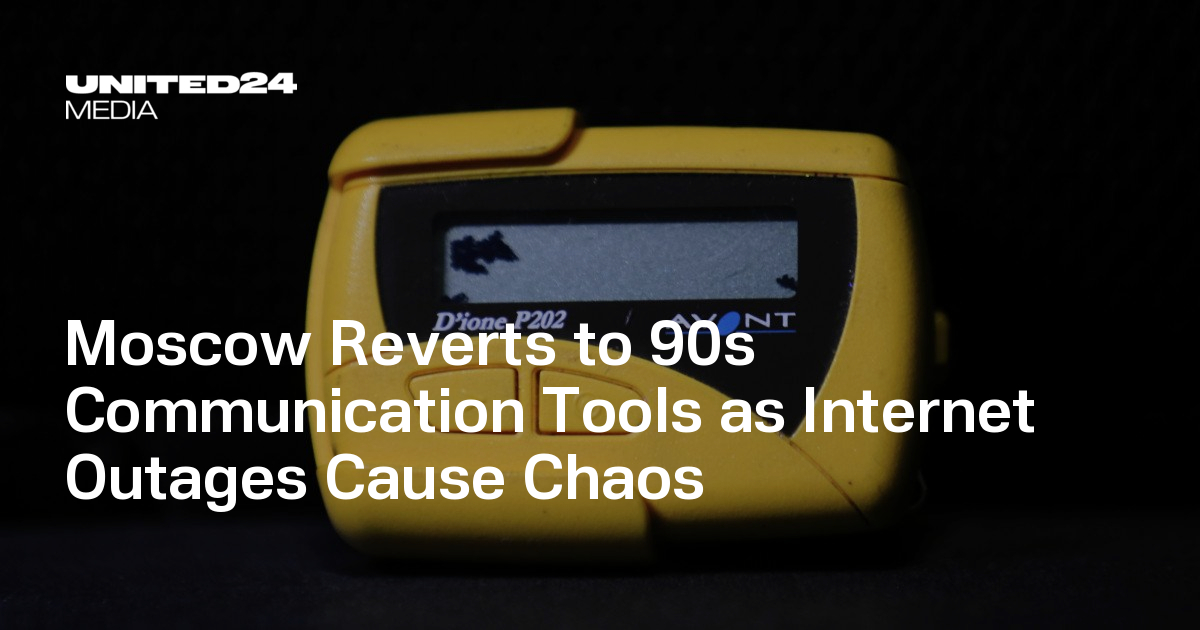
Sales of alternative comms surged: pagers +73%, radios +27%, landline phones +25% and city atlases/guides +48% (Mar 6–10 vs prior period) as Moscow faced mobile internet outages starting Mar 3. Outages persisted five days through Mar 10 across nearly all administrative districts, disrupting couriers, taxis, car-sharing and retail and generating estimated daily economic losses up to $12.5 million. Regulators have tightened controls: telecoms disabled 18.45 million SIMs in 2025 at Roskomnadzor's request (a 76% y/y rise), with authorities justifying shutdowns on security grounds linked to Ukraine.
The immediate market consequence is not just a one-off bump in legacy hardware sales but a signal that centralized, state-controlled network interruptions are becoming a recurring operational risk for urban services. Firms that rely on always-on mobile data (ride-hailing, on-demand delivery, card-not-present payments) will suffer compound revenue and margin hits because manual fallbacks are lower-margin and slower; expect 5-20% daily fulfilment cost inflation for courier/taxi operators during multiday outages.
A second-order supply effect is inventory reallocation and channel stress: suppliers of low-tech comms (analogue radios, simple GSM/DECT handsets, satellite terminals) are low-volume niche manufacturers with limited global capacity, so short-term price spikes and re-shoring of procurement are likely; distributors with flexible sourcing and existing stock can capture outsized margins for weeks. Over months, regulators pushing “whitelisted” internets and tighter SIM controls create a demand bifurcation — closed-state telecom infrastructure (domestic suppliers, DPI/censorship tech) will see structural budget reallocation, while open-internet resilience vendors (satellite, enterprise VPN, enterprise security) win outside the affected jurisdiction.
Tail risks skew large: escalation to nationwide, prolonged shutdowns (weeks+) would meaningfully depress urban GDP components and push more activity underground (cash, informal logistics), raising credit and FX stress in affected markets. Conversely, a quick policy reversal or rapid import bans on hardware would compress the analog supplier upside and instead create black-market substitution, muting public-market plays. Time horizons: immediate revenue shocks in days-weeks; procurement and capex reallocation play out over 3–12 months; structural vendor/technology winners are a 1–3 year story.
AI-powered research, real-time alerts, and portfolio analytics for institutional investors.
Request DemoOverall Sentiment
moderately negative
Sentiment Score
-0.45
