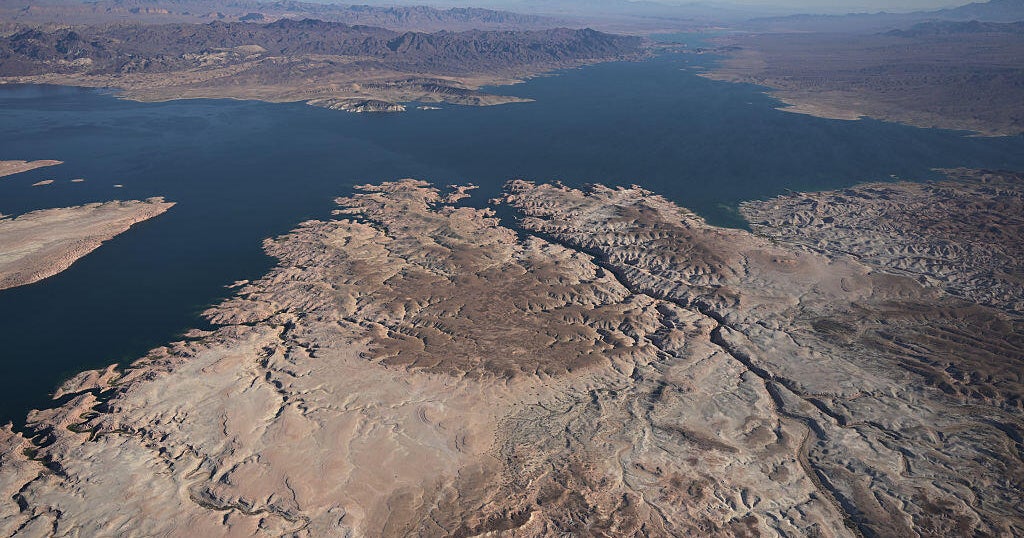
The Colorado River crisis threatens water access for roughly 40 million people across the West, with record-low Rocky Mountain snowpack pushing Lake Mead and Lake Powell toward critically low levels. Federal officials are releasing billions of gallons into Lake Powell to protect hydropower, while Arizona, California and Nevada are considering emergency conservation measures and possible mandatory cuts. With operating rules expiring later this year, upcoming Bureau of Reclamation decisions could materially affect farming, hydropower and municipal water supply across the region.
The market underestimates how quickly water scarcity can become an earnings problem rather than a policy headline. The first-order hit is obvious for agriculture, but the bigger second-order effect is that forced allocation cuts will likely reprice the entire Southwest as a constrained-input economy: higher municipal water rates, higher power costs if hydro output is curtailed, and rising capex for utilities, municipalities, and industrial users forced to retrofit reuse systems. That creates a slow-burn inflation impulse concentrated in exactly the regions most exposed to population growth and data-center demand.
The most interesting transmission channel is electricity reliability. If reservoir levels keep deteriorating, hydropower becomes a less dependable peaking resource, which increases reliance on gas-fired generation and raises balancing costs for utilities with heavy Southwest exposure. That is bullish for natural gas midstream and dispatchable power assets, but bearish for grid-dependent local businesses that assumed cheap, steady power would persist. The timing matters: summer is the catalyst window, with bureau allocation decisions likely to create a binary shift in sentiment before year-end.
A second-order beneficiary set is water infrastructure and reuse technology: treatment, leak detection, desalination, and industrial recycling vendors should see a multi-year capex cycle if emergency restrictions become permanent. The consensus likely focuses too much on the near-term relief from weather and too little on regime change; one good snow event does not offset the structural mismatch between runoff, demand, and reservoir operating rules. The real tail risk is not a gradual squeeze but a coordination failure that forces ad hoc cuts, which tends to be more disruptive to farm output, power markets, and municipal budgets than a negotiated rationing framework.
AI-powered research, real-time alerts, and portfolio analytics for institutional investors.
Request DemoOverall Sentiment
strongly negative
Sentiment Score
-0.72
