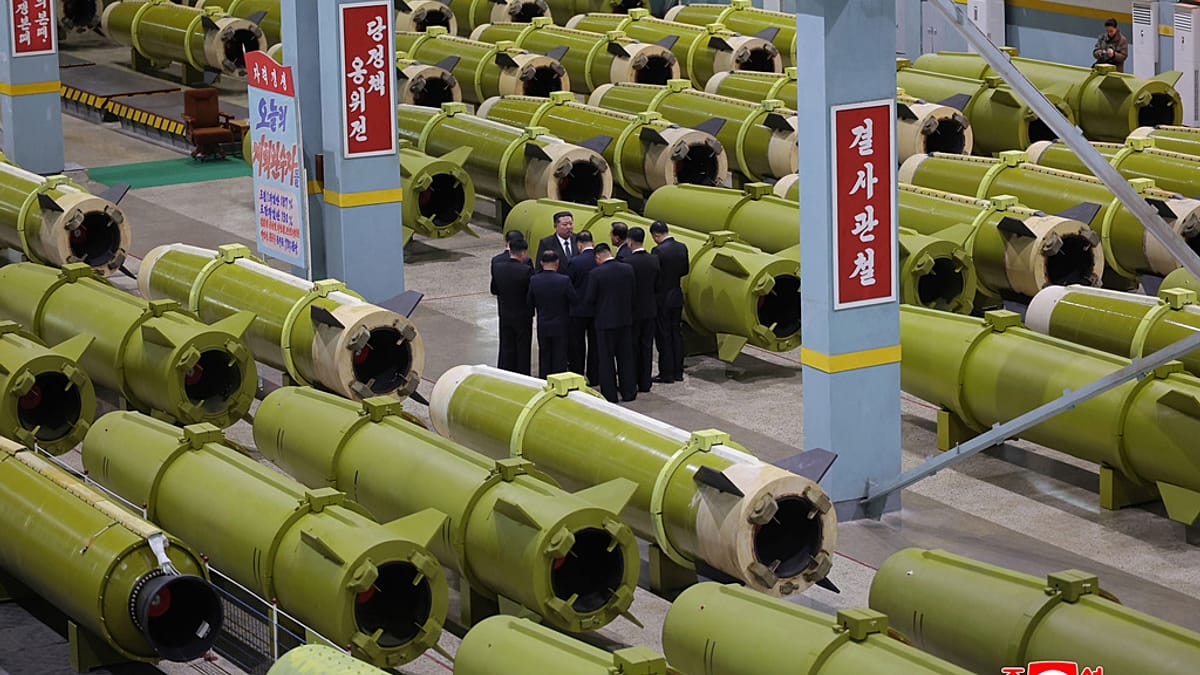
North Korean leader Kim Jong-un has ordered a significant ramp‑up of missile and munitions production in 2026, directing existing factories to boost output and instructing construction of new ammunition plants to meet anticipated military requirements. The move comes amid intensifying ties with Russia — including reported arms transfers and troop deployments — and follows international monitoring that classifies the Russia–North Korea military relationship as sanction‑evading; Pyongyang also released images of a near‑complete nuclear‑powered submarine that may be sea‑tested within months. The developments heighten regional geopolitical risk, reinforce enforcement and sanction‑monitoring tail risks, and could affect defense supply chains and related market positioning.
Market structure: The immediate winners are aerospace & defense primes (Lockheed LMT, Raytheon/RTX, Northrop NOC, General Dynamics GD) and specialty munitions/chemicals and commodity suppliers (MP Materials MP, Cleveland‑Cliffs CLF) that provide steel, propellant precursors and guidance components. Losers include regional tourism/airlines (JETS) and insurers/shippers exposed to Korean peninsula escalation risk; expect elevated lead times for shells/rocket motors and 3–12 month price pressure on steel and specialty chemicals.
Risk assessment: Tail risks include rapid escalation triggering tightened sanctions/secondary sanctions on banks/shippers (low probability, high impact), cyber retaliation, or a surge in Russian procurement that draws harsher Western export controls. Immediate market moves (days) will be risk‑off; weeks–months bring procurement/contracts and budget responses; quarters–years see capex for new plants and durable supply‑side shifts. Hidden dependencies: defense primes rely on dual‑use suppliers (semiconductors, machine tools) that could be restricted rapidly.
Trade implications: Tactical long exposure to defense ETFs (ITA/XAR) and selective primes (LMT, RTX) is favored over cyclicals; pair trade long ITA vs short JETS for relative safety. Use defined‑risk options (3–6 month call spreads 5–15% OTM) to capture upside while capping premium. Commodity/SMB plays: add targeted exposure to MP and CLF with 6–18 month horizons to capture material tightness; size positions 1–3% each.
Contrarian angles: Consensus overweights big primes; underappreciated are small munitions makers, specialty chemicals and reinsurers that will see rate repricing if losses spike. Reaction may be underdone in commodities and overdone in legacy primes if sanctions fragment supply chains; historical parallel: 2014 Crimea—defense stocks rallied but suppliers experienced erratic delivery and margin pressure. Key catalysts to watch: UN sanctions updates, DoD budget amendments, and satellite imagery of ship movements within 30–90 days.
AI-powered research, real-time alerts, and portfolio analytics for institutional investors.
Request DemoOverall Sentiment
moderately negative
Sentiment Score
-0.45
