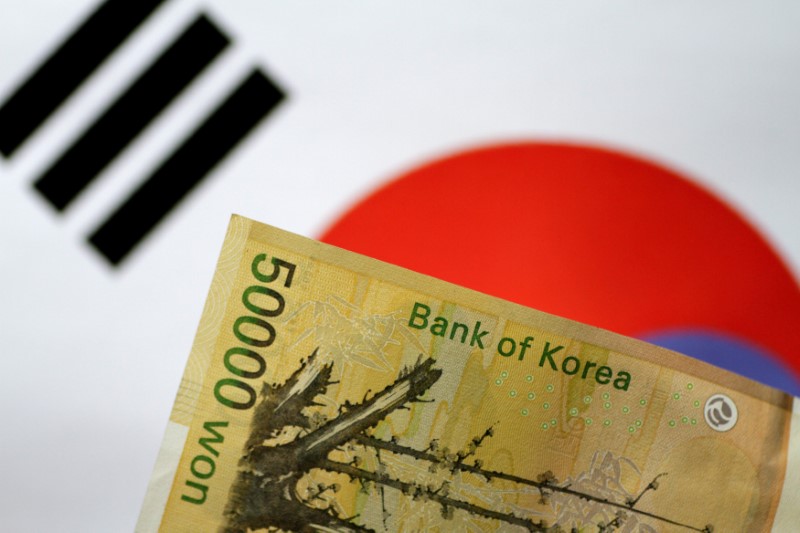
Hot April U.S. CPI rose 3.8% y/y, pushing traders to price out any Fed rate cut this year and lifting the dollar and Treasury yields. Asian currencies were broadly flat to weaker, with USD/JPY up 0.1%, USD/KRW flat after a 1.3% jump, and USD/INR at a record 95.7375 before easing to 95.68. Markets also watched Trump’s May 13-15 Beijing visit and rising Middle East tensions, including disrupted Strait of Hormuz oil flows and crude above $100/bbl.
The immediate market read-through is not “China optimism” but a sharper split between semiconductor demand and supply-chain leverage. Nvidia’s presence in the Beijing meetings lowers the probability of a broad-based tech decoupling in the near term, but it also raises the odds of more explicit export-control bargaining: that tends to help the most strategically indispensable vendors while pressuring second-tier suppliers that rely on China exposure without similar pricing power. In that sense, NVDA is less a pure beneficiary of easing tensions than a relative winner in a regime where policy uncertainty stays high and customers continue to front-load purchases before any new restrictions.
The bigger macro effect is that hotter inflation and firmer yields increase the hurdle rate for duration-sensitive growth, which means any geopolitical relief in semis may be partially offset by multiple compression. That creates a two-factor setup: near-term upside from headline diplomacy, but medium-term downside if Treasury yields keep grinding higher and the market starts discounting slower enterprise capex in AI infrastructure. The most vulnerable names are hardware adjacencies with weaker margins and less unavoidable demand, where any China-specific normalization can reverse quickly if talks disappoint.
Contrarian read: the market may be overestimating how much this visit can improve the policy backdrop for chips, and underestimating how much it can worsen the long-run bargaining position of U.S. tech firms by making them appear central to trade negotiation. If the meetings produce only symbolic progress, the event can become a classic sell-the-news setup for semiconductor beta over the next 1-2 weeks. The more durable trade is not directional China optimism, but dispersion within AI: companies with stronger pricing power and cleaner balance sheets should outperform if rates stay elevated and geopolitical noise persists.
AI-powered research, real-time alerts, and portfolio analytics for institutional investors.
Request DemoOverall Sentiment
mildly negative
Sentiment Score
-0.15
Ticker Sentiment
