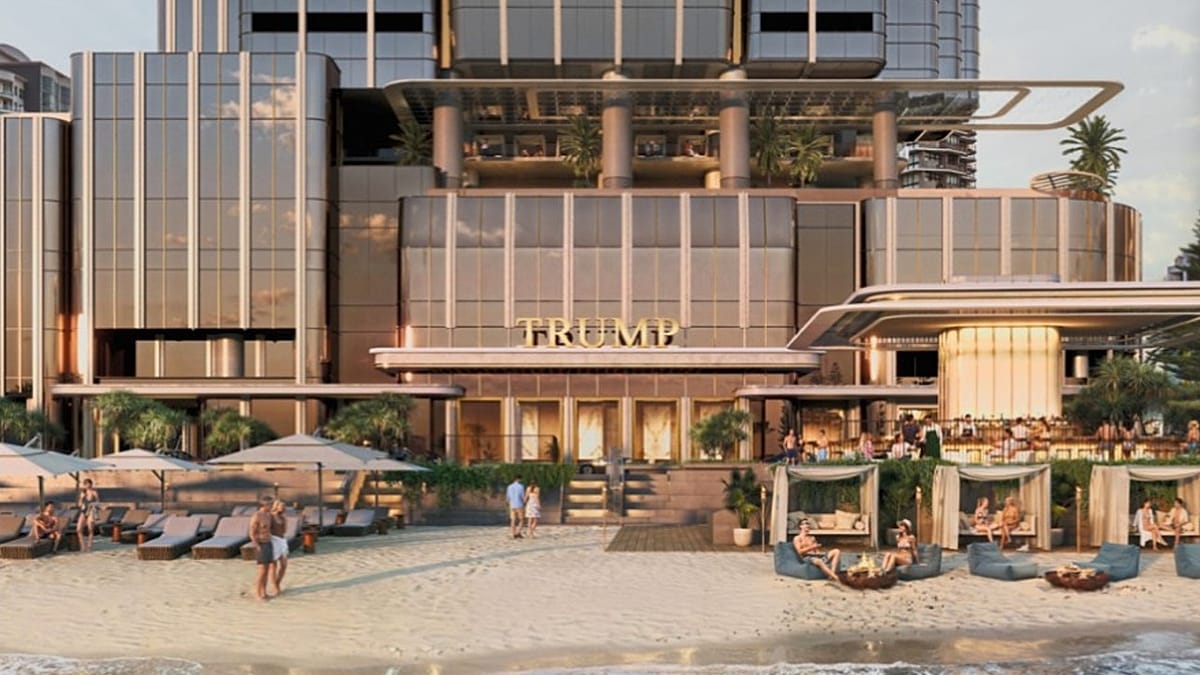
The planned $1.1 billion, 91-storey Trump hotel and apartment tower on Australia’s Gold Coast has been scrapped, with the developer citing the Trump brand as "toxic to Australians." Altus Property Group says it still intends to proceed with the development under another brand, while the Trump Organization said the project depended on unmet licensing obligations. An anti-Tump petition drew more than 124,000 signatures, underscoring local reputational and political headwinds rather than broad market implications.
This is less a one-off branding headline than a signal that politically charged consumer perception is now a real underwriting variable for trophy real estate and hospitality licensing. The immediate loser is the sponsor/brand owner, but the bigger damage sits with any project that relies on pre-sales, condominium branding, or foreign capital that can be delayed by reputational friction; financing terms for similar mixed-use towers can widen quickly if lenders see activist pressure translating into slower absorption or permit risk.
Second-order beneficiaries are neutral luxury flags and local developers with cleaner brand equity. A reflagging to a non-political luxury operator should improve terminal value and reduce sales friction, but it likely comes with a higher royalty/equity share to secure the name, so the sponsor may give back economics to de-risk execution. For competitors, the takeaway is that in politically polarized markets, brand optionality is now worth more than a few points of headline recognition.
The catalyst horizon is months, not days: the key variable is whether the project can secure a replacement brand and preserve lender appetite. The tail risk is that public opposition broadens from brand stigma into municipal or planning delays, which would impair land value and timing even if the tower is eventually salvaged. The contrarian read is that the reputational hit may be over-discounted for non-U.S. buyers who care more about design, location, and occupancy than politics; if the replacement brand is strong, the asset itself may re-rate back toward luxury-peer benchmarks.
For investors, the cleanest expression is not a direct trade on the project, but on related names where political controversy can alter project economics: offshore luxury hotel operators, branded-residence platforms, and developers with similar presale exposure. The lesson is that execution risk in high-end hospitality is increasingly driven by social license, not just construction and demand.
AI-powered research, real-time alerts, and portfolio analytics for institutional investors.
Request DemoOverall Sentiment
moderately negative
Sentiment Score
-0.35
