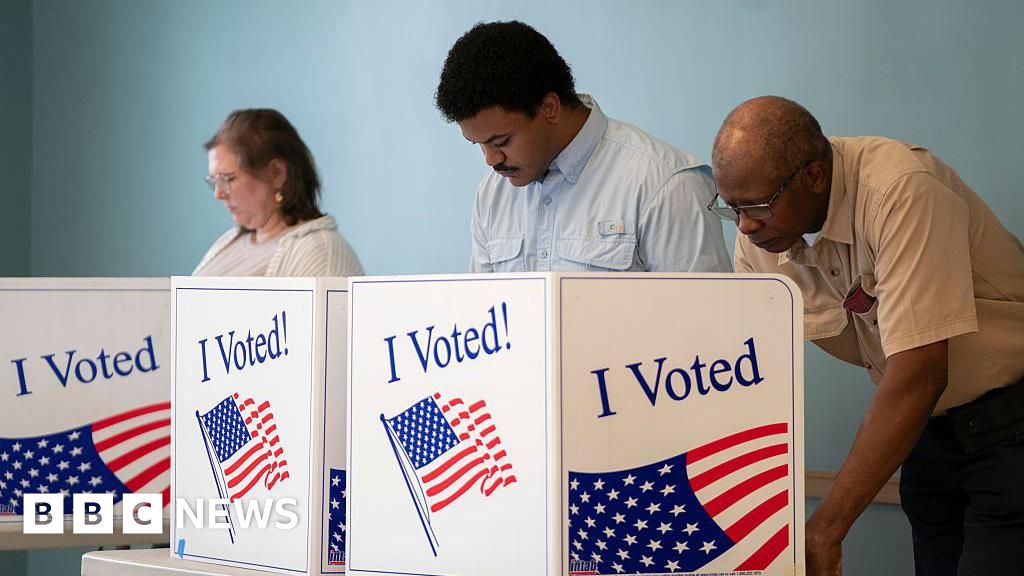
South Carolina Republicans blocked a Trump-backed redistricting plan, preserving Rep. Jim Clyburn’s seat and limiting GOP chances of gaining another House seat ahead of the November midterms. An Alabama federal court also temporarily blocked a GOP map it found racially discriminatory, reinforcing legal resistance to redistricting efforts in the South. The broader fight over congressional maps remains active in several Republican-led states, including Florida, Tennessee, Mississippi, and Texas.
The market implication is not the headline-level House math; it is the growing probability of a legally messy, state-by-state map reset that extends election uncertainty well into Q3. That tends to raise the “policy volatility” premium across sectors exposed to federal spending, antitrust, healthcare reimbursement, and defense appropriations because control of the House becomes less about ideology and more about litigation timing and procedural leverage. In practice, that can keep rotation into election hedges alive even if polls are unchanged, because the path to a durable majority is now more contestable and more delay-prone.
The second-order winner is the legal-services and election-adjacent compliance ecosystem, but the larger investment angle is that the Supreme Court’s recent posture increases the odds that future redistricting disputes migrate from political to judicial arenas. That favors firms and strategies that monetize procedural uncertainty: appellate law specialists, political-data vendors, and event-driven desks positioned around injunctions and emergency rulings. It also subtly benefits incumbents with localized donor networks, since prolonged map instability encourages both parties to concentrate money into a smaller set of district-level battles.
The main contrarian point is that consensus may be overestimating the immediacy of any House majority shift and underestimating institutional drag. Even aggressive redistricting can be neutralized by court stays, deadlines, and the practical constraints of drawing maps around already-begun voting, so the tradable impact may arrive in bursts rather than as a clean regime change. That argues for trading volatility around legal catalysts, not for a blanket directional bet on one party’s legislative agenda being fully realized before the midterms.
AI-powered research, real-time alerts, and portfolio analytics for institutional investors.
Request DemoOverall Sentiment
neutral
Sentiment Score
-0.05
