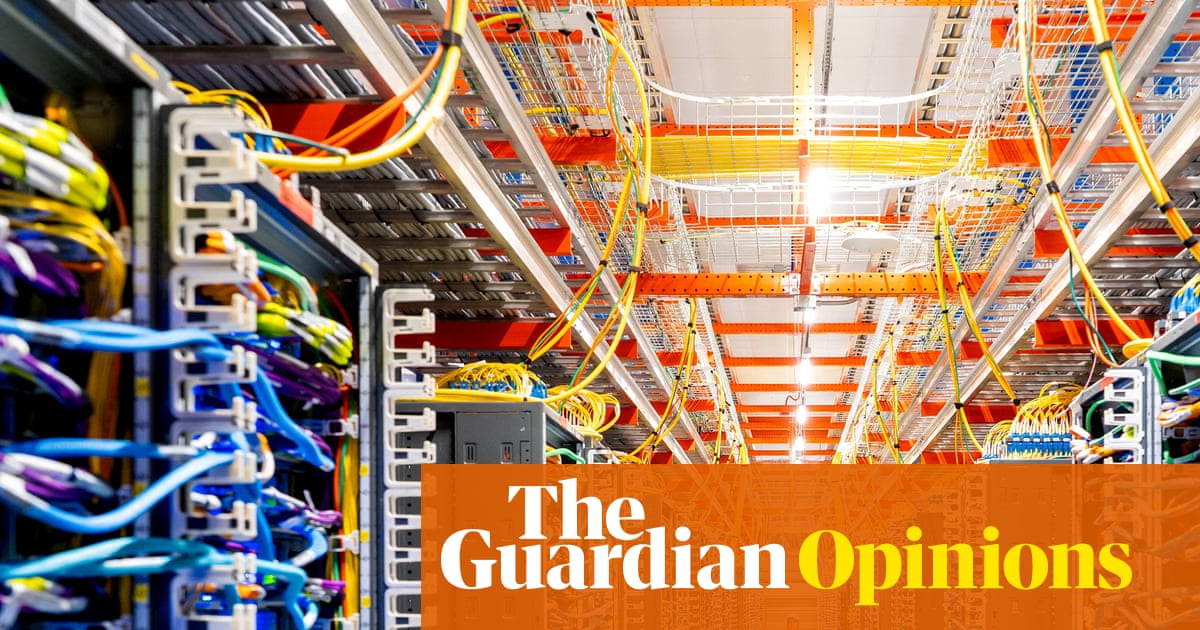
The article argues that local and state opposition blocked or stalled about 48 datacenter projects worth an estimated $156bn in 2025, with 2026 expected to bring even more resistance. It frames the anti-datacenter movement as a growing political and regulatory risk for AI infrastructure, citing Maine’s moratorium attempt, Bernie Sanders and Alexandria Ocasio-Cortez’s national pause proposal, and widespread local bans or cancellations. The piece suggests rising opposition could constrain AI expansion, intensify policy scrutiny, and become a key issue in the midterms and 2028 election cycle.
The investable takeaway is not that AI demand is slowing; it is that hyperscale buildout is moving from a pure capex cycle into a permitting-and-politics bottleneck. That tends to hit the ecosystem in sequence: land/options and local contractors first, then power/electrical equipment, then the platform winners only if delays become material enough to defer training capacity and enterprise rollouts. The market is likely still underpricing how many projects can slip by 6-18 months without being cancelled, which matters more for near-term sentiment than for ultimate secular demand.
META and GOOGL are better insulated than the article implies because their AI monetization depends more on software and distribution than on incremental third-party datacenter approvals. The bigger second-order risk is to third-party compute-dependent models and to suppliers levered to rapid site conversion, grid interconnects, transformers, cooling, and power management. BX is a softer read: the real exposure is not the headline AI narrative, but the financing and asset-marking assumptions embedded in data-center heavy private credit/real asset strategies if local opposition pushes out lease-up and raises project IRRs.
PLTR is the most vulnerable symbolically and tactically because it sits at the intersection of AI enthusiasm, government access, and surveillance backlash. Even if fundamentals are not directly impaired, the stock is exposed to a narrative reset: any regulatory headline can compress multiple faster than earnings revisions do. The contrarian point is that a broader moratorium regime could end up entrenching incumbents rather than stopping AI, because only the largest players can absorb permitting friction, utility negotiations, and compliance overhead.
The market may be overestimating the probability of a clean anti-AI policy wave and underestimating the chance of selective carve-outs that favor hyperscalers and defense-linked use cases. That makes this more of a relative-value story than a blunt sector short: look for dispersion between large-cap platform names and overowned AI-adjacent beneficiaries. Near term, sentiment should trade off election headlines and local permitting fights; over 6-12 months, grid-capacity constraints and capex reprioritization will matter more than ideology.
AI-powered research, real-time alerts, and portfolio analytics for institutional investors.
Request DemoOverall Sentiment
mildly negative
Sentiment Score
-0.15
Ticker Sentiment
