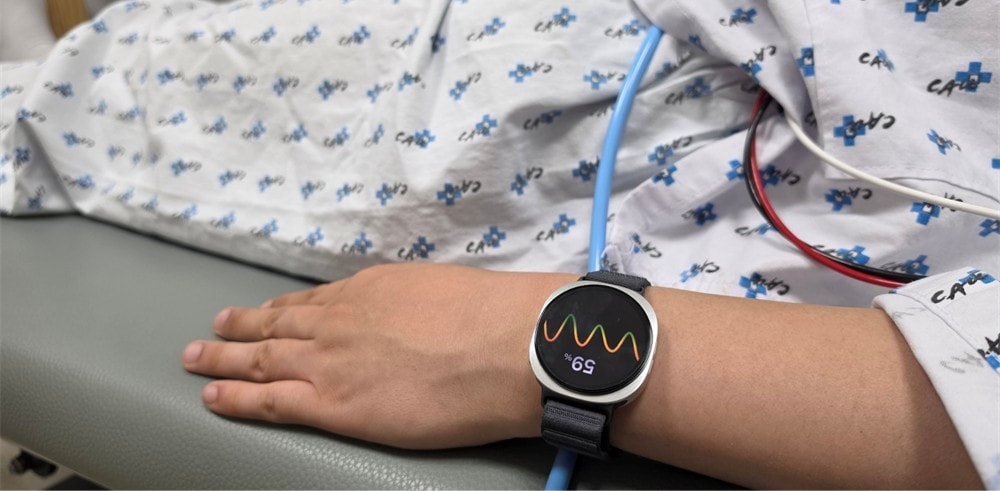
Samsung said the Galaxy Watch6 predicted vasovagal syncope up to 5 minutes in advance with 84.6% accuracy in a joint clinical study with Chung-Ang University Gwangmyeong Hospital. The result suggests commercial smartwatches may be able to support real-time health warnings and shift wearable healthcare toward preventive care. The findings were published in European Heart Journal-Digital Health, but the immediate market impact appears limited.
This is less a near-term revenue event than a credibility milestone for consumer health computing. The first-order winner is Samsung’s ecosystem: the watch becomes a higher-attachment-rate device if it can justify a recurring health-monitoring use case, which supports upgrade cycles and raises switching costs versus Android wearables with weaker sensor/AI differentiation. The second-order beneficiary is likely the broader digital health stack—if a mainstream smartwatch can surface actionable pre-symptom alerts, insurers and employers may eventually underwrite adherence and fall-prevention programs, expanding the addressable market beyond fitness.
The commercial risk is that clinical validation does not automatically translate into mass adoption. False positives are the key friction: if alert fatigue is high, engagement will collapse and the feature becomes a novelty rather than a retention lever. That matters because the monetization window is months-to-years, not days; the market will likely re-rate only if Samsung shows real-world performance in ambulatory settings, integration with emergency response, and evidence that the alert actually reduces injury claims.
Competitively, this raises the bar for Apple, Google/Fitbit, and Garmin to defend the premium wearable category on health utility rather than hardware specs. The more important second-order effect is on component and software partners: improved PPG/HRV algorithms can create a funnel for more sensor-rich wearables, benefiting OEMs and med-tech AI vendors with regulatory-grade data pipelines. The contrarian view is that the stock reaction may be underwhelming because investors have seen many “breakthrough” wearables claims fail at the reimbursement and behavioral-change stage; the real value accrues only if Samsung can convert clinical proof into a sticky subscription or enterprise health product.
For risk, watch for three failure modes: poor false-positive rates in broader populations, regulatory/medico-legal scrutiny once alerts are treated as safety devices, and a lag between capability and commercialization. If any of those surface, the story reverts to incremental product marketing rather than platform expansion. The upside catalyst is a follow-on study in free-living conditions showing that alerts reduce injuries or EMS calls over 6–12 months, which would be the first credible path to monetization.
AI-powered research, real-time alerts, and portfolio analytics for institutional investors.
Request DemoOverall Sentiment
mildly positive
Sentiment Score
0.42
