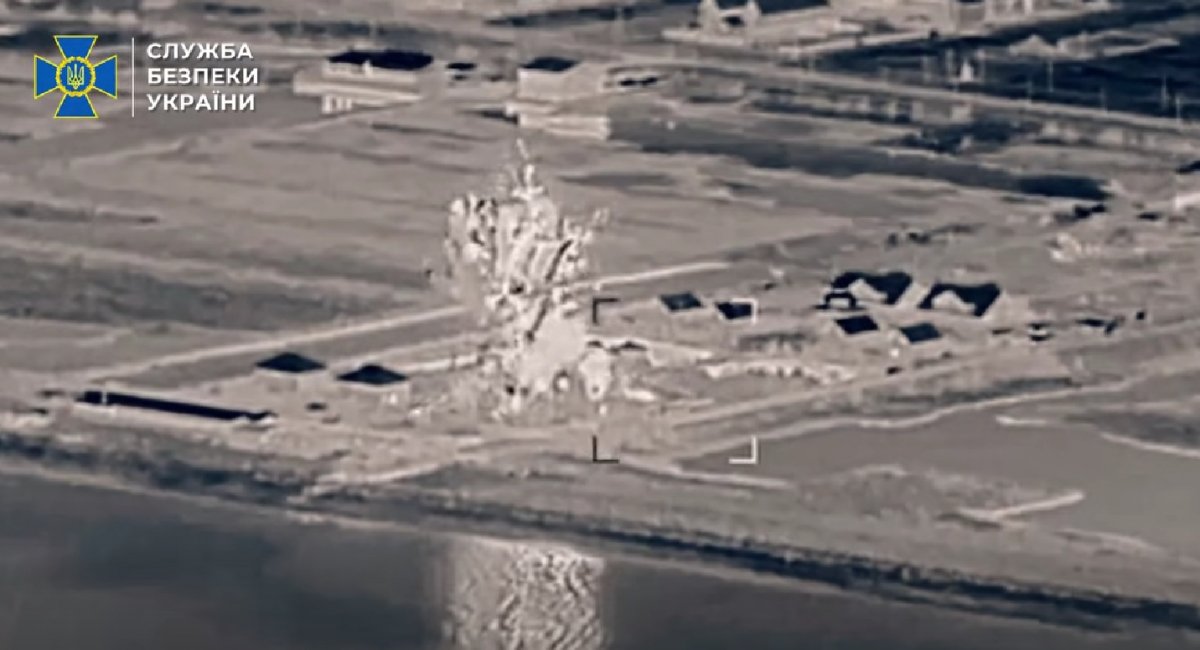
Ukraine says its Alpha Special Operations Center destroyed the Russian FSB headquarters and a Pantsir-S1 air-defense system in occupied territory, with estimated Russian losses of about 100 killed or wounded. The report underscores continued deep-strike operations against Russian rear targets and reinforces war-related risk, but it is unlikely to have an immediate direct market impact beyond defense and regional sentiment.
This reinforces that the war is increasingly becoming a contest of rear-area vulnerability rather than front-line attrition. The second-order effect is a higher baseline of operational friction for Russian air defense, logistics, and command-and-control, which forces more dispersion, redundancy, and electronic warfare spend — all of which raise cost and reduce throughput over the next several months. That is mildly supportive for Western defense primes with air defense, counter-UAS, and munitions exposure, while being structurally negative for any industrial or commodity names tied to Russian reconstruction capacity.
The most important market implication is escalation risk, not immediate battlefield damage. Precision strikes on headquarters and air-defense assets increase the probability of a Russian response against Ukrainian critical infrastructure, which can create short bursts of risk-off in European assets, regional credit, and energy-sensitive sectors within days. Over a 1-3 month horizon, the main catalyst is whether these strikes measurably degrade Russian ability to defend occupied territory; if so, it raises the odds of additional sanctions, export controls, and faster replenishment orders for NATO suppliers.
The contrarian view is that the market may already be desensitized to headline escalation, underpricing the cumulative logistics degradation on the Russian side. If this becomes a persistent campaign rather than isolated events, the bigger trade is not a one-day volatility spike but a slow grind higher in defense procurement expectations and a slow grind lower in perceived Russian operational resilience. The main reversal risk is diplomacy or a pause in strike intensity, which would compress implied volatility and fade the premium in defense-related names within weeks.
AI-powered research, real-time alerts, and portfolio analytics for institutional investors.
Request DemoOverall Sentiment
moderately negative
Sentiment Score
-0.20
