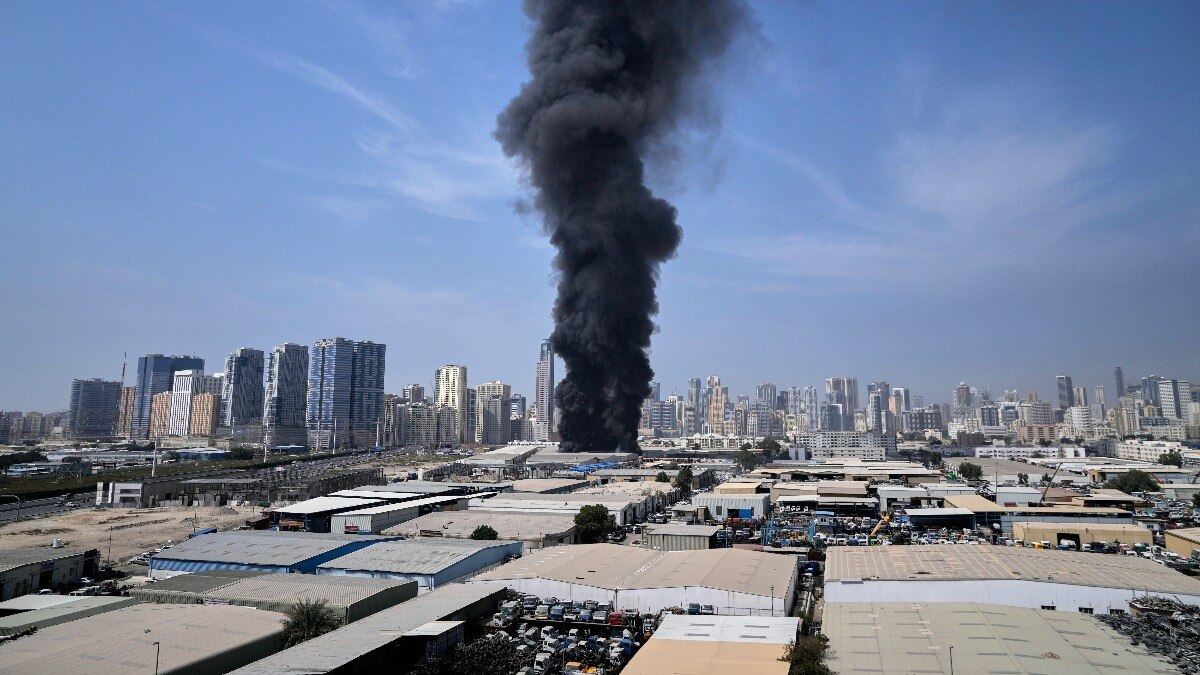
US crude oil has risen above $100/barrel amid escalating US-Israel-Iran hostilities, including a drone strike that hit a fuel tank near Dubai International Airport causing temporary suspension of flights. Israel reported destroying a plane used by Iran's Ali Khamenei; Fujairah port and other regional infrastructure have been struck, and the Strait of Hormuz faces potential disruptions as the US seeks a coalition to escort merchant shipping. India evacuated ~550 nationals from Iran and regional air defences (UAE, Bahrain, Iraq) are actively intercepting missiles/drones, signaling heightened shipping and insurance costs and material upside risk to energy prices and supply-chain congestion.
This shock is behaving like a supply-chain tax on hydrocarbon logistics: premiums for safe transit, war-risk insurance and longer voyage miles are being added on top of spot crude and product prices. Expect a durable wedge between Brent and inland benchmarks as freight bottlenecks and tanker re‑routing raise delivered cost into Asia by an incremental $2–$6/bbl over the next 30–90 days, keeping refinery margins uneven regionally and advantaging exporters with direct pipeline or LNG capacity.
Second-order winners are marine and tanker equity cashflows (higher TCE rates) and the largest integrated producers who can flex supply into tight markets; losers are passenger airlines, airfreight-sensitive goods and thin‑margin refiners exposed to high feedstock costs. Container and break-bulk shippers will face 10–20% longer transit times on reroutes around the Cape, which materially increases working capital needs for importers in EMs and is likely to push short-term freight indices higher, amplifying inflation in traded goods over the coming quarters.
Tail risks skew to kinetic escalation and wider port closures — a multi-week blockade or broader Gulf choke would push structural oil risk premia toward $20/bbl, while a credible de‑escalation (diplomatic ceasefire or coordinated SPR release) could erase much of the upside within 30–90 days. For portfolio construction, prefer balance-sheet resilient names that convert higher spot prices into free cash quickly and avoid firms where variable costs (jet fuel, shipping fuel) dominate EBITDA in the near term.
AI-powered research, real-time alerts, and portfolio analytics for institutional investors.
Request DemoOverall Sentiment
strongly negative
Sentiment Score
-0.80
