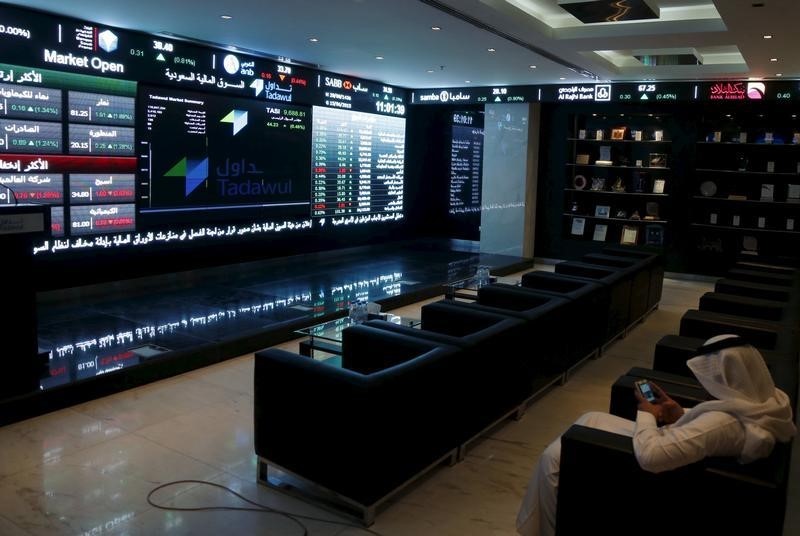
JPMorgan downgraded MSCI UAE from Overweight to Neutral, removed all three UAE stocks from its CEEMEA Top 10 and added Al Rajhi Bank to the Saudi-heavy Top 10, citing elevated investor risk. The bank flagged higher foreign ownership in UAE, Dubai reputational risk after a 2-day market closure and 5% daily trading limits, and prefers low‑beta Saudi large caps (e.g., Aramco), telecoms, higher‑quality Saudi banks and FAB, and UAE utilities over Saudi mid‑caps and UAE real estate. JPMorgan's base case is another 2–4 weeks of fighting; a longer conflict would likely depress regional equities and support higher energy prices.
UAE-listed equities are uniquely exposed to a liquidity mismatch: high foreign ownership plus episodic trading limits create compressed onshore supply when non-resident sellers try to exit, producing gap risk on re-openings that can magnify moves beyond fundamental earnings hits. Expect short-term realized volatility to overshoot implied vol (i.e., one-way flow driving skew) and create opportunities for sellers of skew and buyers of outright downside protection in Dubai-linked real estate names.
Higher regional energy prices act as a dual-edged sword — supporting sovereign balance sheets and large integrated exporters while increasing insurance/shipping costs and tourist/retail headwinds that disproportionately hit Dubai’s commerce-and-tourism-facing economy. A 100–200bp widening in UAE corporate/sukuk spreads is plausible within 1–3 months under sustained uncertainty; for a levered developer this could translate into tens of millions in extra annual interest expense, forcing capex cuts or asset disposals that pressure mid-cap equity valuations.
Key catalysts and horizons: days—newsflow (ceasefire, strikes, supply disruptions) will drive headline volatility; weeks—forced re-pricing from foreign outflows and any index rebalancing (MSCI/FTSE reviews) will determine direction; months—credit market repricing and real economic impact on tourism/hospitality will set valuation floors. Reversals come from credible de-escalation, targeted onshore liquidity support, or coordinated energy reserve releases capping oil; absent these, expect a multi-week regime of Gulf equity dispersion with Saudi large caps and banks structurally more resilient.
AI-powered research, real-time alerts, and portfolio analytics for institutional investors.
Request DemoOverall Sentiment
mildly negative
Sentiment Score
-0.45
Ticker Sentiment
