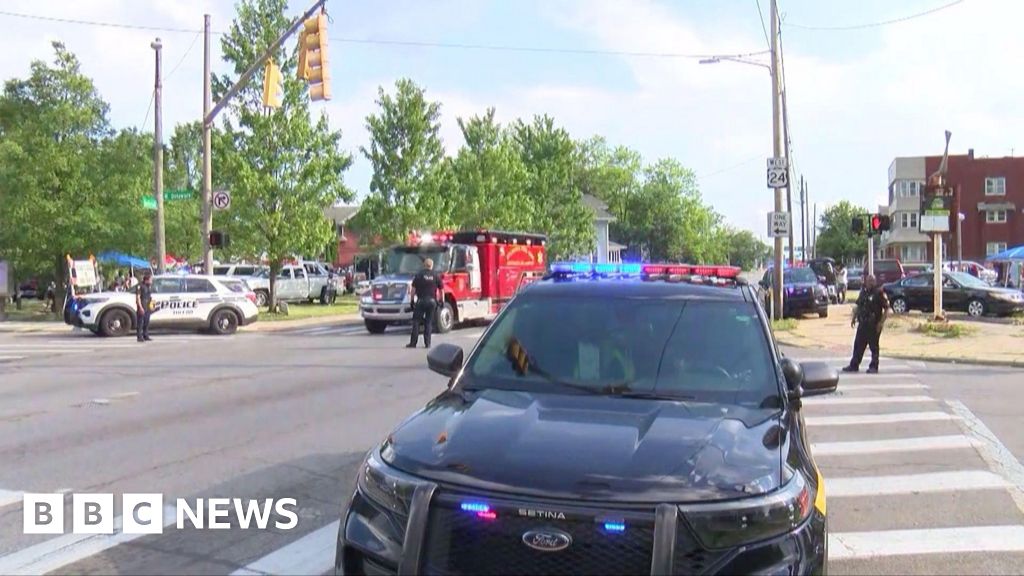
At least 12 people were shot near the Old West End Festival in Toledo, Ohio, with 10 reported in stable condition and 2 in critical condition. Police said two suspects appear to have fired at each other, and the investigation is focused on the Delaware Avenue and Robinwood Avenue area. The incident is a violent public-safety event with limited direct market impact, though it may draw attention to local security and civic event safety.
The direct market read is not on named equities but on risk perception around urban safety, municipal liability, and consumer mobility in discretionary leisure venues. The first-order hit is local and temporary, but the second-order effect is broader: incidents at public festivals tend to raise perceived “friction” for family attendance, event staffing, and insurance pricing across similar outdoor gatherings for the next several weeks. That can translate into softer foot traffic for nearby food, beverage, rideshare, and last-mile hospitality demand in the affected region, even if national travel data never budges.
The more durable channel is political rather than economic. High-visibility domestic violence near a family event tends to reinforce legislative pressure around policing budgets, surveillance infrastructure, and public-space security contracts over a 3-12 month horizon. That creates a subtle winner set in security systems, body-worn cameras, incident-response software, and municipal contractors, while regional festival operators and venue owners may face higher compliance costs and liability insurance renewals into next cycle.
Consensus often overweights the headline and underweights the procurement response. These events rarely impair aggregate leisure spending, but they do tend to accelerate spending on fixed security capex, which is stickier and more predictable than sentiment-driven attendance. The contrarian point is that the trade is usually not to short “travel/leisure” broadly; the better expression is to own the picks-and-shovels of security and local infrastructure resilience while fading any knee-jerk selloff in national consumer names.
Catalyst timing matters: the next 1-2 weeks are about local headlines and political reaction, while the 1-2 quarter window is about budget revisions, insurance quotes, and procurement awards. If the investigation reveals a failure of event security protocol or a repeat incident in another city, the policy response could broaden faster than expected, supporting a re-rating in public-safety spend.
AI-powered research, real-time alerts, and portfolio analytics for institutional investors.
Request DemoOverall Sentiment
strongly negative
Sentiment Score
-0.85
