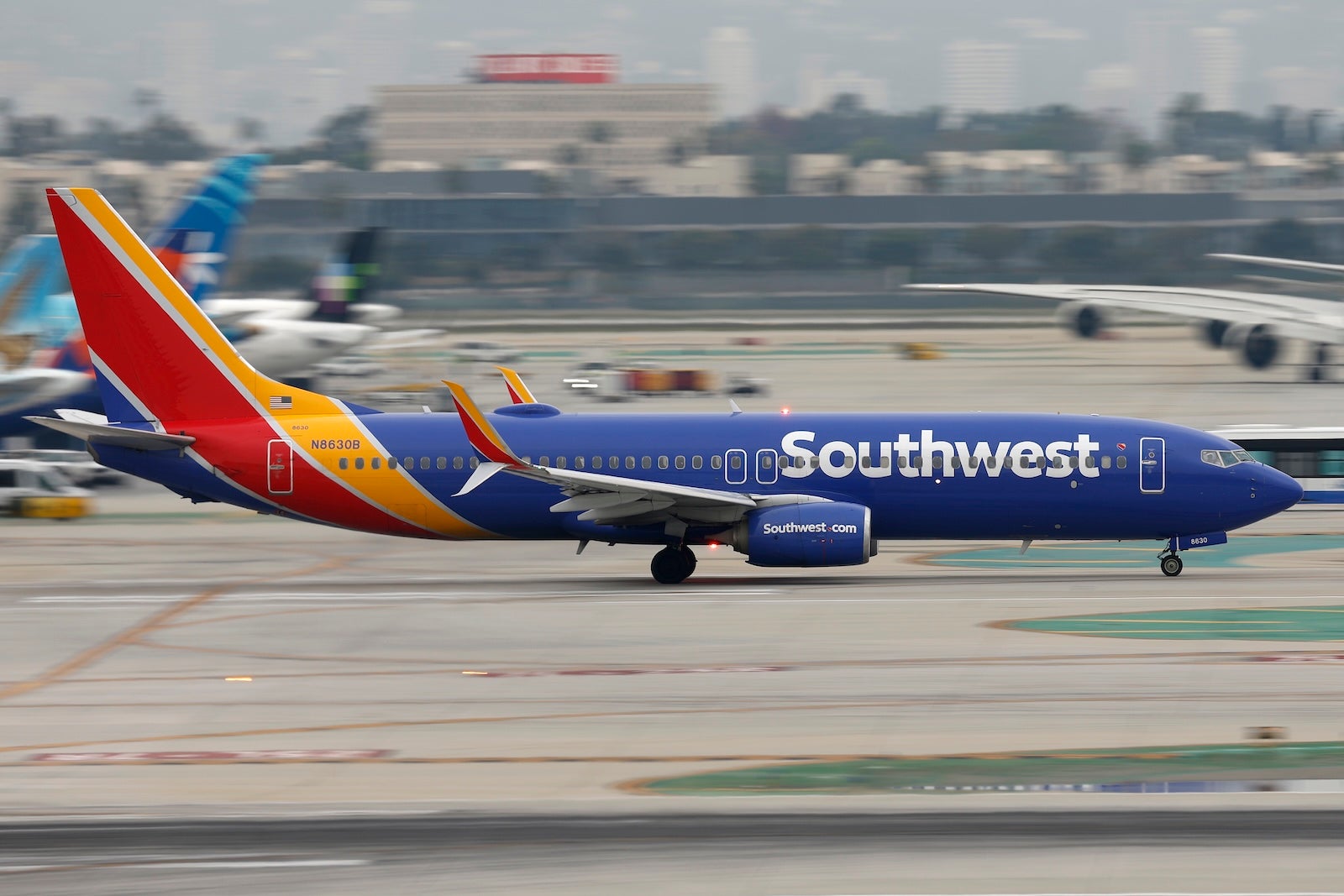
Southwest will end service to Chicago O'Hare (ORD) and Washington Dulles (IAD) effective June 4, exiting a five-year ORD experiment and closing its three gates there. Management positions the moves as network refinement amid a push for profitability while planning modest capacity growth of 1–2% YoY in Q1 and pursuing revenue initiatives (seat assignments, bag fees, potential first-class and lounges). The ORD exit may free gate space for American and United amid FAA flight caps, while Southwest will lean on Midway (MDW) where it will operate >90% of departures; IAD traffic will shift toward BWI/DCA. Affected passengers are offered free rebooking to nearby airports or full refunds (IAD→BWI/DCA/PHL/RIC; ORD→MDW/IND/MKE).
This is a classic reallocation of scarce airport real estate into incumbent hub carriers’ hands, creating near-term pricing power at constrained airports. With FAA activity limits and summer scheduling lock-ins, expect a 1–3% lift to PRASM in the affected city-pairs for the next 1–3 quarters as competitors plug capacity and prioritize higher-yield frequencies.
For Southwest, concentration into stronger bases and revenue initiatives (premium seats, bag fees, lounges) lowers the marginal return threshold for marginal routes but raises unit-cost complexity. Over a 6–12 month horizon, densification can plausibly shave CASM on core base flying by a few dozen basis points while simultaneously increasing breakeven fares on thin transits populated by lower-yield leisure traffic.
Second-order effects run through the airport ecosystem and the leasing market: gate churn favors carriers with ready aircraft and crew flexibility, creating short windows where leasing markets and regional partners command higher rates. Airport concession and parking revenues will see asymmetric local impacts (small airports losing service can see double-digit declines in summer foot traffic), which in turn pressures local authorities to bid or rebate — an operational cost that incumbents with scale can force onto municipalities.
Key near-term catalysts that could reverse or amplify this move are summer schedule filings (weeks), FAA slot/cap decisions (days–weeks), and quarterly guidance from the three carriers (1–3 months). A policy or competitive counteroffer that preserves service would flip the profit capture quickly; absent that, expect incremental margin capture for hub incumbents through the peak travel season.
AI-powered research, real-time alerts, and portfolio analytics for institutional investors.
Request DemoOverall Sentiment
neutral
Sentiment Score
0.00
Ticker Sentiment
