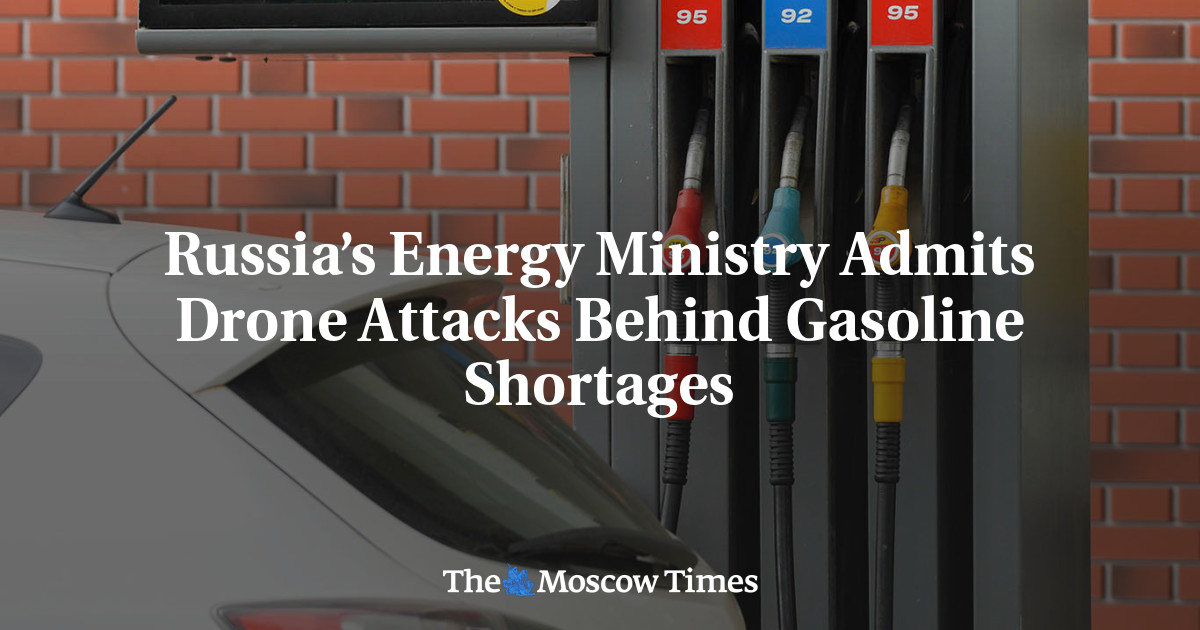
Ukraine’s drone strikes have disrupted Russian refinery output and are being blamed by Russia’s Energy Ministry for gasoline shortages in annexed Crimea and parts of southern Russia. Average gasoline prices in Russia are up 4.8% year to date to 67.83 rubles per liter, while diesel is averaging 79.46 rubles per liter and fuel exports remain banned through July 31. The disruptions are forcing Russia to cut June crude exports and redirect supply to domestic refineries, underscoring escalating energy-supply risk from the war.
This is less a localized fuel hiccup than a signaling event that Russia’s domestic refining network is now a live wartime target. The second-order effect is margin compression across the entire Russian downstream complex: when product availability tightens, the state tends to ration retail first, then force crude diversion into refineries, and finally absorb the hit through export curbs and price controls. That sequence is negative for upstream monetization, because it turns higher crude output into lower-value domestic product and increases logistical inefficiency.
The immediate winners are non-Russian refined-product exporters in nearby arbitrage corridors, especially refiners with access to Atlantic Basin and Middle East supply chains. If Russia is forced to keep more barrels at home, regional gasoline and diesel cracks can tighten even if headline Brent is unchanged, which benefits complex refiners in Europe, India, and the Gulf more than pure upstream names. The less obvious loser is any economy already sensitive to transport fuel inflation; retail gasoline usually feeds into goods prices with a short lag, so this is a marginal but broad-based inflation impulse rather than just an energy headline.
The key catalyst window is days to weeks, not years: the market will react to whether the attacks keep disrupting refinery uptime and whether Moscow extends export restrictions or imposes deeper domestic controls. A meaningful de-escalation would require either improved air defense/interdiction or a shift in attack economics that makes strikes less sustainable. Absent that, the risk is a grinding deterioration in product availability that persists through the summer driving season and keeps Russian authorities trapped between inflation and shortages.
Consensus may be underestimating how much damage can come from product scarcity without a comparable move in crude benchmarks. If global crude stays range-bound while Russian gasoline/diesel cracks spike, energy equities may see a narrower, more selective trade than a broad oil beta move. That argues for owning refiners over producers and treating this as a relative-value, not outright commodity, event.
AI-powered research, real-time alerts, and portfolio analytics for institutional investors.
Request DemoOverall Sentiment
strongly negative
Sentiment Score
-0.55
