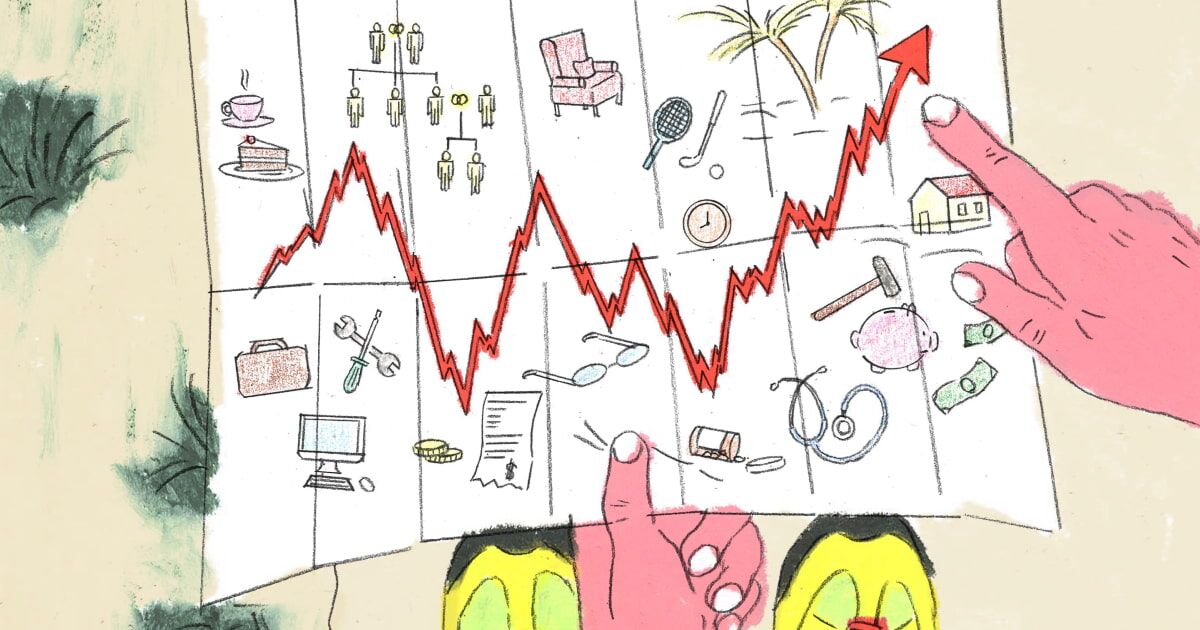
The five-year "red zone" around retirement (five years before to five years after stopping work) exposes savers to sequence-of-return risk: a prolonged downturn during this window can force sales at losses and permanently erode retirement savings. Stock-heavy savers who lack mitigation strategies face a materially lower standard of living; portfolio managers should consider de-risking glidepaths, maintaining cash buffers or income solutions to avoid forced sell-offs in that period.
A retirement “red zone” materially changes the market microstructure around drawdowns: concentrated selling by near-retirees and target-date funds tends to be non-linear and concentrated in the riskiest equity tranches, which amplifies downside liquidity gaps and pushes option skew and short-dated implied vol sharply higher. That creates a transient opportunity to hedge cheaply with long-dated, slightly OTM protection while selling expensive very short-dated hedges generated by panic rebalancing.
Second-order winners will be providers of guaranteed income and short-duration cash products — money-market ETFs and well-capitalized annuity writers can capture flood-in flows and widen spreads; losers are active managers forced into selling into weakness and any leverage providers (levered ETFs, margin lenders) that accelerate liquidations. On the market-structure side, dealers who absorb rebalancing flows will widen bid-ask and charge higher hedging costs, creating transient profit opportunities in flow-arbitrage and volatility-selling strategies once panic passes.
Key catalysts and timelines: a 10–20% equity drop over weeks (not months) is the highest-probability trigger that converts “sequence” worries into realized selling and a VIX term-structure inversion; Fed rate shocks or a sudden dislocation in short-term funding lines accelerate this within days. The contrarian angle: consensus underestimates the persistence of elevated short-dated implied vol — buying staggered, multi-tenor protection (longer-dated cheaper vols vs. front-month expensive vols) can be priced to produce positive asymmetric payoffs without killing carry if executed before rebalancing season peaks.
AI-powered research, real-time alerts, and portfolio analytics for institutional investors.
Request DemoOverall Sentiment
mildly negative
Sentiment Score
-0.30
