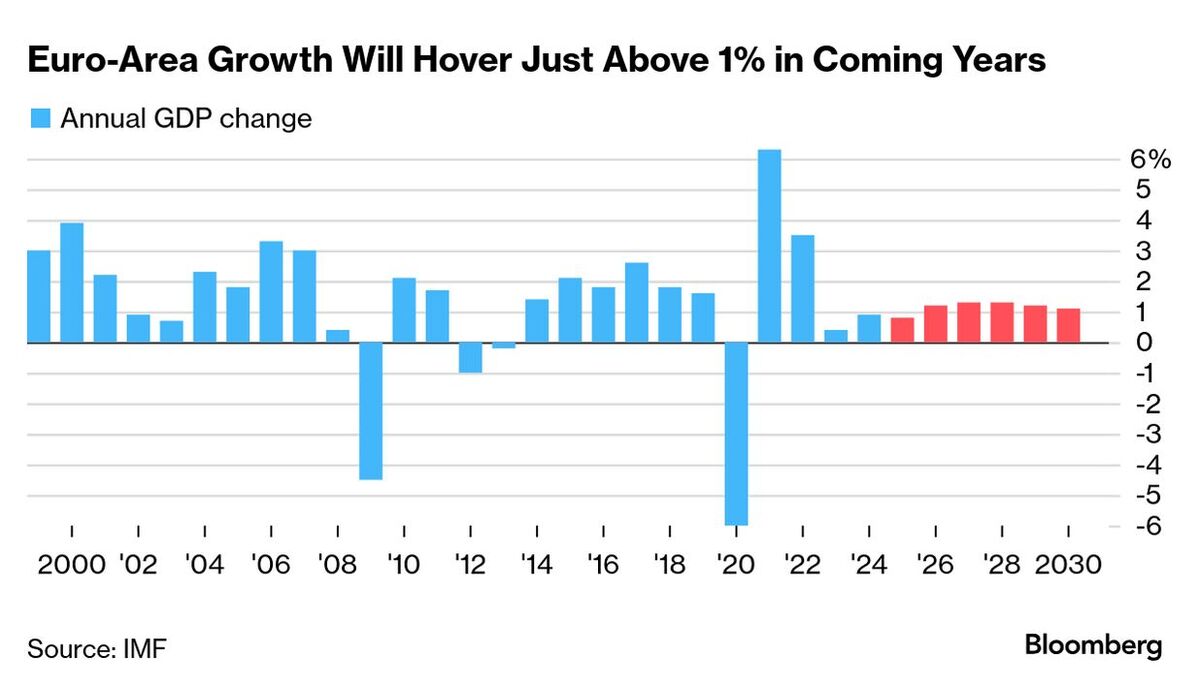
The IMF has warned that the Euro-zone risks stagnation due to slowing growth, weak investment, and geopolitical threats, projecting a growth of only 0.8% in 2025 despite low unemployment and near-target inflation. Trade tensions and low demand are cited as key factors choking economic momentum, with the IMF noting that risks are sharply tilted to the downside, signaling potential challenges for European markets and investments.
The International Monetary Fund's recent warning highlights a significant risk of economic stagnation for the Euro-zone, with projected growth at a mere 0.8% for 2025. This subdued outlook persists despite ostensibly positive conditions such as record-low unemployment and inflation levels nearing target. The IMF identifies several key headwinds contributing to this scenario, including slowing overall growth, persistently weak investment, escalating geopolitical threats, ongoing trade tensions, and subdued demand, all of which are collectively choking economic momentum. Crucially, the institution underscores that risks are tilted sharply to the downside, suggesting a fragile economic environment where negative shocks could have amplified impacts. This assessment aligns with a strongly negative sentiment and indicates a potentially challenging period ahead for the European economic bloc, driven by concerns around economic data, trade policy, geopolitical instability, and inflation dynamics.
AI-powered research, real-time alerts, and portfolio analytics for institutional investors.
Request DemoOverall Sentiment
strongly negative
Sentiment Score
-0.65
