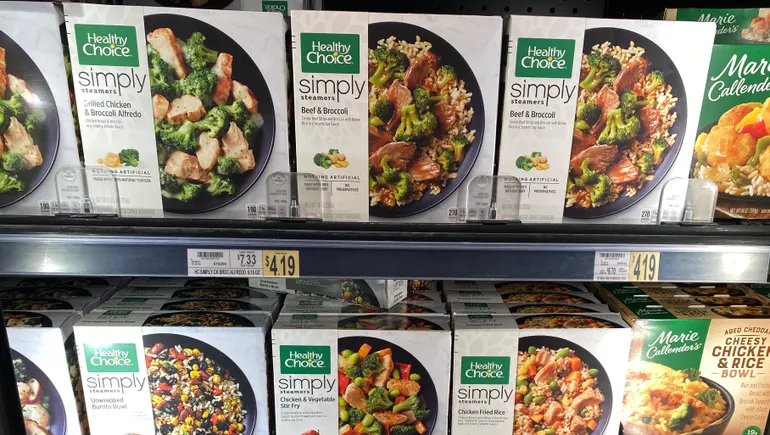
Conagra named former J.M. Smucker executive John Brase as president and CEO effective June 1, replacing Sean Connolly after a 10-year tenure. The leadership transition comes amid softer consumer spending and category pressure, though Conagra recently reported organic net sales growth in grocery, snacks, refrigerated and frozen segments. The move is primarily a governance update, with limited immediate market impact but some relevance to the company’s turnaround and margin execution.
This is a signaling event more than an operating one: the board is admitting the current mix of portfolio discipline, pricing, and brand investment has not been enough to stabilize valuation. A P&G/Smucker operator is usually brought in when the problem is execution quality rather than asset quality, which implies the market may start giving Conagra credit for margin repair before top-line inflection shows up. That creates a short-window setup where expectations can improve faster than fundamentals, especially if the new CEO quickly reframes the mix toward fewer, higher-velocity brands and tighter supply-chain productivity. The second-order issue is competitive behavior. If Conagra keeps leaning into selective price cuts while peers do the same, the category may enter a more promotional phase that compresses gross margins across center-store snacks and frozen meals for multiple quarters. That is less negative for scale leaders with better data/retail execution, but it raises the bar for everyone else: the winners will be the companies that can fund promotions without sacrificing service levels or trade spend discipline. Brase’s background suggests he may be more willing to take share through operational rigor than through headline-grabbing M&A, which is constructive for near-term FCF but not necessarily for growth optics. The contrarian read is that the stock may be over-penalizing a mature, cash-generative platform that can still rerate if investors believe the turnaround is mostly self-help. The risk is that lower pricing in a weak demand environment becomes a permanent margin tax rather than a one-time reset; if volume elasticity disappoints over the next two quarters, the market will treat this as a structural share-loss story, not a leadership-refresh story. The key catalyst window is the next 1-2 earnings prints, where evidence of cleaner inventory, better fill rates, and sequential gross margin improvement would matter more than reported organic sales alone.
AI-powered research, real-time alerts, and portfolio analytics for institutional investors.
Request DemoOverall Sentiment
neutral
Sentiment Score
-0.10
Ticker Sentiment
