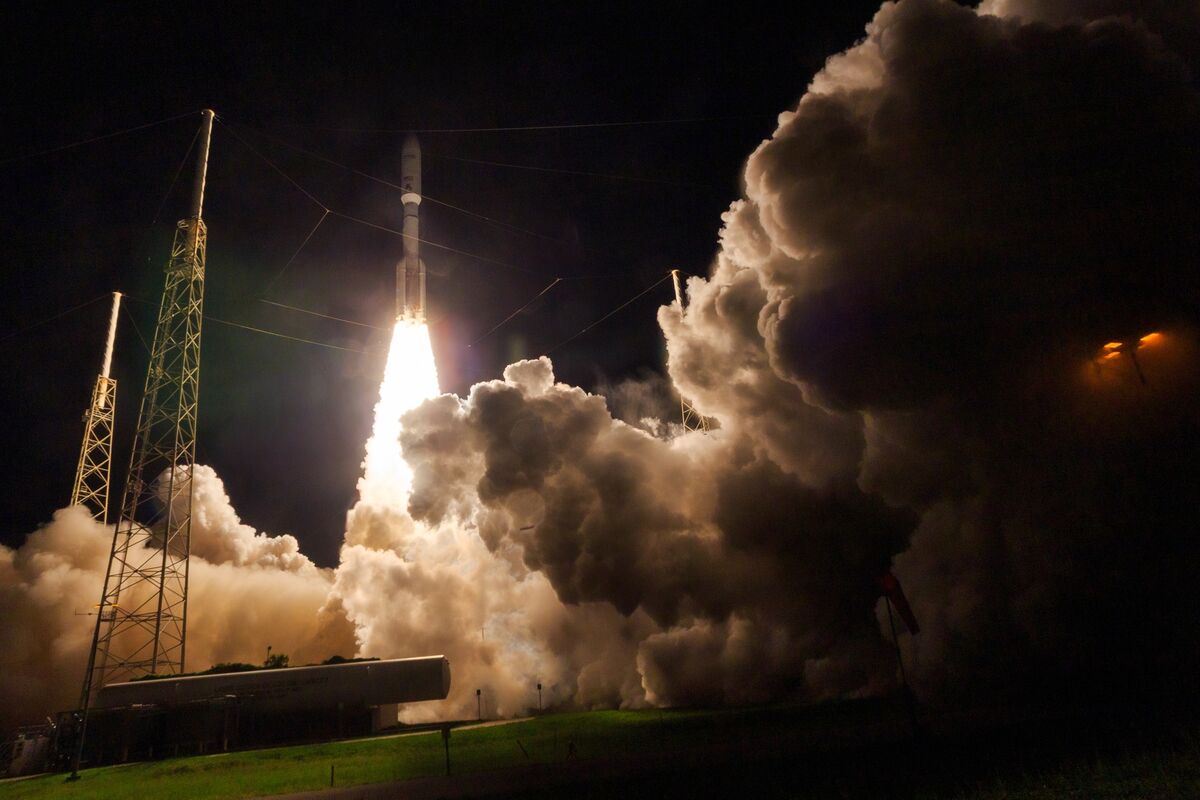
Amazon is set to begin its broadband internet service later this year, after a United Launch Alliance Atlas V rocket successfully launched 29 Amazon Leo satellites. The launch—completed from Cape Canaveral—supports the company’s timeline to compete with SpaceX’s Starlink. While not an immediate financial catalyst, the milestone meaningfully advances Amazon’s network rollout.
This is more meaningful as a strategic option on Amazon’s infrastructure stack than as near-term revenue. The first real commercial launch sequence can re-rate the market’s view of AMZN as a platform company that can monetize logistics, cloud, and connectivity together, but the first 12 months are likely to be judged on subscriber growth, terminal availability, and launch cadence rather than topline contribution. In other words: the stock can respond to proof of execution, but the P&L impact should stay de minimis until the network reaches scale.
Competitive pressure is most direct on Starlink, but the second-order effect is on the bargaining power of rural telecom and fixed-broadband incumbents. Even a credible second supplier can cap pricing and reduce churn economics for low-density markets, which matters more for valuation than raw share gain at Amazon’s current stage. The defense angle is underappreciated: a diversified LEO network is strategically useful for government and emergency resilience, creating an embedded option for federal contracts that could support utilization even if consumer uptake is uneven.
The main risk is that the market extrapolates a consumer broadband winner before unit economics are proven. If terminal costs stay high or installation friction remains elevated, adoption could be slower than the headline suggests, and the equity could give back any enthusiasm once investors realize this is a capex-intensive, multi-year rollout. The catalyst path to watch is the next 1-3 months: launch tempo, service-area expansion, and any disclosure on preorders or beta demand; the thesis weakens if management starts sounding defensive on cost or capacity.
Contrarian view: consensus may be too focused on "Starlink challenger" framing and too little on Amazon’s ability to use this as a low-margin distribution layer for Prime, AWS edge, and government relationships. If that cross-selling works, the real value is not broadband ARPU but stickier enterprise and public-sector relationships. If not, this remains a capital-heavy science project; in that case the stock reaction should fade and the opportunity is better expressed only after evidence of monetization.
AI-powered research, real-time alerts, and portfolio analytics for institutional investors.
Request DemoOverall Sentiment
mildly positive
Sentiment Score
0.25
Ticker Sentiment
