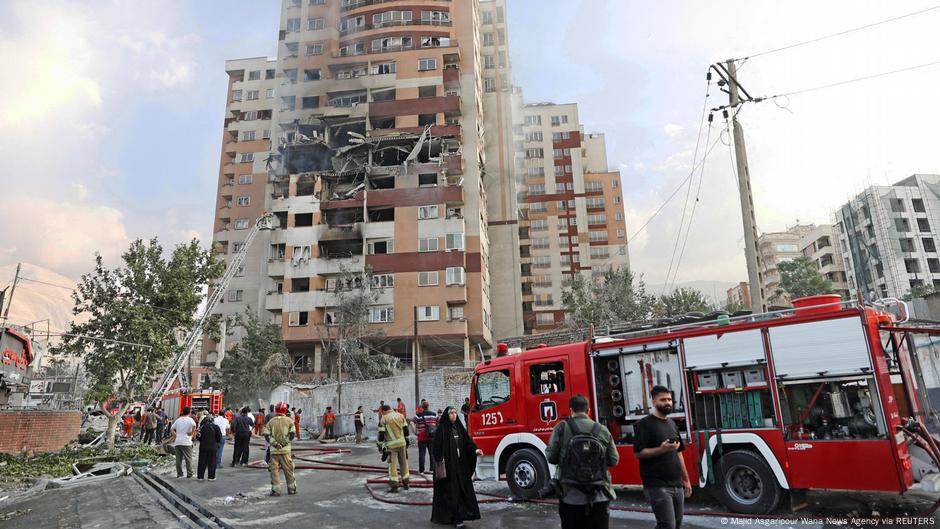
Legal experts are debating the legality of Israel's June 13 attack on Iran, with the core issue being whether it constitutes a legitimate act of self-defense under international law. While Israeli politicians claim the attack was a preemptive measure against a potential Iranian nuclear threat, many international law analysts argue it more likely qualifies as a "preventive" attack, which is generally prohibited, as Iran did not pose an imminent threat; some legal scholars argue the attack should be viewed in the context of a larger conflict, while others worry that implicit state support for Israel's actions could erode the established framework of international law regarding self-defense.
The June 13 Israeli attack on Iran has ignited a significant debate among international law experts regarding its legality, with a prevailing view among analysts suggesting it constituted a 'preventive' strike rather than a permissible act of 'self-defense' due to the lack of an imminent threat from Iran, as supported by assessments like US intelligence suggesting Iran was possibly three years from a nuclear weapon. While Israeli officials framed the operation as a necessary preemptive measure against Iran's nuclear ambitions, legal scholars such as Matthias Goldmann and Marko Milanovic highlight that international law, particularly Articles 2 and 51 of the UN Charter, sets strict conditions for self-defense which were likely not met. This situation is further complicated by arguments viewing the attack within a larger ongoing conflict or, as Michael Schmitt notes, a potential need for a more liberal interpretation of self-defense given the severity of a nuclear threat, though he concedes other diplomatic options were still viable. The negative sentiment (score -0.3) and cautious tone surrounding this event underscore concerns that implicit support for such actions, as seen in some governmental statements, could lead to an erosion of established international legal frameworks, drawing parallels to past controversies like the 2003 Iraq invasion and Russia's justification for the 2022 Ukraine invasion. While the immediate market impact score (0.1) is low, indicating this specific legal debate may not be a primary market driver, the underlying geopolitical tensions and the potential degradation of international law present sustained uncertainty for the region and global order.
AI-powered research, real-time alerts, and portfolio analytics for institutional investors.
Request DemoOverall Sentiment
Negative
Sentiment Score
-0.30
