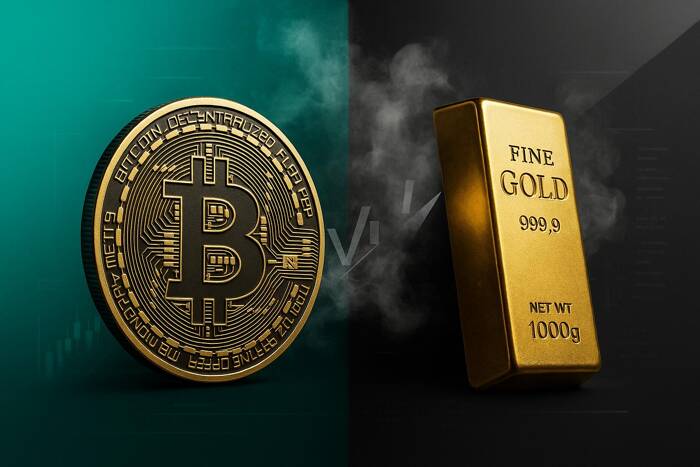
U.S.-Iran ceasefire headlines pushed U.S. Treasury yields and the dollar lower (USD index failed at ~100.50), prompting a rally in gold and silver while oil briefly dropped to the ~$90 support zone before rebounding. Bitcoin held long-term support in the $50,000–$60,000 area and the BTC/gold ratio rebounded from strong support at 12 toward ~26; technical upside targets cited include BTC $80,000 (then $95,000) with breakpoints at $125,000 and $300,000. Persistent geopolitical risk (Israel/Hezbollah, Iran strikes/retaliation) keeps volatility and inflation upside risk elevated, favoring safe-haven metals but leaving crypto performance contingent on broader risk sentiment.
Geopolitical shocks are compressing risk premia across asset classes in a way that favours convex, real-asset exposures more than headline safe-havens alone. Because miners and commodity producers exhibit operating and financial leverage to commodity prices, a modest move in perceived tail-risk can produce outsized equity returns through margin expansion and forced re-rating of discounted cash flows; expect sector-level volatility to outpace spot metal moves for several weeks after each new informational shock.
Energy-driven inflation risk is the slow second-order channel that can reverse the initial safe-haven impulse: persistent upward pressure on energy costs tends to lift nominal yields and widen real-rate volatility over 3–12 months, which is negative for long-duration assets and can choke off speculative carry trades (including some leveraged crypto positions). Monitor breakevens and market-implied inflation swaps for signs the shock is being priced as persistent rather than transitory — that transition is the single most important catalyst for rotating from “risk-on via metals” to “risk-off via rates.”
Crypto’s sensitivity to macro liquidity means it will likely decouple from metal-led flows during periods when funding costs swing; short-term rallies are prone to fade if futures funding flips or ETF/spot flows stall. From a flows perspective, watch exchange balance changes and options skew: sustained outflows from exchanges and a persistent rise in call skew vs put skew in crypto (or the opposite in miners) will signal who leads the next leg and where to fasten convex option exposure.
AI-powered research, real-time alerts, and portfolio analytics for institutional investors.
Request DemoOverall Sentiment
mildly positive
Sentiment Score
0.20
