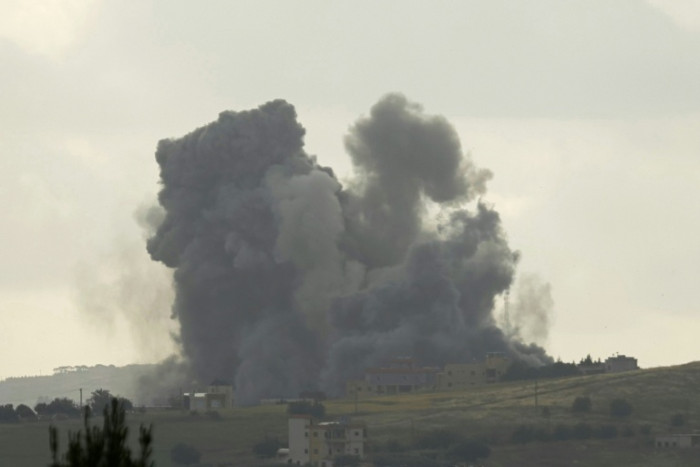
Israel’s renewed strikes on Hezbollah in southern Lebanon and reported killings in Jenin underscore escalating regional conflict, while the Israel-Lebanon truce was only extended by 45 days ahead of further talks on June 2-3. Iraq’s oil exports through the Strait of Hormuz fell to 10 million barrels in April from a usual 93 million, highlighting severe supply disruption risk after Iran’s blockade. Global stocks sold off and Brent crude rose about 3% to nearly $109 a barrel as markets priced in persistent inflation pressure and wider geopolitical spillover.
The market should treat this less as a one-day geopolitics headline and more as a widening transport-constraint regime. If Hormuz throughput remains impaired, the first-order winner is crude, but the second-order winners are freight dislocation, storage, and “last-mile” logistics assets with access to non-Hormuz supply. The losers are refiners and import-dependent emerging markets with weak external balances; they face a double hit from higher feedstock costs and FX pressure, which tends to show up in sovereign CDS before equities.
The Lebanon front matters because it raises the probability that the energy shock is not just about barrels but about risk premia on regional infrastructure. Even limited escalation can keep charter rates, marine insurance, and bunker costs elevated for weeks, which feeds into global inflation faster than the CPI print because shipping contracts reprice sooner than retail prices. The bigger medium-term risk is that elevated oil sustains tighter financial conditions just as growth is already fragile, creating a policy trap where central banks cannot easily offset supply-driven inflation.
A key second-order effect is that alternative export routes become strategically valuable but operationally constrained. Iraq’s inability to reroute meaningful volumes quickly suggests that spare pipeline and port capacity across the Gulf is much thinner than the market models, so the “temporary” shock can linger for quarters, not days. If the Strait reopens, energy equities may fade, but transportation bottlenecks and insurance spreads will likely normalize more slowly, keeping a residual inflation impulse alive.
The consensus may be underpricing how nonlinear this gets if physical flows stay disrupted into the next monthly data prints. With oil already repricing, the real trade is not just long energy but long volatility on inflation-sensitive assets and short the most rate-sensitive parts of equities. If diplomatic talks produce even modest de-escalation, the reflexive unwind in crude could be sharp, so timing and optionality matter more than outright beta.
AI-powered research, real-time alerts, and portfolio analytics for institutional investors.
Request DemoOverall Sentiment
strongly negative
Sentiment Score
-0.65
