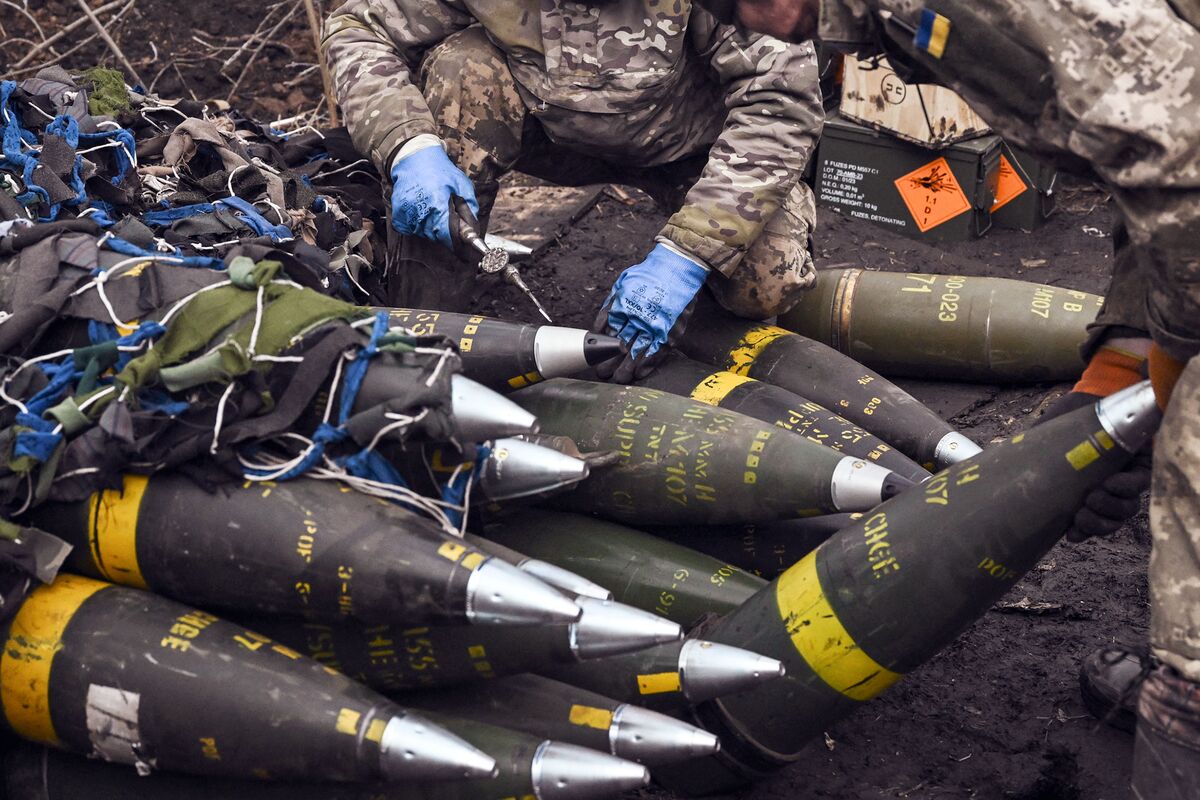
General Dynamics will spend $200 million of its own money to reboot its delayed 155mm artillery shell plant in Mesquite, Texas, and unwind a partnership with Turkey's Repkon. The move underscores setbacks in a Pentagon-backed munitions expansion originally intended to meet demand tied to the war in Ukraine. The news is negative for execution risk, though the financial impact is likely contained to the company rather than the broader market.
This is less a “bad headline” than a credibility reset for a program that was supposed to monetize the Pentagon’s ammo re-shoring cycle. The key second-order effect is that delays at a flagship plant can actually prolong elevated pricing and contract scarcity for qualified 155mm capacity, which helps the small set of incumbents already shipping against surge demand. For GD, the near-term P&L hit is not just the $200M cash spend; it is also the probability of margin leakage if management is forced to prioritize schedule over process efficiency in a high-urgency ramp.
The market should focus on execution risk migrating from a one-time capex story into a multi-year systems-integration problem. Unwinding the partnership implies governance friction, re-qualification risk, and a reset of vendor relationships — all of which can push first meaningful volume out by quarters, not weeks. That creates a valuation overhang because defense investors will have to model not only delayed revenue, but lower confidence in GD’s ability to execute on other fixed-price or industrial ramp programs where schedule slippage turns into working-capital drag.
Competitively, any proven alternative shell capacity in the US or allied supply chain gains bargaining power on pricing, labor, and subcontracting. If GD stumbles, expect the benefit to flow to firms with existing energetics/metalworking capacity and to suppliers of machine tools, explosives, and quality-control systems rather than to pure primes. The contrarian point: the market may already be discounting some slippage, but underestimates how often defense ramps inflect only after a painful teardown/rebuild cycle — meaning the downside is less about this quarter and more about prolonged opportunity cost versus peers that can actually deliver.
Catalysts are binary and mostly long-dated: any official update on first-production timing, another restructure, or a Pentagon allocation shift could move the stock over the next 1-6 months. A genuine bullish reversal would require evidence that the new buildout is on a deterministic path to repeatable throughput, not just a capex announcement. Until then, GD remains a relative underperformer versus defense names with cleaner execution and more immediate book-to-bill conversion.
AI-powered research, real-time alerts, and portfolio analytics for institutional investors.
Request DemoOverall Sentiment
mildly negative
Sentiment Score
-0.25
Ticker Sentiment
