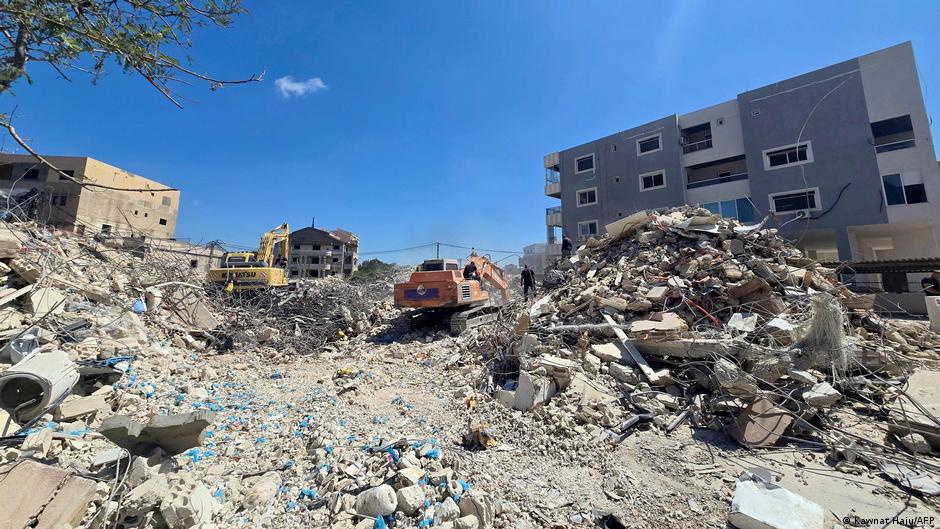
Israel has established a 5-10 km security area inside southern Lebanon, raising questions over whether the move is a lawful buffer zone or a de facto occupation. The article highlights that international law allows such zones only under limited conditions, including mutual agreement, UN authorization, humanitarian grounds, or self-defense, while prolonged control without consent could trigger occupation rules. The situation carries meaningful geopolitical risk and could affect regional security and defense dynamics.
The market impact is less about a direct commodity shock and more about the probability that a localized military footprint hardens into an occupation regime. That matters because occupations create a slow-burn liability stack: legal exposure, aid/rehab costs, force-protection drag, and recurring headline risk that can bleed into partner governments and contractors even if the front line itself is stable. The first-order trade is not energy; it is a widening discount rate on regional reconstruction and cross-border investment in southern Lebanon/Levant adjacency plays.
Second-order, the biggest beneficiary is likely defense systems, counter-UAS, ISR, and border-security names rather than traditional munitions. A drawn-out buffer-zone posture implies more persistent demand for surveillance, tunneling detection, hardened comms, and precision strike integration, while also raising attrition of reserve manpower and maintenance intensity. If the area becomes de facto uninhabitable, the cost of holding it rises nonlinearly, which usually increases the value of technologies that reduce troop exposure more than the value of sheer firepower.
The contrarian angle is that the legal ambiguity itself can cap escalation: when policymakers cannot cleanly defend permanence, they often prefer a reversible posture and push for third-party mediation within 1-3 months. That creates a binary setup where the tape can overshoot on headline risk now, then mean-revert if Washington, Paris, or Cairo drive a monitored pullback. The key catalyst to watch is not battlefield movement but any signal that civilian return corridors or a defined sunset date are being negotiated; absent that, the market should price a higher probability of sanctions chatter, litigation risk, and procurement acceleration in surveillance-heavy defense.
For broader portfolios, the negative spillover is modest but real for regional infrastructure, insurers, and EM credit with Levant exposure. The more permanent the footprint appears, the more likely counterparty risk rises for contractors and donors, while reconstruction-linked equities face delayed cash conversion and higher political-risk haircuts. The tradeable edge is in buying duration on defense beneficiaries and selling assets that depend on a quick normalization assumption.
AI-powered research, real-time alerts, and portfolio analytics for institutional investors.
Request DemoOverall Sentiment
moderately negative
Sentiment Score
-0.25
