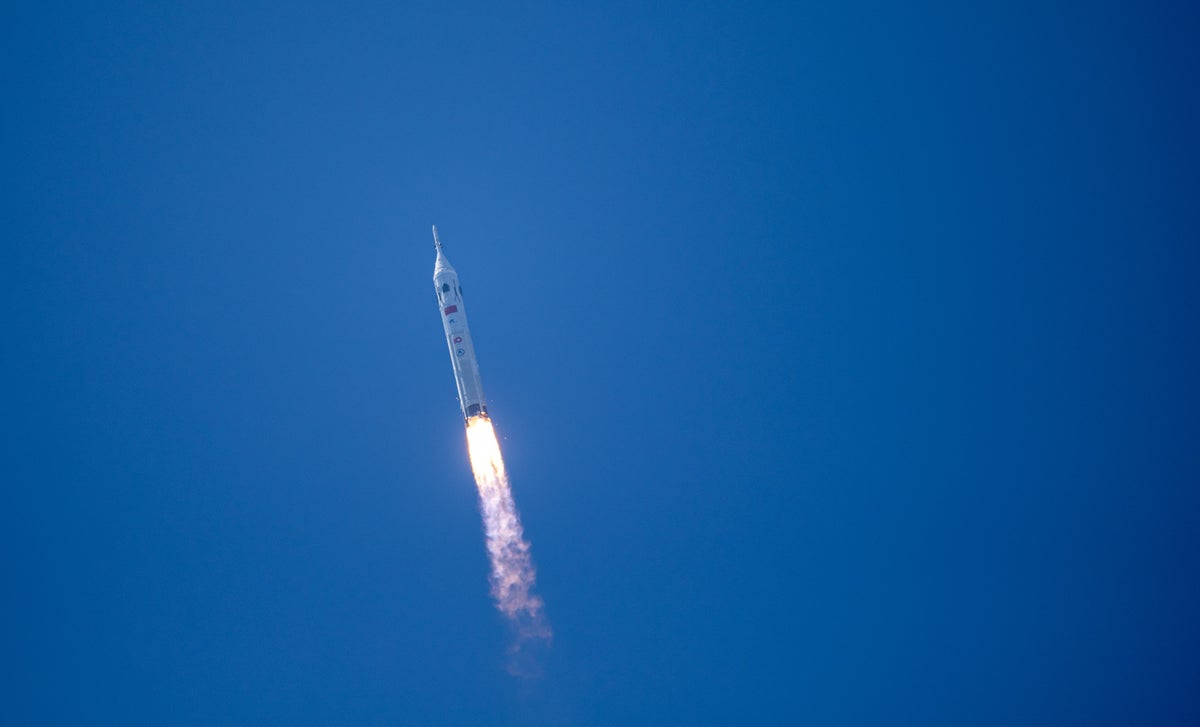
Artemis II is nearing splashdown after a successful circumlunar flyby, while on Feb 11 China performed a successful single-stage Long March 10 and Mengzhou in-flight abort test plus a controlled propulsive booster splashdown. China has also tested the Lanyue lander and aims for a crewed lunar landing before 2030, planning dual Long March 10 launches to rendezvous in lunar orbit; Mengzhou variants could carry 6–7 astronauts to LEO or three to low lunar orbit. These developments heighten strategic competition in aerospace/defense and could influence supplier and national program priorities, though near-term market pricing impact is likely limited.
China’s centralized, end-to-end approach to crewed lunar capability compresses programmatic optionality: a single political decision can accelerate hardware integration and scale manufacturing capacity in a way the fragmented U.S. ecosystem cannot. That creates a two-track market dynamic over the next 12–36 months — increased government contracting for traditional primes and simultaneous price-pressure on commercial small-launch and niche suppliers as China verticalizes its stack.
Second-order supply-chain winners are not the headline rocket builders but subsystem and payload integrators that scale with recurrent lunar test flights: precision avionics, propulsive landing systems, and high-reliability space-grade composites. Expect meaningful revenue cadence inflection points tied to China’s upcoming full Long March 10 orbital tests (months) and to NASA commercial lander award decisions (quarters), each capable of driving 20–40% order-book re-rating for exposed suppliers.
Tail risks center on single-event failures and geopolitics. A catastrophic test failure, export-control tightening, or a U.S. congressional funding pivot could reverse momentum within weeks-to-months; conversely, a successful Starship certification or a Chinese crewed lunar sortie before 2030 would accelerate consolidation and premium valuation for firms that secure long-term logistics/lander work. The most likely asymmetry: investors are underpricing program risk concentration in China and underestimating the upside for established primes that capture the inevitable surge in government-funded cislunar logistics over the next 2–5 years.
AI-powered research, real-time alerts, and portfolio analytics for institutional investors.
Request DemoOverall Sentiment
mildly positive
Sentiment Score
0.15
