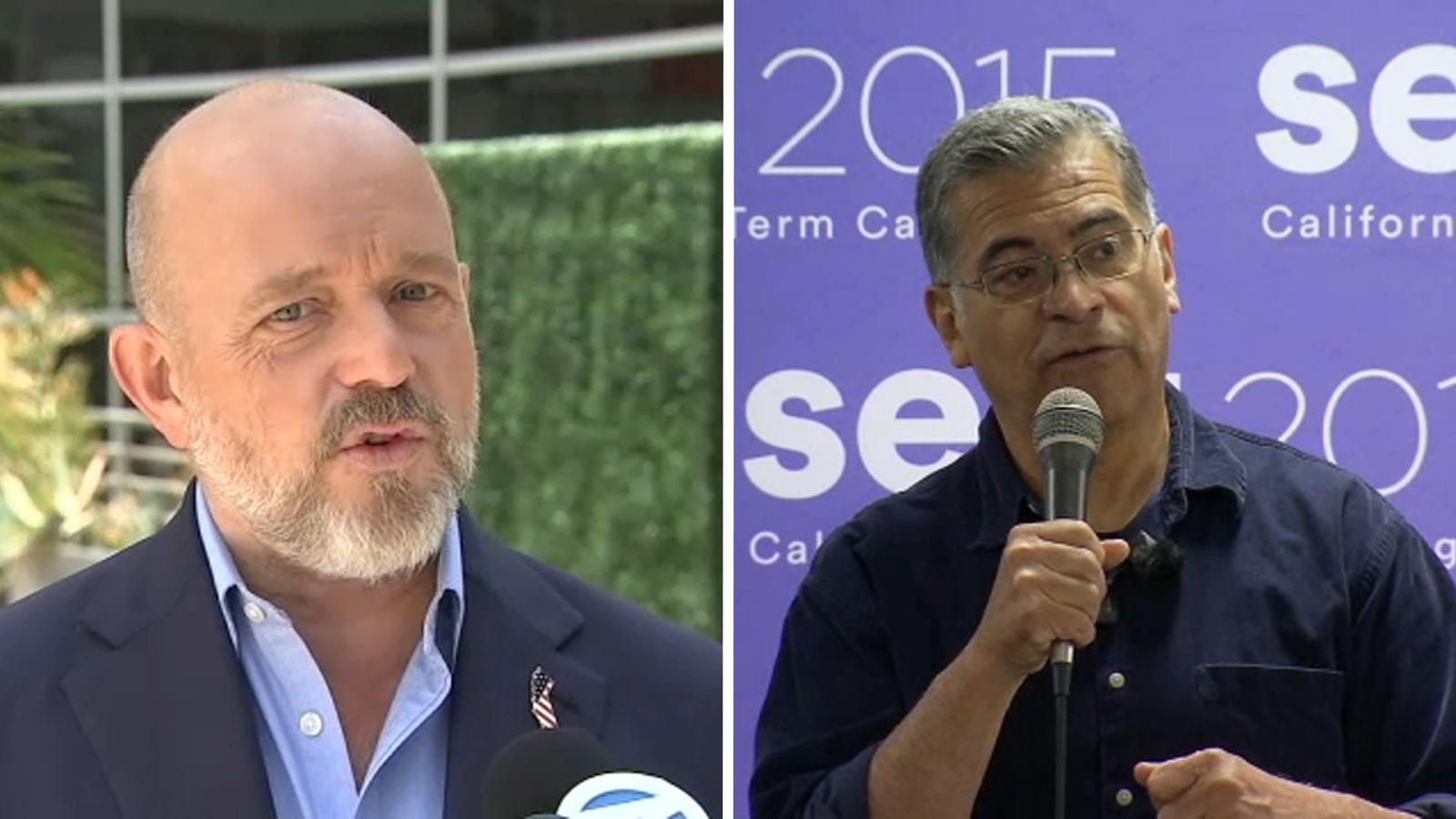
A new PPIC poll shows Xavier Becerra leading the California governor race at 23%, followed by Steve Hilton at 20%, Tom Steyer at 15%, Chad Bianco at 13% and Katie Porter at 12%. The top two finishers, regardless of party, will advance to the November election. The article is polling-driven political reporting with minimal direct market impact.
The immediate market read is not about policy, but about probability distribution: this poll materially raises the odds of a Becerra-Hilton general election, which is the cleanest base case for donors, lobbyists, and local policy-sensitive businesses. A two-candidate front with one Democrat and one Republican typically compresses uncertainty for California-regulated sectors, but it also increases the value of late-cycle campaign spending because the path to November is still fluid. The key second-order effect is that any candidate with a credible runoff path can pivot from ideology to coalition-building, muting the policy tail risk that usually drives pre-election factor rotation.
From an investor positioning standpoint, the main opportunity is in event-driven dislocations around California-exposed assets rather than broad market beta. Utilities, healthcare, clean-tech, and regulated infrastructure can all gap on headline risk if one of the higher-volatility contenders becomes the consensus runoff favorite, but the shorter horizon matters: the next 2-3 weeks can reprice probabilities sharply, while the actual policy impact likely extends only if the nominee wins in November. The market is likely underestimating how quickly a polling drift toward the top two can trigger funding, endorsements, and negative campaigning that change turnout composition more than overall share.
The contrarian angle is that this is still a low-signal race for fundamentals until the field narrows further. A double-digit poll spread in a crowded primary is often less predictive than the intensity gap among committed voters, so the apparent front-runners can still be vulnerable to late consolidation among ideologically aligned blocs. That means the cleanest trade is not to bet on a winner, but to own volatility where California policy beta is highest and avoid chasing names that would only benefit from a November outcome that is months away and highly path-dependent.
AI-powered research, real-time alerts, and portfolio analytics for institutional investors.
Request DemoOverall Sentiment
neutral
Sentiment Score
0.00
