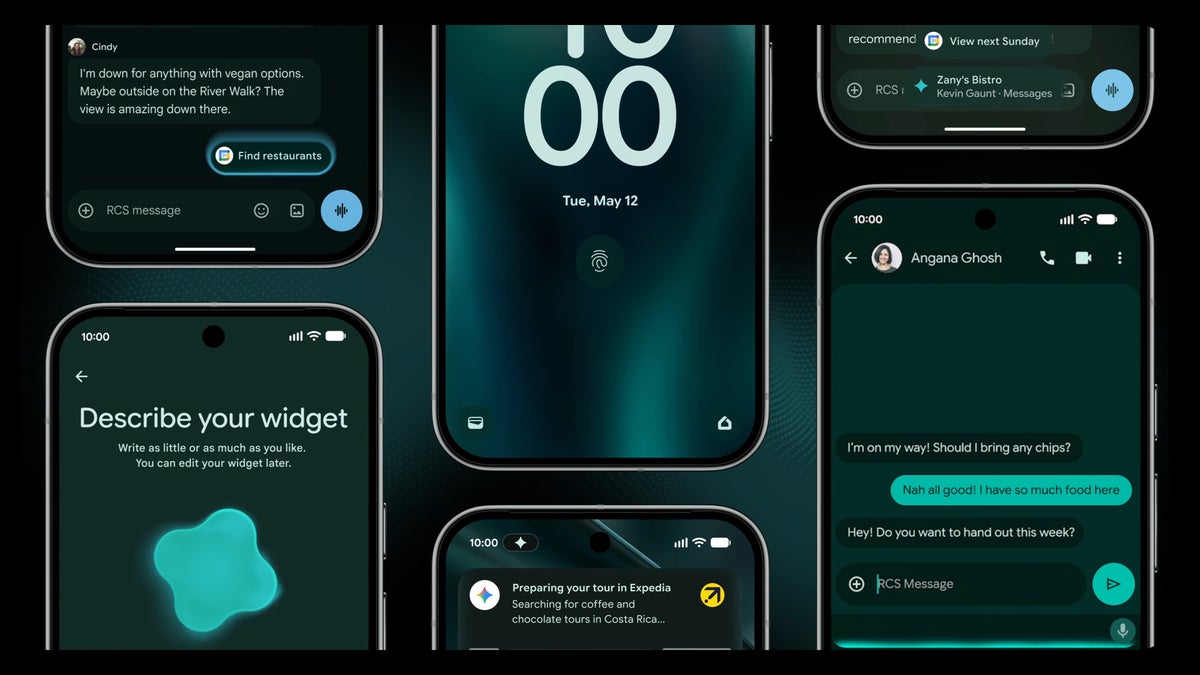
Google is repositioning Android 17 as an "intelligence system" centered on Gemini, with features like multi-step app automation, screen-context actions, form filling, and real-time assistance. The article argues this is mainly marketing rather than a true operating-system transformation, but notes the underlying AI capabilities could meaningfully improve user experience if they ship reliably. Near-term market impact looks limited, though the announcement reinforces Google’s AI-led product strategy across Android and Pixel.
GOOGL is using a category rename to widen the moat around Gemini before rivals can anchor the market in a competing framing. The key second-order effect is distribution: if Google can make AI feel like the native control plane of Android, it raises switching costs for users and developers because app workflows, search behavior, and notification handling become more deeply coupled to Google services. That matters more than the label itself; the valuation impact comes from higher engagement, better default monetization, and a stronger case for premium Pixel hardware, not from the marketing phrase.
The near-term catalyst is execution quality over the next 1-3 product cycles. If the automation and context features work reliably, Google can push time-spent and query volume higher without needing a separate paid consumer AI narrative, which is bullish for both ad retention and device attach rates. If they fail in edge cases, the market will quickly reclassify this as a demo-led story, and the multiple expansion argument on AI integration will fade.
DASH is a more interesting indirect read-through than the article acknowledges. Any AI agent that can complete multi-step commerce tasks becomes a demand-shaping layer, which could improve conversion for merchants that integrate cleanly while pressuring aggregators with weak workflow ownership. In the short run, though, agentic ordering mostly benefits the platform with the best identity, location, and payment graph — currently Google — while the delivery network still bears operational risk if the model misfires or creates low-quality orders.
The contrarian view is that the market is overpricing the branding shift and underpricing the product-liability risk. The harder the assistant penetrates core workflows, the more any error becomes a trust event, and trust losses tend to show up after launch, not at announcement. That makes this a months-long, not days-long, thesis: strong upside if reliability is good, but a sharper drawdown if usage data reveals friction, especially around commerce and calendar/email-driven actions.
AI-powered research, real-time alerts, and portfolio analytics for institutional investors.
Request DemoOverall Sentiment
mildly positive
Sentiment Score
0.15
Ticker Sentiment
