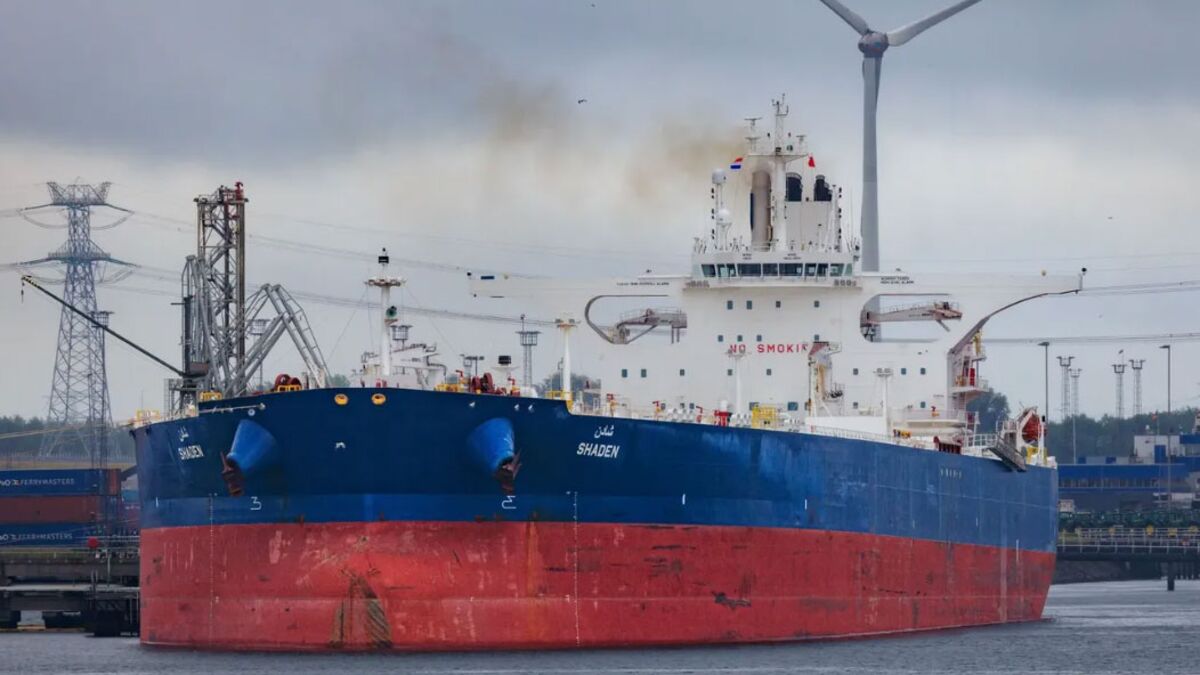
Three Saudi-controlled oil supertankers, along with a Qatari LNG ship and a Chinese fuel tanker, have begun crossing the Strait of Hormuz after being stuck in the Persian Gulf since the war began. The move is an early sign that the interim US-Iran peace deal is easing shipping disruptions through a critical energy chokepoint. The development is supportive for crude and LNG transport flows and could reduce risk premiums tied to Gulf shipping.
This is a negative-duration unwind for global energy logistics: as soon as transit confidence returns, the market should price a rapid normalization in tanker risk premia, war-risk insurance, and freight bottlenecks. The first beneficiaries are shipowners with exposed spot routes and charterers holding barrels in the right basin; the losers are anyone monetizing scarcity through elevated freight, storage, or dislocation. The second-order effect is more important than the headline—restoring lane reliability tends to compress regional crude differentials before it meaningfully changes outright Brent, so the immediate trade is usually in spreads and transport equities rather than flat oil.
The market is likely underestimating how fast this can reverse if the ceasefire is seen as tactical rather than durable. A single incident can re-widen war-risk premia within hours, while a genuine normalization path takes weeks to months as insurers, port operators, and shipping lines rebuild confidence. That asymmetry favors selling volatility into strength: the near-term upside is incremental, but the tail risk of renewed disruption remains convex and can reprice the entire Gulf freight stack overnight.
Contrarian angle: consensus may be too focused on lower crude prices and not enough on re-routing of supply-chain rents. If Gulf exports re-enter the market smoothly, arbitrage windows should narrow for traders and floating storage players faster than for upstream producers, which means the biggest loser may be the middlemen rather than the producers. Also, if eased passage reduces the need for precautionary stockpiling, product crack spreads can soften even if benchmark crude stays rangebound, which is a subtle but meaningful headwind for refiners with weak feedstock flexibility.
Net: the setup is best expressed as a tactical short in logistics dislocation, not a broad bearish energy view. The trade should be sized for headline-driven reversals and monitored on a days-to-weeks horizon, because the market will likely overreact both to further exits and to any renewed blockage signal.
AI-powered research, real-time alerts, and portfolio analytics for institutional investors.
Request DemoOverall Sentiment
mildly positive
Sentiment Score
0.15
