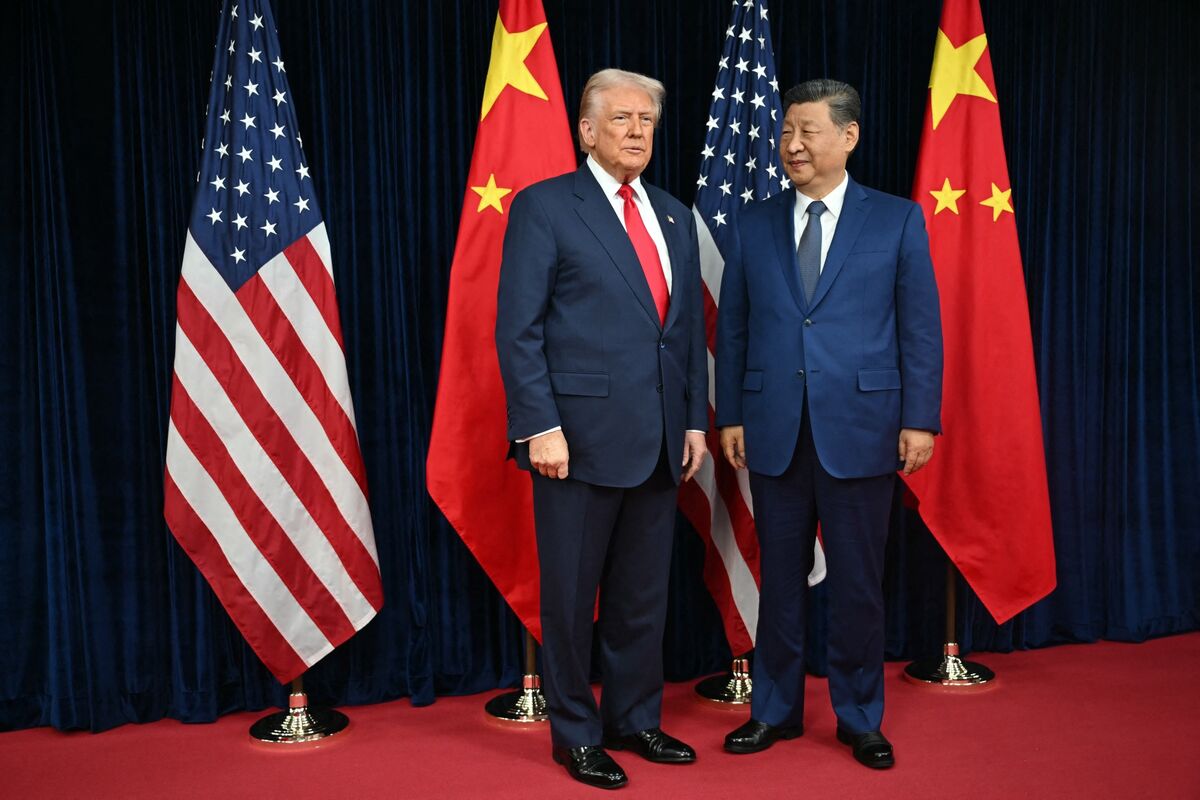
Trump said he will discuss the Iran war with Chinese President Xi Jinping at their summit next week and characterized Xi as 'very nice' and 'respectful' on the issue. The comments suggest an effort to downplay tensions between the U.S. and China around the conflict, but the article contains no policy decision or market-moving announcement. Impact is mainly geopolitical and likely limited unless it leads to changes in U.S.-China or Iran-related policy.
The market implication is less about the optics of a diplomatic thaw and more about whether China signals restraint on the marginal channels that matter to oil balance: strategic purchases, shipping insurance, and enforcement intensity around sanctions evasion. If Beijing even tacitly cooperates, the first-order effect is not a collapse in crude but a lower probability of a supply-shock tail, which compresses the geopolitical risk premium by roughly $3-7/bbl over 1-3 months. That matters most for energy vol sellers and for refiners whose feedstock costs are sensitive to headline-driven spikes.
The bigger second-order trade is in relative geopolitics, not commodity beta. A smoother US-China tone on the Iran file reduces near-term incentive for China to lean harder into non-dollar trade settlement with sanctioned producers, which is modestly supportive for USD liquidity and negative for “sanctions arbitrage” in shadow shipping, small tanker operators, and obscure middlemen logistics names. Conversely, any visible divergence at the summit would likely widen the range in crude and defense-related equities, but the move should fade faster than the initial headline because actual barrels take weeks to reroute.
The consensus is likely overestimating how much one summit can alter the war premium and underestimating how quickly the market will reprice if no concrete enforcement steps follow. The real catalyst window is days, not quarters: a benign read-through can briefly pressure crude and defense, but if there is no follow-up language on export controls or sanctions enforcement, the market will revert to treating this as political theater. The tail risk is a sharper-than-expected escalation that forces a repricing of tanker, airline, and cyclicals within 24-48 hours, but absent that, the path of least resistance is mean reversion in geopolitically sensitive vol.
AI-powered research, real-time alerts, and portfolio analytics for institutional investors.
Request DemoOverall Sentiment
neutral
Sentiment Score
0.00
