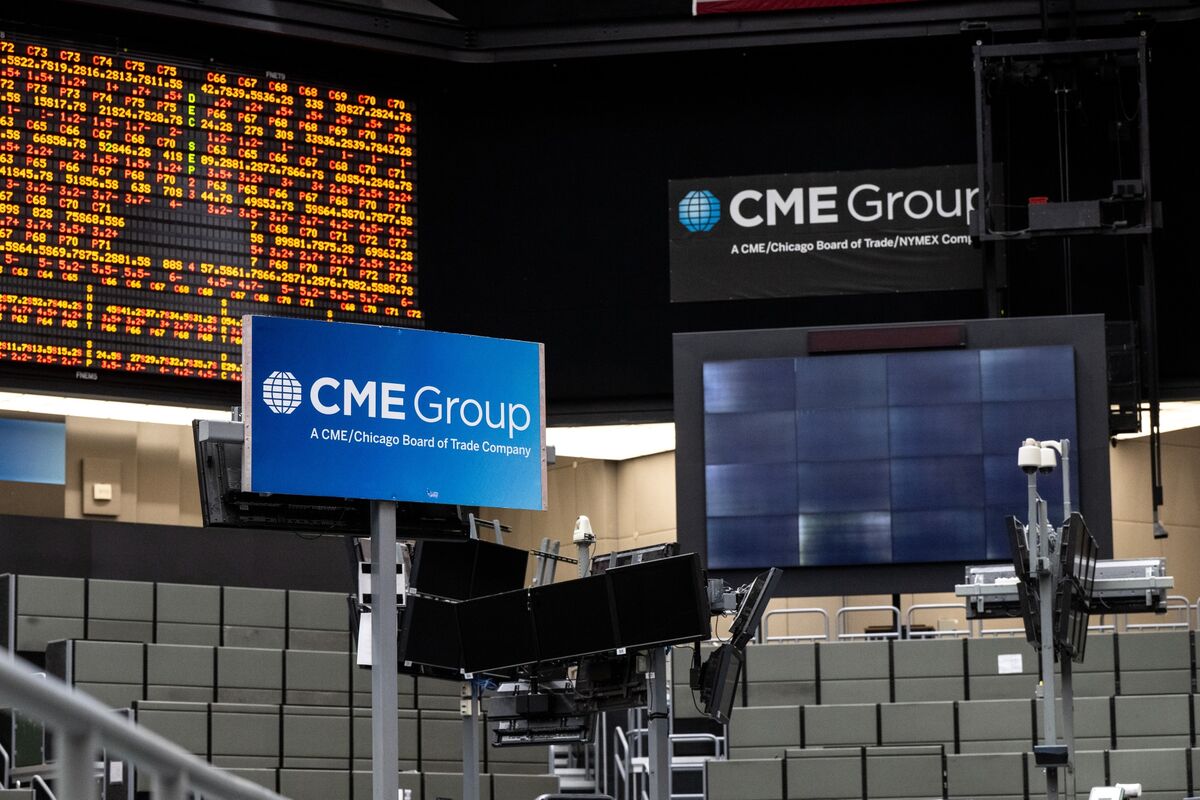
CME Group halted commodity futures trading after a data-center glitch, temporarily disrupting price discovery and execution in key futures contracts and posing short-term operational and liquidity risks for market participants. Separately, former President Donald Trump pledged a tougher immigration stance, a political development with potential policy and regulatory implications ahead of elections. Fashion retailer Zara is expanding into higher-end fashion segments, signalling a strategic retail move that could affect competitive positioning in apparel markets.
Market structure: A data-center outage directly hurts CME Group (CME) via lost trading fees, reputational damage, and potential flow diversion; immediate winners are rival venues with spare capacity (ICE, NDAQ, LSEG) and third-party matching/clearing providers that can capture displaced volume. If outage persists >24–72 hours, expect measurable market-share shifts in high-frequency and energy/commodity flows; pricing power on venue fees may tilt toward platforms that demonstrate demonstrable redundancy. This tightens short-term supply of reliable on-exchange liquidity and raises marginal value of low-latency access.
Risk assessment: Tail risks include failed settlement or margin calls causing knock-on liquidity events (low probability, high impact), regulatory fines >$100m, and class-action suits that could pressure margins over 12–24 months. Immediate (days) impact is volatile spreads and halted flows; short-term (weeks–months) is customer migration and contractual renegotiations; long-term (quarters–years) centers on architecture investments and recurring vendor diversification. Hidden dependencies: concentrated colocation vendors, cross-margining arrangements, and clearinghouse resilience.
Trade implications: Tactical pair trade — modest long ICE (ICE) vs short CME (CME) to capture flight-to-competitor flows; size 1–3% net equity risk, rebalancing within 2–8 weeks. Buy cybersecurity/cloud infra exposure (CRWD, PANW, AMZN, MSFT) +150–250 bps as vendors likely win increased capex; use options to express view: buy CME 3‑month 7.5% out-of-money puts if CME gap down >5% for defined risk. Rotate away from small electronic brokers with single-point dependencies.
Contrarian angles: Consensus may overestimate permanence of flow migration — clearing network effects and OTC relationships favor CME long-term; a >10% CME sell-off could be a buy-on-weakness within 1–3 months. Historical outages showed short-lived market-share moves and mean reversion; unintended consequence of heavy regulation is higher barriers to entry that strengthen incumbents that can fund redundancy capex.
AI-powered research, real-time alerts, and portfolio analytics for institutional investors.
Request DemoOverall Sentiment
neutral
Sentiment Score
0.00
Ticker Sentiment
