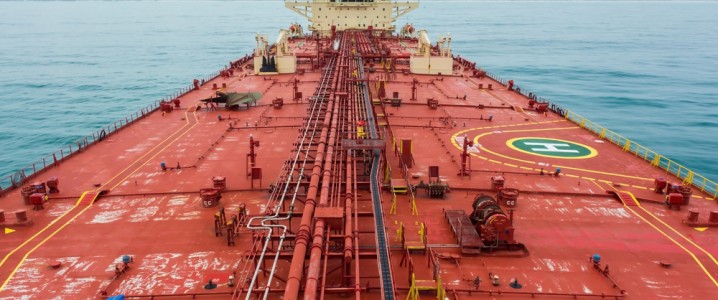
Saudi Arabia has offered about 4.6 million barrels of Arab Extra Light, Arab Heavy and Arab Light on the spot market after tanker traffic through the Strait of Hormuz nearly froze. Vessel transits fell to three on a recent day (versus ~100 pre-war), and Riyadh has rerouted exports to the Red Sea, boosting Yanbu shipments to ~2.3 million bpd (≈50% above post-2016 monthly averages). The disruption has pushed Brent and WTI above $100/bbl and prompted G7 consideration of a coordinated release from OECD stockpiles.
The immediate market response understates how durable logistical frictions can be: re-routing crude through alternative corridors and longer voyages raises per-barrel delivered cost through a combination of extra freight days, higher war-risk premiums, and opportunistic spot-selling by sellers that need to liquidate into constrained tanker capacity. That increment is structural for the coming 1–3 months while spare tanker and terminal capacity is reallocated, which favors owners of VLCC/Suezmax capacity and penalizes margin-sensitive refiners and product importers in overstretched hubs.
A second-order supply effect is the re-ordering of term vs spot flows. Buyers with term contracts will increasingly demand swaps or logistics support, forcing traders and state oil companies to bridge the gap; this centralizes price-setting with a smaller group of market-makers and increases the value of logistics optionality (storage, long-charters, alternative pipelines) over the next 3–9 months. Over longer horizons (12–36 months), capital redeployment toward pipeline capacity and de-risked routing will be the durable outcome, tightening the market if demand remains steady.
Key catalysts to watch are insurance market actions (P&I/war-risk stampede), the pace at which alternative routing capacity is brought online, and any coordinated release or diplomatic resolution that restores default routes. A rapid diplomatic de-escalation would compress spreads and cap freight gains within weeks; conversely, escalation that damages shore infrastructure creates a multi-quarter supply choke that favors asset owners with immediate logistical capacity. Position sizing should reflect high event risk and potential for both abrupt reversals and sustained elevated premiums.
AI-powered research, real-time alerts, and portfolio analytics for institutional investors.
Request DemoOverall Sentiment
strongly negative
Sentiment Score
-0.65
