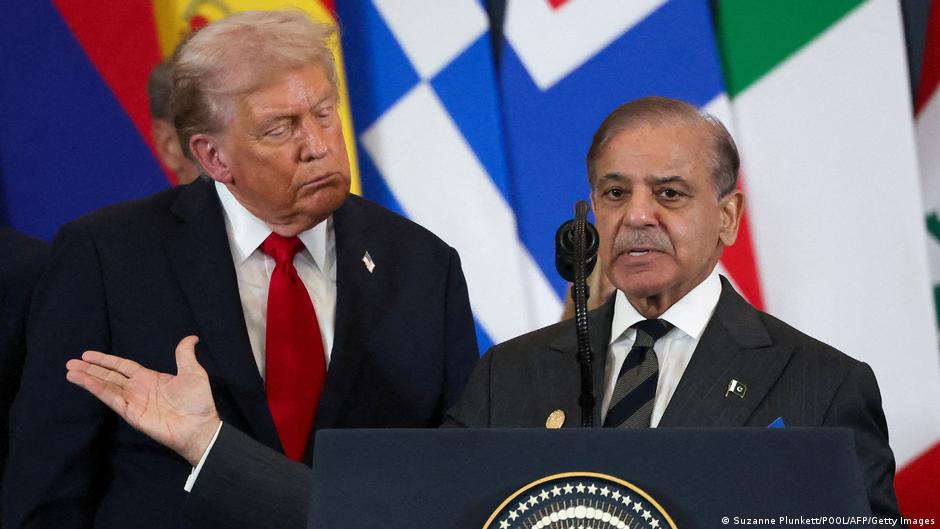
Pakistan is under pressure from President Trump to join the Abraham Accords as part of a potential deal to end the Iran war, but domestic and regional political risks make the move highly contentious. The article says any normalization would likely depend on Saudi Arabia moving first and on progress toward an independent Palestinian state, while rejection could carry costs given Pakistan's reliance on the US and the IMF. The Iran conflict has already disrupted Pakistan's energy supply and raised fuel prices, adding urgency to a resolution.
The market-relevant issue is not “Pakistan diplomacy” in the abstract; it is the sequencing problem between external financing, energy costs, and domestic political survivability. Islamabad is being asked to make a symbolic foreign-policy concession while its near-term macro sensitivity is dominated by imported fuel, IMF dependence, and the need to preserve access to Gulf labor remittances and concessional capital. That means the real bargain is less about Israel and more about whether Washington and Riyadh can create a financing umbrella large enough to offset the political cost inside Pakistan. The second-order effect is that any serious move toward normalization would likely widen Pakistan’s internal policy premium before it improves any external premium. In the first 1-3 months, expect higher headline risk for Pakistani sovereign spreads and FX as religious parties and opposition groups weaponize the issue; only later, if Gulf support is explicit, would the market start to price lower rollover risk. A Saudi-first signal would matter less because it changes Pakistan’s ideology and more because it reduces the probability of Islamabad being singled out as the sole outlier in a pro-Western regional bloc. The contrarian view is that the consensus is probably overestimating the durability of U.S. leverage here. Washington can create acute pressure, but it cannot easily manufacture domestic legitimacy in a country where anti-normalization sentiment is a cross-cutting political asset. That makes any “yes” from Islamabad more likely to be conditional, delayed, and phrased around Palestinian statehood benchmarks—so the tradable event is not the announcement itself, but the gap between rhetoric and implementation over the next 3-6 months. For markets, the cleaner implication is on energy and EM risk rather than on a direct Pakistan equity story. If the Iran conflict de-escalates, the biggest beneficiary is Pakistan’s import bill and FX reserve trajectory; if it does not, the macro pain compounds regardless of diplomatic posture. That asymmetry argues for trading the probability of lower fuel costs rather than the politics headline alone.
AI-powered research, real-time alerts, and portfolio analytics for institutional investors.
Request DemoOverall Sentiment
mildly negative
Sentiment Score
-0.15
