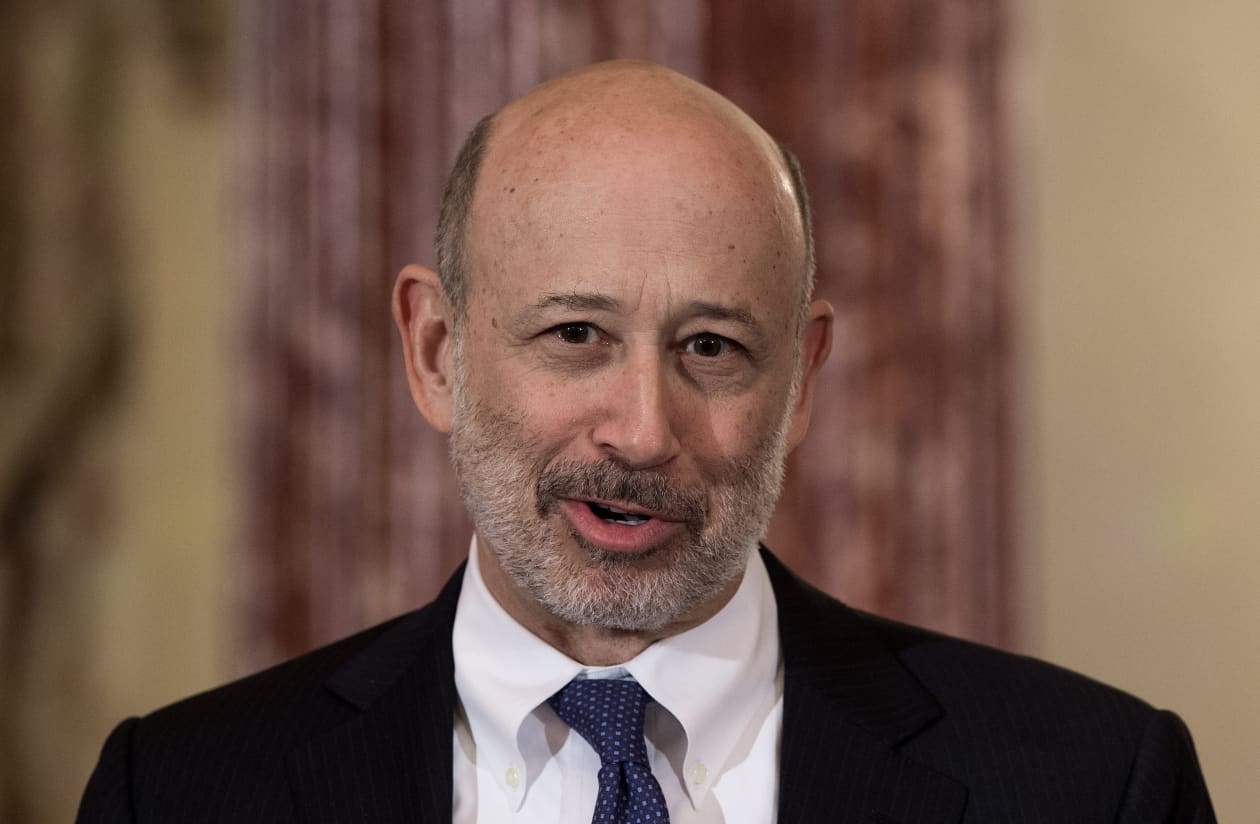
Former Goldman Sachs CEO Lloyd Blankfein said day trading is like his "music" and described it as a hobby, adding that 98% of his portfolio is in risky assets. The comments are largely personal and do not indicate a specific corporate or macro catalyst. Forbes estimates his net worth at about $1.8 billion.
The market read-through is less about one ex-CEO’s hobby and more about what it implies for elite-finance signaling: when a former top Goldman executive publicly frames trading as casual entertainment, it reinforces the perception that the boundary between professional and retail-style speculation is thinning. That matters for GS because the franchise benefits when markets stay active and participation broadens, but it also raises the odds of more flow-driven, momentum-sensitive conditions that can compress spreads and amplify reversals.
The second-order effect is on positioning psychology, not fundamentals. If high-profile finance veterans normalize “risk-on” behavior, it can extend speculative appetite in single-name equities, options, and high-beta baskets for weeks to months, especially when vol is subdued. But the same narrative becomes a contrarian tell if market breadth narrows: these celebrity-trading signals tend to show up late in risk cycles, when incremental buyers are already crowded into the same crowded growth/tech factors.
For GS specifically, the stock is unlikely to move on the quote itself, but the headline supports a modestly bullish view on market activity and client turnover over the next quarter. The bigger risk is governance optics: if the Street starts to view senior-bank alumni as endorsing casino-like behavior, it can keep pressure on compensation, conduct, and risk-management narratives during any future volatility spike. The setup is therefore mildly positive for trading revenues, but asymmetric for sentiment if markets de-risk quickly.
Contrarianly, the article is probably more important as a signal of complacency than conviction. When a billionaire with institutional pedigree says trading is harmless entertainment, that can be interpreted as a late-cycle confidence indicator rather than a durable bullish thesis. The practical takeaway is to fade any crowded retail-risk proxies if breadth deteriorates, while using short-dated options to express a view that current speculative appetite may be too sticky relative to underlying macro uncertainty.
AI-powered research, real-time alerts, and portfolio analytics for institutional investors.
Request DemoOverall Sentiment
neutral
Sentiment Score
0.05
Ticker Sentiment
