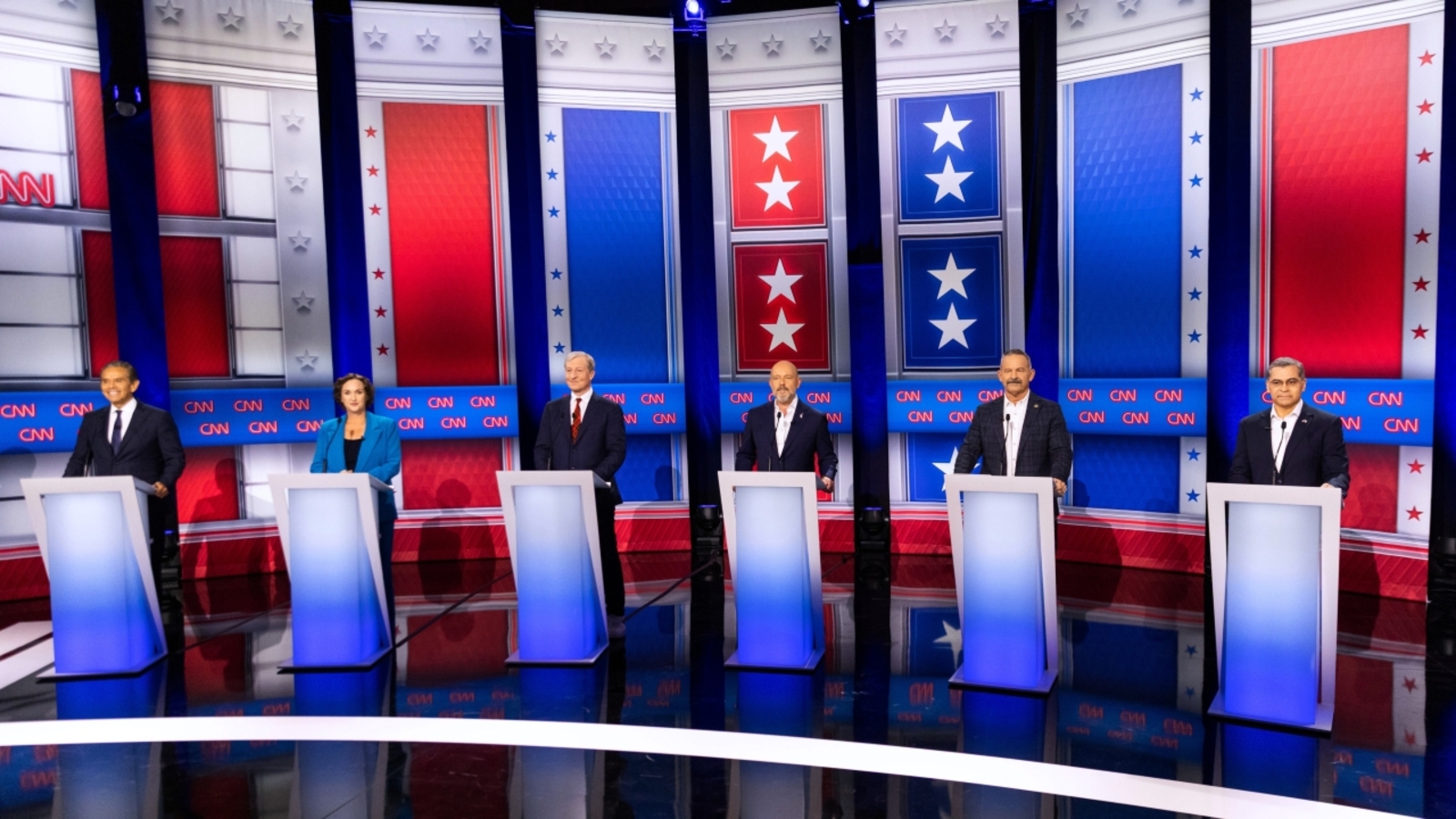
Seven California gubernatorial candidates clashed in a televised debate centered on gas prices, taxes, immigration and the state's cost-of-living pressures, with California gasoline averaging more than $6 per gallon. The race remains wide open, with Republicans Steve Hilton and Chad Bianco and five Democrats competing in a crowded field ahead of the June 2 primary. While politically significant, the article is mainly a campaign update and is unlikely to have a direct market-moving impact.
The market implication is less about who wins the governor’s office and more about which policy regime gets priced into California risk assets over the next 6-18 months. A Democrat-heavy field keeps the probability skew toward continuity on regulation, labor, and housing constraints, which is modestly supportive for incumbent utilities, large landlords with pricing power, and firms already optimized for California compliance. The real incremental risk is a headline-driven drift toward more tax, wage, and permitting friction if the eventual nominee feels pressure to outflank on affordability.
The more interesting second-order effect is on California’s capital intensity: any credible move to ease fuel, insurance, and housing pain requires either direct subsidies or faster permitting, but the debate dynamics suggest candidates are more likely to campaign on redistribution than throughput. That means continued underinvestment in wildfire insurance capacity and housing supply is the base case, which preserves scarcity rents for existing owners while keeping transaction volumes muted. In energy, rhetoric around gasoline pricing is politically salient but operationally unlikely to change near-term pump prices, so the tradeable edge is not crude demand but sentiment around California-facing consumer names.
The contrarian view is that the market may be overestimating the probability that a polarized primary materially changes policy. California’s fiscal and regulatory inertia is high; even a more aggressive winner will face budget constraints, legal hurdles, and institutional veto points. That argues for fading any knee-jerk selloff in California-exposed quality names on election headlines, while staying cautious on smaller domestically levered businesses that depend on easier permitting or lighter labor cost growth.
Over the next 1-3 months, the cleanest catalyst is polling: if two Republicans start to plausibly advance, expect a sharp, short-lived repricing of California policy risk, but historically that risk premium should decay quickly unless it becomes a structural threat. The larger 6-12 month catalyst is insurance and housing legislation, where any incremental loosening would be more meaningful for fundamentals than the governor’s race itself.
AI-powered research, real-time alerts, and portfolio analytics for institutional investors.
Request DemoOverall Sentiment
neutral
Sentiment Score
-0.05
