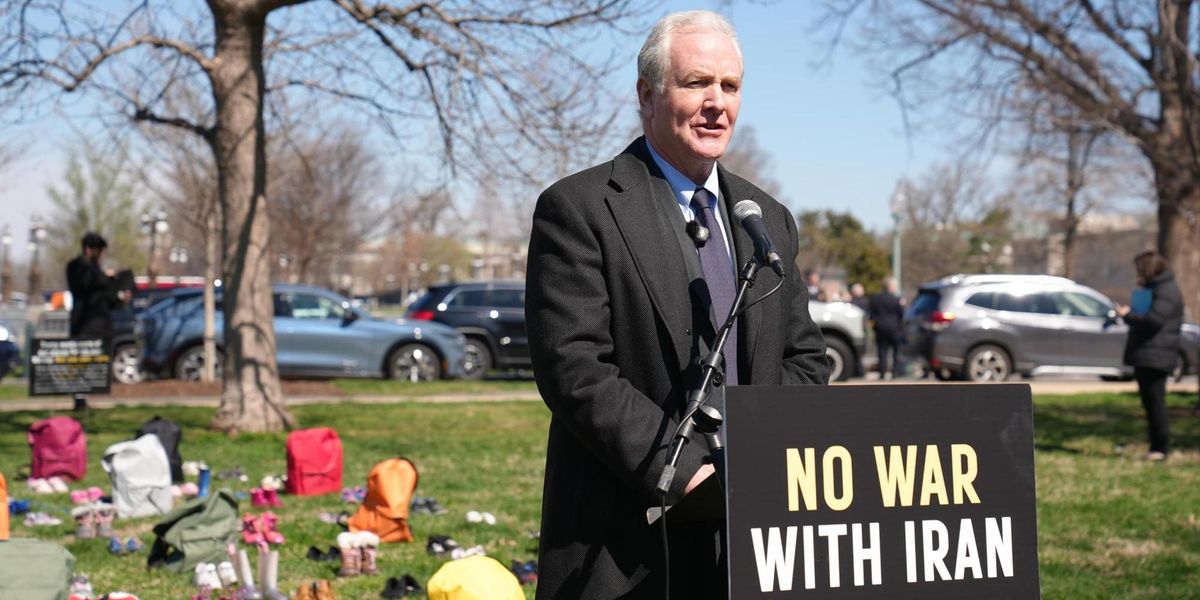
Key event: Congress rejected an initial ~$50 billion supplemental to fund U.S. operations related to the war in Iran (the Pentagon later asked the White House to seek ~$200 billion), and the Pentagon estimates the first week of the war cost about $11 billion. Progressive Democrats held a press event vowing to block any additional defense supplemental without Congressional authorization, and multiple war-powers resolutions have failed or face long odds, creating substantial political hurdles to new war funding. Implication: heightened fiscal and political risk for defense appropriations could pressure defense-sector sentiment, Treasury financing assumptions and broader risk sentiment if a large supplemental is pursued or rolled into reconciliation.
The immediate political blockade on a war supplemental shifts the market from a straightforward “defense-spend = defense rally” trade into a multi-path process risk scenario. Expect weeks of bargaining where Republicans try to attach sweeteners (Ukraine, border, tax offsets) and Democrats extract concessions — that raises the probability of a larger, lumpier package (>$100–200B) but months later, not days. Mechanically, a delayed but larger bill amplifies Treasury supply and risk premia over a 3–9 month window; markets will price two things separately — near-term funding uncertainty (risk-off, safe-haven flows) and eventual fiscal expansion (higher real rates and EM/FX stress).
The budget friction also creates asymmetric winners among defense-related equities. Large primes with multi-year backlog and diversified revenue (LMT, RTX, NOC, GD) are best-positioned to capture lump-sum supplemental awards and are less dependent on short-cycle subcontract flow; mid/smaller-tier suppliers and R&D-dependent contractors face working-capital squeezes if the Pentagon re-prioritizes within existing obligations. Second-order supply-chain effects include delayed avionics/semiconductor orders (pushing revenues later) and stronger pricing power for players with excess manufacturing capacity, which could widen margin dispersion by 300–500bps across suppliers over the next 6–12 months.
Key catalysts to watch in days–weeks are (1) formal White House supplemental size and timing, (2) floor votes on war-powers/resolutions, and (3) Senate/House reconciliation maneuvering timelines; any of these can flip the narrative quickly. Tail risks: an unexpectedly large, reconciliation-passed package funded by debt would lift yields and defense equities but compress risk assets; conversely, sustained congressional refusal and diplomatic de-escalation would remove a policy-level growth impulse, pressuring defense names and improving risk appetite. The consensus (immediate bipartisan funding) underestimates the stickiness of progressive resistance and the calendar friction that will create both buying opportunities and short-term volatility.
AI-powered research, real-time alerts, and portfolio analytics for institutional investors.
Request DemoOverall Sentiment
strongly negative
Sentiment Score
-0.65
