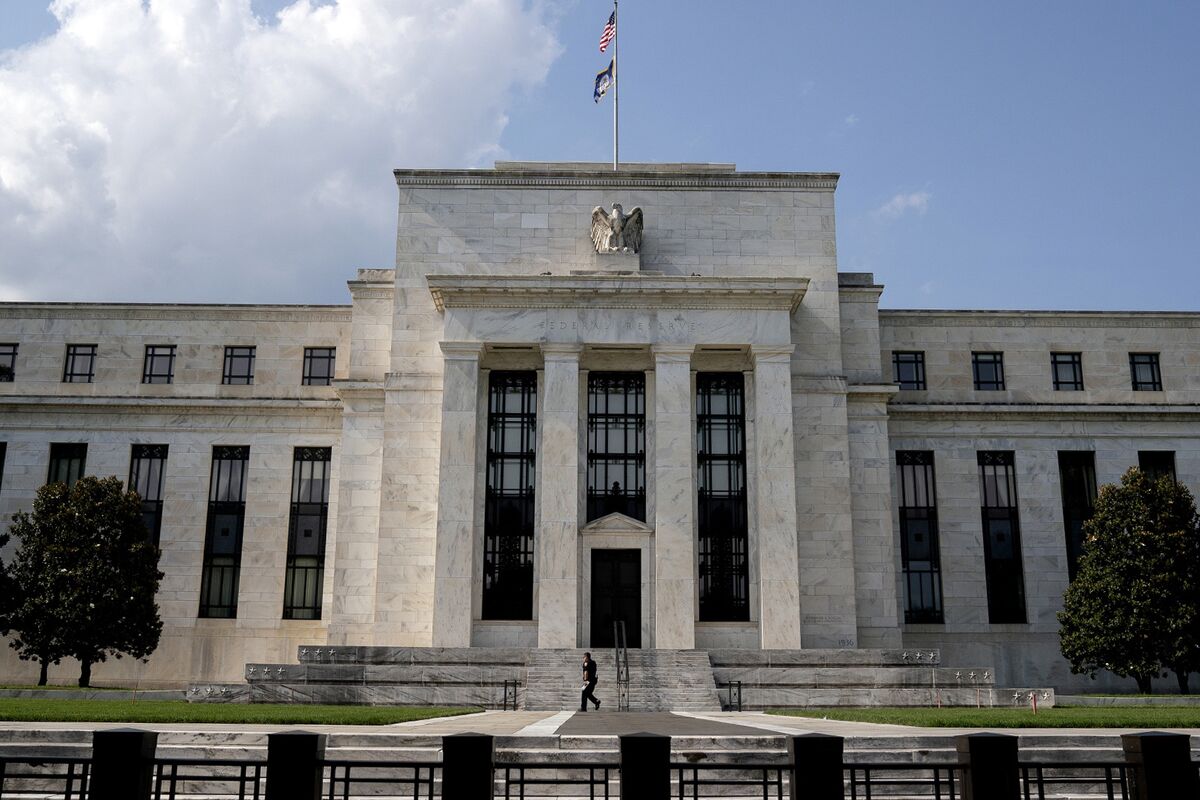
Economists surveyed by Bloomberg expect Federal Reserve officials to vote to cut interest rates next week, with the median respondent projecting two additional quarter-point cuts in 2026 starting in March. The anticipated move would extend rate reductions implemented in September and October and reflects a dovish stance aimed at guarding against a potential sharp deterioration in the labor market, with implications for bond yields, equity positioning and rate-sensitive sectors.
Market structure: A Fed path that cuts in December and again twice in 2026 clearly biases markets toward duration and rate-sensitive assets. Expect long-duration Treasuries, REITs (VNQ) and utilities (XLU) to capture relative inflows while short-duration cash/money-market yields and bank NIMs face pressure; curve dynamics likely show front-end compression and potential flattening unless growth surprises. Cross-asset: weaker USD and higher gold (GLD) are probable, while corporates can opportunistically refinance, tightening credit spreads in the next 3–9 months.
Risk assessment: Tail risks include a sharper-than-expected labor-market deterioration prompting emergency easing (more than two cuts) or a wage-driven inflation rebound that forces a policy U-turn; either would violently repriced duration and credit. Immediate (days): front-end yields drop and option vols fall; short-term (weeks–months): spread compression and sector rotations; long-term (quarters–years): leverage and duration accumulation raise systemic fragility. Hidden dependencies include fiscal impulses, regional bank health, and NFP/CPI surprises that can flip the trade rapidly.
Trade implications: Tactical positions favor duration and defensive growth: establish modest duration (2–4% portfolio) via TLT/IEF and inflation hedge (1–2% GLD) within 2–6 weeks post-cut, trimming if 10y yield rises >40bp from entry or CPI/core PCE >2.9%. Pair trades: long VNQ (2%) vs short KRE (2%) to capture relative benefit to property income vs bank NIM squeeze; use 3–6 month options (buy protection) to manage headline vol. Rotate overweight into utilities, REITs and long-duration semiconductors (QQQ) while underweight regional banks and cash proxies.
Contrarian angles: Consensus may be underpricing upside inflation risk from wage stickiness — if monthly NFP <+100k or core inflation >2.9% the market will reprice quickly and punish crowded duration trades. Historical precedents (late-2018/2019 Fed pivots) show equity multiple expansion can be fleeting; crowded long-duration positioning raises crash risk when data surprises. Prepare execution rules (hard stops, volatility-based position sizing) rather than directional conviction alone.
AI-powered research, real-time alerts, and portfolio analytics for institutional investors.
Request DemoOverall Sentiment
mildly positive
Sentiment Score
0.25
