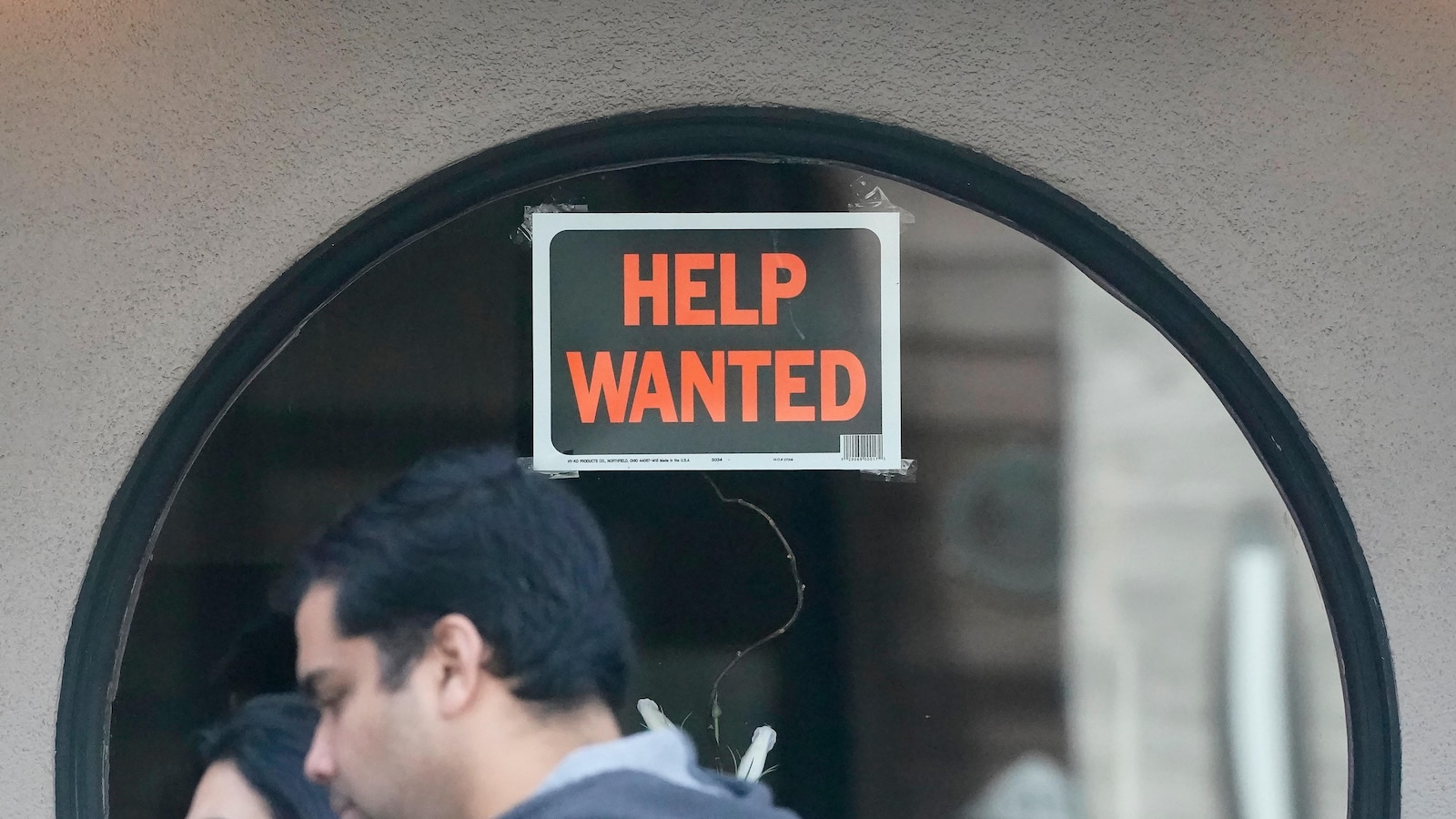
U.S. job openings fell to 7.1 million at the end of November from 7.4 million in October, the fewest postings since September 2024 and the lowest level outside that month in nearly five years, according to the Labor Department's JOLTS report. Layoffs also declined, signaling a low-hire, low-fire market where employers retain staff but are reluctant to add, even as GDP growth was robust in mid-2025; the report raises questions about whether labor demand will catch up with economic expansion or whether automation and AI will allow growth with fewer jobs. The December monthly jobs report, due Friday, will provide further clarity for policymakers and markets.
Market structure: Fewer job openings (7.1M vs 7.4M) shifts relative winners to automation/AI-capex beneficiaries (NVDA, MSFT, GOOGL, AMZN, AVGO) and cloud/industrial automation suppliers, while staffing firms (MAN, RHI) and labor‑intensive consumer services (restaurants, budget retail) face demand erosion. Labor slack reduces wage-pressure risk, improving margins for capital‑intensive firms and increasing probability markets price 25–75bps of Fed cuts over 12 months, which favors long-duration bonds and growth multiple expansion.
Risk assessment: Tail risks include a surprise hiring resurgence that re-ignites inflation >3% (forces Fed back to hiking), an aggressive regulatory clampdown on AI (20–40% hit to market leaders in worst case), or a consumer-income squeeze causing recession. Immediate catalysts: Dec payrolls (days), CPI + Fed minutes (weeks), AI capex reports and Q1 earnings (quarters). Hidden dependency: productivity gains can’t substitute for broad consumer wage income — weak wages can depress cyclical consumption with a 3–9 month lag.
Trade implications: Tactical overweight tech/automation and duration while shorting staffing/consumer cyclical exposure. Use size controls: 2–3% longs in NVDA/MSFT and 2–4% long TLT, 1–2% shorts in MAN/RHI; implement call spreads on NVDA (3–6mo) and put spreads on staffing. Pair idea: long NVDA (2%) / short RHI (1.5%) to capture skew between capex winners and labor services losers; enter small ahead of Dec jobs and scale after reaction.
Contrarian angle: Consensus treats weak openings as net negative for equities, but if AI sustains productivity-driven growth, multiples could re-rate higher even with low hiring — a 10–20% upside to select tech names is plausible over 12–24 months. Conversely, political/regulatory backlash is underpriced; hedge long-tech exposure with 6–12 month hedges sized to 30–50% of position notional.
AI-powered research, real-time alerts, and portfolio analytics for institutional investors.
Request DemoOverall Sentiment
mildly negative
Sentiment Score
-0.25
