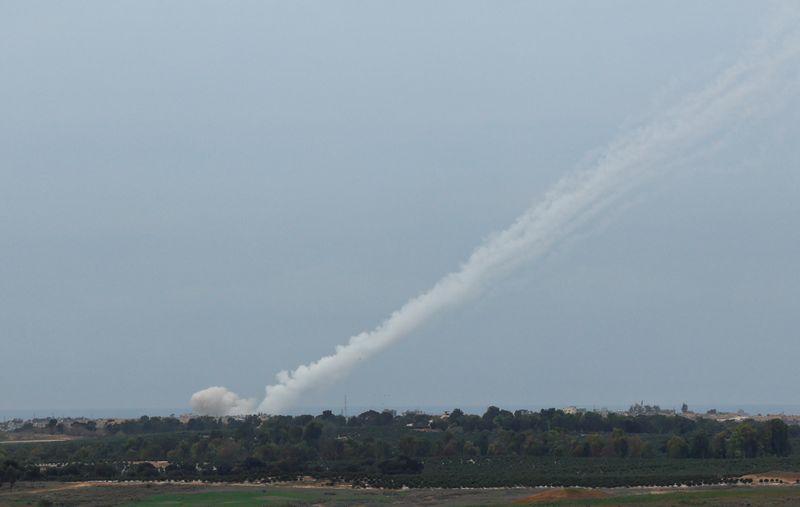
Israeli FM Gideon Saar said Israel will not hold direct talks with Lebanon in the coming days and denied reports that it told the US it was critically short of missile interceptors, contradicting recent Haaretz and Semafor pieces. Separately, former President Trump’s vow to “bomb the hell out of the shoreline” to reopen the Strait of Hormuz injects incendiary rhetoric that raises Middle East escalation risk. These developments heighten near-term upside risk to oil prices and could boost defense contractors — monitor Brent/WTI moves, short-dated oil hedges, and defense-sector flows.
Markets will front-run tangible supply frictions even if kinetic escalation stays limited. The most immediate transmission mechanisms are insurance premia, tanker voyage time, and freight rates — a 10–20% spike in hull & P&I costs can lengthen voyage economics enough to push VLCC/AFRA utilization higher within 1–4 weeks, translating to a 30–80% move in spot tanker rates if flows are rerouted. Energy prices will incorporate a risk premium quickly: a short-lived closure or insurance scare can lift prompt Brent/WTI by $5–15/bbl in days, but persistent rerouting sustains the premium for months and creates contango that favors storage and tanker-owner economics.
Defense demand dynamics bifurcate by lead time and margin profile. Consumable interceptors and munitions create an urgent procurement window (weeks–months) that favors incumbents with on-hand production capacity and prime contractor supply chains; longer-term modernization programs (years) benefit firms with systems-level integration and software/radar backlogs. Manufacturing constraints (propellant, radomes, specialized alloys, and guided-seeker production) mean upside to revenue is lumpy but margin-accretive once programs shift from ad hoc buys to funded orders over 6–24 months.
Catalysts that widen or reverse the trade are discrete: accelerated US/ally inventory transfers or confirmed replenishment contracts would compress defense carry trades within 1–3 months, while a real closure of a chokepoint would keep energy and shipping premiums elevated for quarters. Positioning should therefore combine short-dated convexity to capture spikes and longer-dated, capped exposure to harvest procurement-driven revenue upgrades, with stop-outs keyed to diplomatic signals (e.g., direct US mediation, confirmed emergency transfers) that historically remove >50% of the near-term premium.
AI-powered research, real-time alerts, and portfolio analytics for institutional investors.
Request DemoOverall Sentiment
strongly negative
Sentiment Score
-0.60
