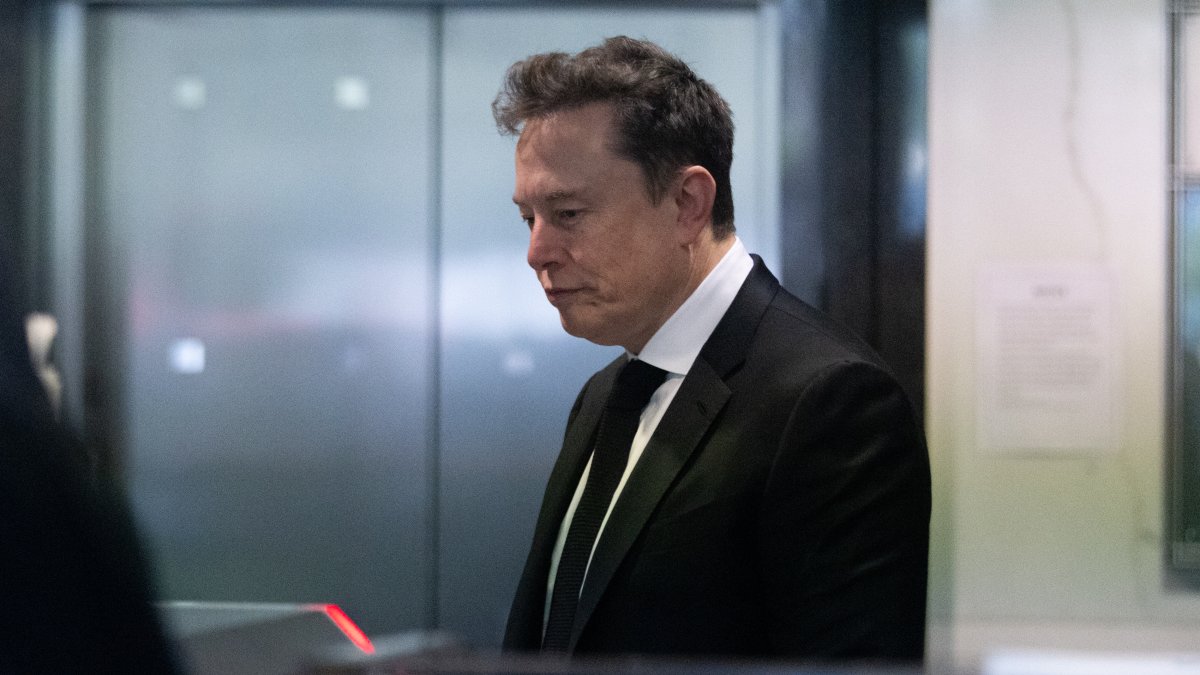
Elon Musk’s $134 billion lawsuit against Sam Altman, Greg Brockman, and Microsoft over OpenAI’s investments and nonprofit mission resumed Wednesday, with Musk back on the stand. The case centers on whether OpenAI violated its original mission to develop AI for humanity’s benefit, while OpenAI says the suit is an attempt to hinder its growth and support Musk’s xAI competitor. A nine-person jury has been selected, and the trial is expected to last three weeks.
This is less a clean binary legal headline than a volatility event around AI governance premiums. The market should treat MSFT’s exposure as a second-order multiple risk: even if damages never materialize, any discovery that expands the record around control rights, exclusivity, or board influence could raise the probability of antitrust scrutiny and slow the normalization of OpenAI/Microsoft economics. That matters because the strategic value in AI has increasingly been capitalized into software and cloud names as a durable moat, so even a modest reassessment can compress multiple expansion rather than hit near-term earnings.
For TSLA, the direct P&L impact is negligible, but the litigation keeps xAI in the conversation as a credible competitor and fundraising vehicle. The more important effect is on talent allocation and partner bargaining: prolonged uncertainty around OpenAI’s governance can make frontier-model researchers more willing to hedge with multiple employers, while enterprise customers may diversify model providers to avoid single-vendor concentration. That is mildly negative for OpenAI’s implied win-rate and supportive for second-tier model hosts and infrastructure picks-and-shovels over the next 6-18 months.
The near-term catalyst path is event-driven: testimony, injunction requests, and any document disclosures can move MSFT and AI-adjacent names in sharp but temporary bursts over days to weeks. The bigger tail risk is not a courtroom loss; it is forced structural concessions that make OpenAI more expensive to partner with and less exclusive to distribute through Microsoft, which would lower the option value embedded in MSFT’s AI narrative. Conversely, if the case is dismissed or narrowed quickly, the setup becomes a volatility crush trade because the market will have priced in a governance discount that is difficult to justify absent hard evidence.
AI-powered research, real-time alerts, and portfolio analytics for institutional investors.
Request DemoOverall Sentiment
mildly negative
Sentiment Score
-0.15
Ticker Sentiment
