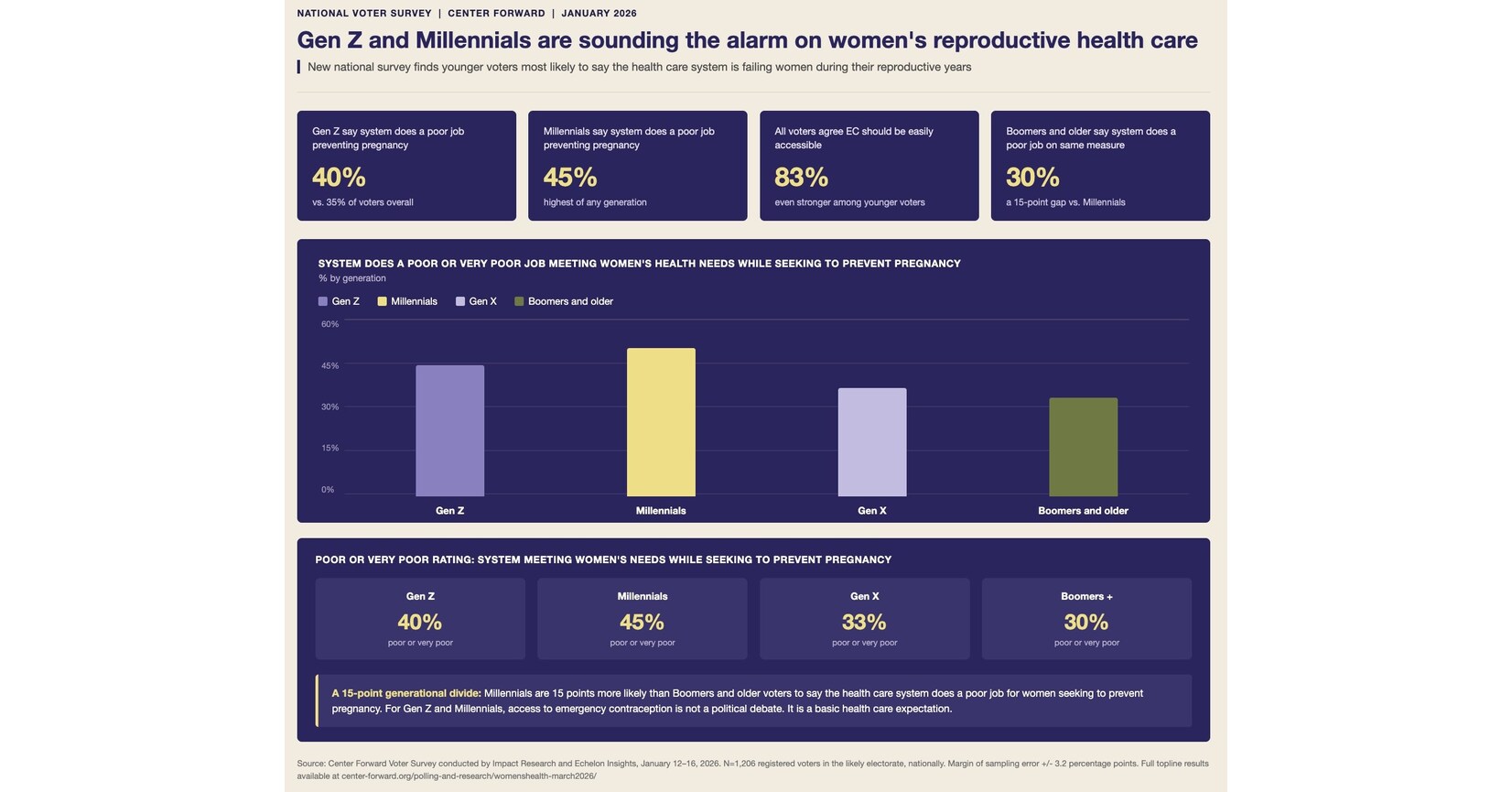
A new national survey of 1,206 likely voters finds a 15-point generational gap on women’s reproductive health care: 45% of Millennials and 40% of Gen Z say the U.S. health care system does poorly meeting women’s needs when trying to prevent pregnancy, versus 30% among Baby Boomers and older voters. The poll also shows strong support for access to over-the-counter emergency contraception (83% importance; 76% that it should remain over the counter), with a stated need for broader, accurate public education—especially via social media. Filed January 12–16, 2026 with a ±3.2pp sampling error, the findings are positioned to urge policymakers to “do better” on OTC emergency contraception access.
This reads more like a political-risk temperature check than an investable demand catalyst. The financial takeaway is that reproductive-health access remains a high-salience issue for younger consumers, which keeps the probability of future state-level friction elevated even if nothing changes today. That matters less for the tiny emergency-contraception category itself than for adjacent businesses with broad OTC shelf space, compliance overhead, or exposure to pharmacy-channel traffic.
The near-term winner is not the branded product being promoted here, but any retailer or consumer-health manufacturer that benefits from continued normalization of OTC self-care. The loser set would emerge only if policymakers move from rhetoric to rules: pharmacy chains, especially those already fighting traffic erosion and labor pressure, would absorb the most incremental compliance and reputational drag. The second-order effect is that any access restriction would likely accelerate substitution to online and direct-to-consumer channels, which favors digitally enabled healthcare and hurts legacy drugstore economics.
The contrarian read is that the market may overdiscount this as pure messaging. Survey data does not equal sales, and absent a statutory or regulatory shift, the revenue impact on listed equities is negligible. The real signal is that younger-voter intensity makes reproductive-health access a durable campaign issue into the next election cycle, so this should be treated as a watchlist item for policy volatility rather than a standalone trade today.
AI-powered research, real-time alerts, and portfolio analytics for institutional investors.
Request DemoOverall Sentiment
neutral
Sentiment Score
-0.05
