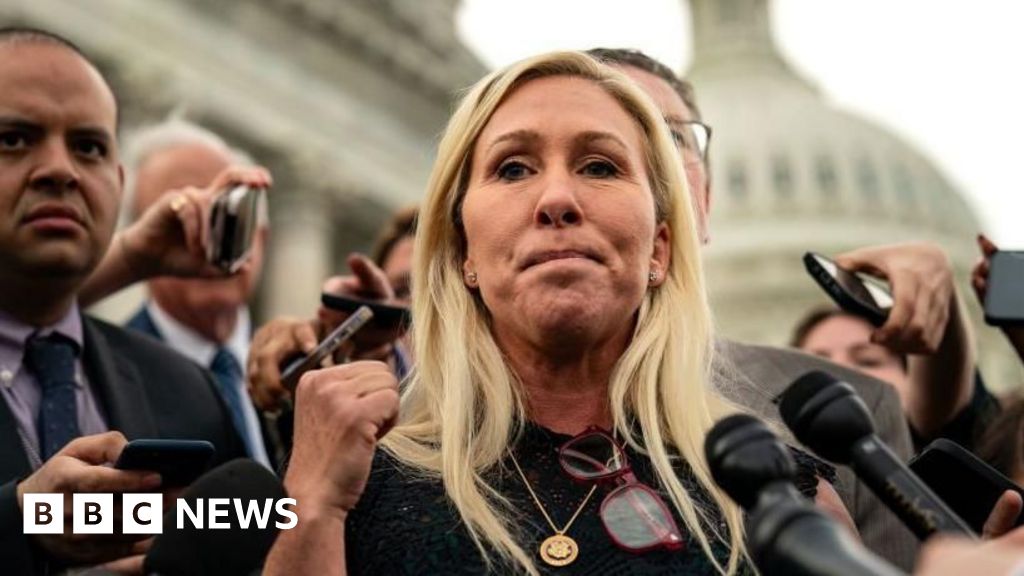
Special election in Georgia's 14th district will be held Tuesday to replace Marjorie Taylor Greene, with 17 candidates competing and a runoff scheduled for 7 April if no one clears 50%. Former district attorney Clay Fuller has Donald Trump's endorsement, but the field includes multiple Republicans (e.g., Colton Moore, Beau Brown) and Democrats (e.g., Shawn Harris); Greene won 64% vs Harris 35% in 2024. Greene resigned in January after a public split with Trump and has since criticized his policies; the contest highlights intra-party fractures but is unlikely to move markets materially.
This special election is best read as a local stress-test of GOP cohesion rather than a standalone market event: fragmentation among 17 candidates and voter fatigue with high-profile personalities increases the probability of a runoff (April 7) and leaves the district more competitive into November. That elongates political uncertainty across two discrete windows (immediate runoff in 2–4 weeks, national midterm positioning through Nov), increasing the frequency of headline-driven micro shocks that historically lift short-term realized volatility by 25–40% around surprise outcomes in comparable swing contests.
Policy transmission is non-linear: if intra-GOP fractures persist and Democrats see even marginal pickup odds in historically safe districts, the market will reprice the probability of a Democratic House or a more moderate GOP coalition — pushing sectors sensitive to regulatory slope changes (biotech/drug-pricing, healthcare insurers, and small-cap domestic industrials) to re-evaluate valuation multiples within 3–6 months. Conversely, if a Trump-endorsed candidate wins decisively, expect consolidation of hardline messaging that could pressure defense and foreign‑policy exposed supply chains in the 6–12 month horizon as rhetoric, not immediate legislation, drives repricing.
For risk management, the immediate tradeable is volatility insurance rather than binary single-stock bets: buy protection around the runoff and then re-assess into November; over-indexing to a single interpretation of Trump’s endorsement power is the common error. The contrarian edge: local voters are valuing “professionalism” and electability over performative politics, implying the market may be overpricing a blanket MAGA sweep and underpricing outcomes where centrist Republicans or status-quo candidates prevail — a scenario that favors defensive cyclicals and reduces tail regulatory risk.
AI-powered research, real-time alerts, and portfolio analytics for institutional investors.
Request DemoOverall Sentiment
neutral
Sentiment Score
0.00
