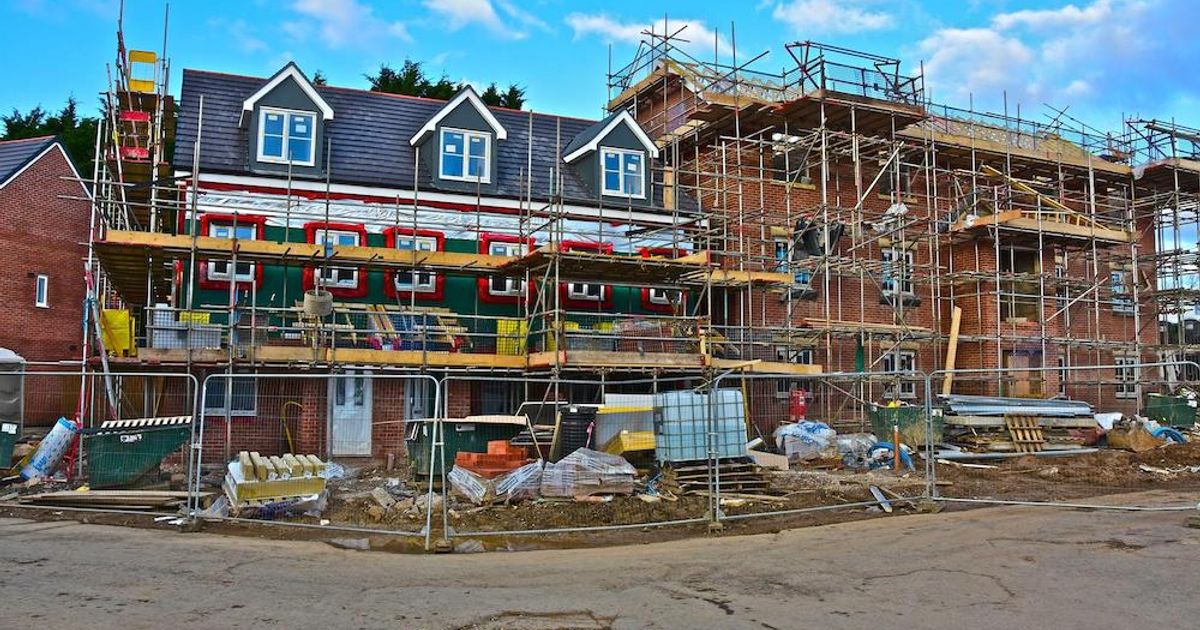
Deutsche Bank downgraded Persimmon PLC from Buy to Hold despite the housebuilder reporting a stronger-than-expected 2025, with full-year pre-tax profit guided roughly 5% ahead of the broker's forecasts driven mainly by higher volumes while margins were towards the lower end of guidance. Management expects 2026 volumes to be broadly flat, implying around 5% profit growth; Deutsche says Persimmon merits a premium versus peers but notes the shares have risen sharply and now trade at above 1.2x forecast net tangible assets, so the premium is already priced in and the broker left its target price unchanged.
Market structure: Persimmon (LSE:PSN) shows the classic late-cycle housing profile—solid volumes driving a c.5% beat to DB forecasts but low sales rates in Q4 and management guidance for broadly flat volumes in 2026. Winners: builders with cleaner remediation books and cheaper valuations (peer mid-caps) that can gain rotation flows; losers: momentum longs in PSN if premium valuation compresses (PSN >1.2x forecast NTA). Cross-asset: a UK demand softening would pressure sterling and boost gilt safe-haven flows; builder CDS/bond spreads could widen 20–50bp in a sell-off.
Risk assessment: Tail risks include an abrupt mortgage shock (BoE-driven 50–100bp move in 2yr yields) or unexpected remediation/legal costs materially above PSN’s peers, each capable of a >20% equity drawdown. Time horizons split: immediate (days)—volatility on analyst chatter and DB downgrade; short-term (3–6 months)—execution of outlet openings and Q1 sales rates; long-term (12–24 months)—landbank valuation and house-price cycle. Hidden dependencies: PSN’s returns hinge on outlet cadence and price mix, not just unit volumes; build-cost inflation or planning delays can flip 5% profit guidance to a miss.
Trade implications: Given premium priced in, reduce net long exposure to neutral and monetize upside; consider relative-value shorts vs cheaper peers. Specific strategies: collar/put-spread hedges for protection through H2 2026, and short-dated covered calls to harvest premium while waiting for clearer sales-rate data. Catalysts to watch for re-rating: quarterly sales rates, BoE policy moves, and any remediation disclosures over the next 60–120 days.
Contrarian angles: Consensus underweights the possibility of back-end-weighted outlet openings delivering a H2 2026 volume surprise—this could re-rate PSN if delivery beats market timing expectations. Conversely, the market may be underestimating downside if sales rates slide further—valuation leaves limited upside above current levels (mid-single-digit). Action trigger framework: trim above P/NTA 1.35; accumulate on drop >15% from current levels within 3–6 months.
AI-powered research, real-time alerts, and portfolio analytics for institutional investors.
Request DemoOverall Sentiment
mildly negative
Sentiment Score
-0.25
Ticker Sentiment
